By using this site, you agree to the Privacy Policy and Terms of Use.
Accept
GMJ NewsGMJ NewsGMJ News
  • Latest News
    • GMJ Briefs
  • Podcast & Media
    • Podcast Episodes
    • GMJ Audio
    • GMJ Videos
  • Research Digest
    • New Studies
    • Georgian Research
    • Data & Numbers
  • Policy & Systems
    • Health Policy
    • Quality & Safety
    • Migration & Health
    • Global Health
  • Practice
    • Clinical Updates
    • Case Discussions
    • Pharmacy & Prescribing
    • Ingredients A-Z
  • Perspectives
    • Editorial
    • Explainers
    • Voices
    • Letters
  • GMJ Articles
    • Vol. 1 Issue 2 (2026)
    • Vol. 1 Issue 1 (2026)
    • Pre-Launch Articles (2025)
  • Read the Journal →
  • About GMJ News
Notification Show More
Font ResizerAa
GMJ NewsGMJ News
Font ResizerAa
  • Latest News
    • GMJ Briefs
  • Podcast & Media
    • Podcast Episodes
    • GMJ Audio
    • GMJ Videos
  • Research Digest
    • New Studies
    • Georgian Research
    • Data & Numbers
  • Policy & Systems
    • Health Policy
    • Quality & Safety
    • Migration & Health
    • Global Health
  • Practice
    • Clinical Updates
    • Case Discussions
    • Pharmacy & Prescribing
    • Ingredients A-Z
  • Perspectives
    • Editorial
    • Explainers
    • Voices
    • Letters
  • GMJ Articles
    • Vol. 1 Issue 2 (2026)
    • Vol. 1 Issue 1 (2026)
    • Pre-Launch Articles (2025)
  • Read the Journal →
  • About GMJ News
Follow US
GMJ News > GMJ Briefs > Brazilian Cohort Study Identifies Table Salt as Cognitive Risk Factor in Aging Populations

Brazilian Cohort Study Identifies Table Salt as Cognitive Risk Factor in Aging Populations

GMJ
Last updated: 22/06/2026 16:26
By
Prof. Giorgi Pkhakadze
Share
1 Min Read
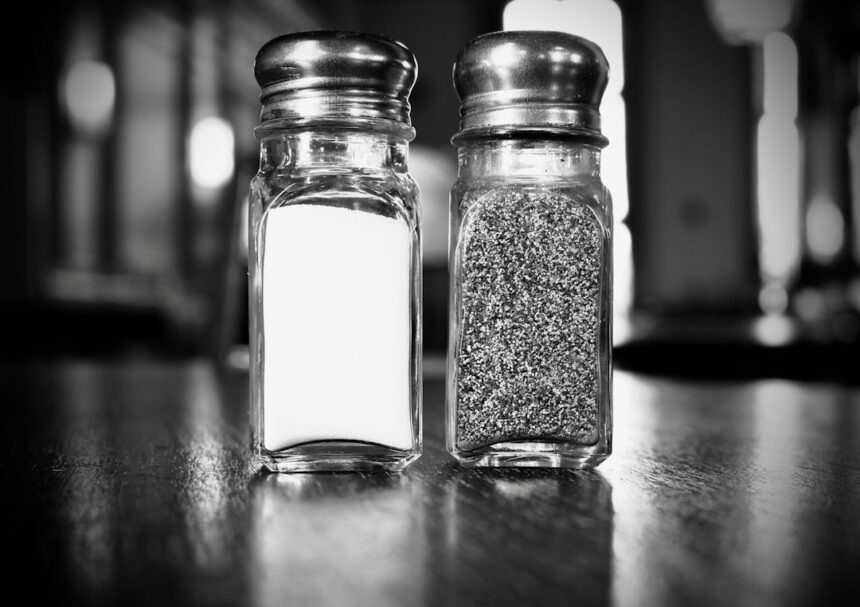
Elderly person adding salt to meal at dining table, representing study findings on salt consumption habits
A comprehensive study of 8,300 older Brazilian adults found that men are significantly more likely to add salt at the table, with the habit linked to faster cognitive decline. The research reveals important gender differences in salt consumption patterns among aging populations. — Photo by Lachlan on Unsplash (Unsplash License)
SHARE
1 min read|124 words

A landmark Brazilian study encompassing 8,300 older adults has uncovered a significant association between habitual table salt addition and accelerated cognitive decline over a 24-month period. The research, conducted across multiple Brazilian cities, revealed striking gender disparities in salt-adding behaviors, with men demonstrating substantially higher rates of table salt use compared to women.

The study found that men’s salt habits appeared largely habitual and resistant to health awareness messaging, while women’s consumption patterns were more closely linked to broader dietary and lifestyle factors. These findings underscore important gender-specific considerations for public health interventions targeting cognitive health in aging populations. The research highlights the need for tailored prevention strategies that account for behavioral differences between older men and women.

Read the full article on GMJ Newsroom.

Was this article helpful?

100% of readers found this helpful (1 votes)

GMJ Brief · Announcement

📰 Read the full article: Large Brazilian Study Links Table Salt Habits to Cognitive Decline in 8,300 Older Adults →

Share This Article
Facebook LinkedIn Bluesky Copy Link Print
GMJ
ByProf. Giorgi Pkhakadze
Follow:
Prof. Giorgi Pkhakadze, MD, MPH, PhD, is Editor-in-Chief of the Georgian Medical Journal and Chair of the Public Health Institute of Georgia (PHIG). He is Professor and Head of the Department of Social and Behavioural Sciences at David Tvildiani Medical University, and Secretary/Treasurer of the UEMS Section of Public Health. ORCID: 0000-0001-7609-4515.

Submit Your Paper →

Georgia's peer-reviewed open-access medical journal. No APC until January 2027.
Submit Manuscript →
Maternal mortality crisis deepens for Sudanese refugee women in Central African Republic

Pregnant Sudanese refugee women in Central African Republic face 138 times higher…

Home Exercise Program Reduces Cognitive Decline During Cancer Chemotherapy

New trial shows home-based exercise significantly improved attention and reduced cognitive problems…

MIT Develops 3D Augmented Reality System for Medical Ultrasound Interpretation

MIT researchers have developed an augmented reality system that transforms 2D ultrasound…

Submit Your Paper to GMJ

No APC until January 2027.
Submit Manuscript →

You Might Also Like

Medical illustration showing optic nerve blood flow blockage causing sudden vision loss

Wegovy Linked to Significantly Higher Eye Stroke Risk Than Ozempic, FDA Analysis Shows

By
Prof. Giorgi Pkhakadze
31/05/2026
Medical illustration showing DNA helix with cancer risk assessment data for pediatric genetic testing

Precision Genetics: How Early Testing Transforms Pediatric Cancer Care

By
Prof. Giorgi Pkhakadze
06/06/2026
Medical illustration comparing manufactured biotherapeutic capsules to traditional fecal microbiota transplant procedure

Key Finding: Live biotherapeutic matches donor FMT in treating recurrent C. diff infection

By
Prof. Giorgi Pkhakadze
20/06/2026
Scientific illustration showing genetic diversity mapping across Indigenous American populations

Indigenous American Immune Genes Show Highest Selection Rates Among Global Populations

By
Prof. Giorgi Pkhakadze
13/06/2026
Facebook Twitter Youtube Instagram
Company
  • Privacy Policy
  • Contact US
  • GMJ Journal
  • Submit Manuscript
  • Editorial Team
  • Register at GMJ
  • Terms of Use

Subscribe to GMJ News — Click here

Join Community
© 2026 Georgian Medical Journal (GMJ). Published by the Public Health Institute of Georgia (PHIG). All rights reserved.
Welcome Back!

Sign in to your account

Username or Email Address
Password

Lost your password?

Not a member? Sign Up