By using this site, you agree to the Privacy Policy and Terms of Use.
Accept
GMJ NewsGMJ NewsGMJ News
  • Latest News
    • GMJ Briefs
  • Podcast & Media
    • Podcast Episodes
    • GMJ Audio
    • GMJ Videos
  • Research Digest
    • New Studies
    • Georgian Research
    • Data & Numbers
  • Policy & Systems
    • Health Policy
    • Quality & Safety
    • Migration & Health
    • Global Health
  • Practice
    • Clinical Updates
    • Case Discussions
    • Pharmacy & Prescribing
    • Ingredients A-Z
  • Perspectives
    • Editorial
    • Explainers
    • Voices
    • Letters
  • GMJ Articles
    • Vol. 1 Issue 2 (2026)
    • Vol. 1 Issue 1 (2026)
    • Pre-Launch Articles (2025)
  • Read the Journal →
  • About GMJ News
Notification Show More
Font ResizerAa
GMJ NewsGMJ News
Font ResizerAa
  • Latest News
    • GMJ Briefs
  • Podcast & Media
    • Podcast Episodes
    • GMJ Audio
    • GMJ Videos
  • Research Digest
    • New Studies
    • Georgian Research
    • Data & Numbers
  • Policy & Systems
    • Health Policy
    • Quality & Safety
    • Migration & Health
    • Global Health
  • Practice
    • Clinical Updates
    • Case Discussions
    • Pharmacy & Prescribing
    • Ingredients A-Z
  • Perspectives
    • Editorial
    • Explainers
    • Voices
    • Letters
  • GMJ Articles
    • Vol. 1 Issue 2 (2026)
    • Vol. 1 Issue 1 (2026)
    • Pre-Launch Articles (2025)
  • Read the Journal →
  • About GMJ News
Follow US
GMJ News > Policy & Systems > Global Health > Maternal mortality crisis deepens for Sudanese refugee women in Central African Republic
Global HealthMigration & HealthPolicy & Systems

Maternal mortality crisis deepens for Sudanese refugee women in Central African Republic

GMJ
Last updated: 23/06/2026 18:42
By
GMJ Policy Desk
Share
6 Min Read
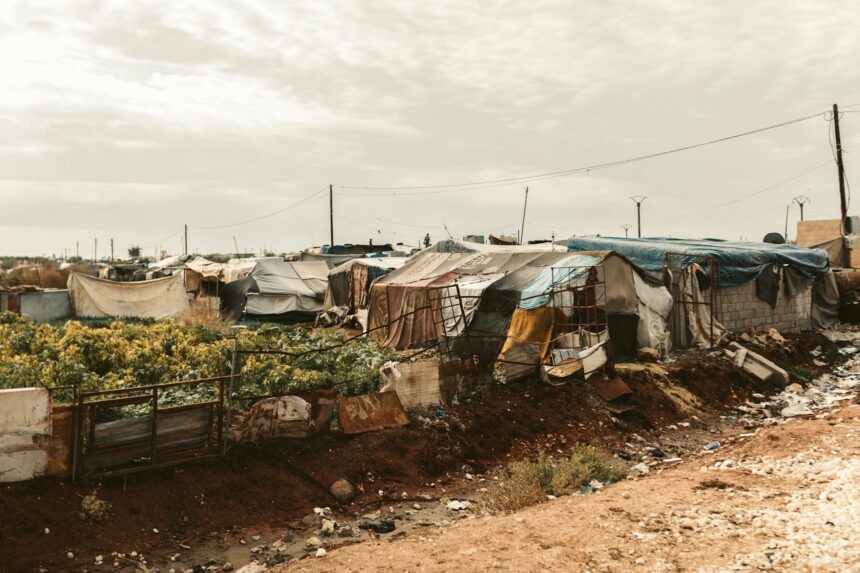
Pregnant Sudanese refugee women waiting for prenatal consultation at Birao District Hospital in Central African RepublicIllustrative image · Photo by Abd Alrhman Al Darra on Pexels (Pexels License)
Pregnant Sudanese refugee women in Central African Republic face 138 times higher maternal mortality risk than EU countries. International aid cuts compound healthcare infrastructure challenges for 36,414 displaced refugees. — Photo by Abd Alrhman Al Darra on Pexels (Pexels License)
SHARE
4 min read|762 words
✓ Reviewed by Prof. Giorgi Pkhakadze, MD, MPH, PhD · ORCID 0000-0001-7609-4515

🟠 Moderate Evidence

Contents
    • Key takeaways
      • Maternal mortality disparities: CAR vs developed regions
  • Displacement compounds maternal health vulnerabilities
  • Healthcare infrastructure under strain
  • Regional context of maternal mortality crisis
    • What this means
  • Frequently asked questions
    • Why is maternal mortality so high in CAR compared to developed countries?
    • How do refugee women access maternal healthcare in CAR?
    • What can be done to improve maternal health outcomes for refugee populations?

Pregnant Sudanese women fleeing civil war face a staggering 138-fold higher risk of maternal death when seeking refuge in the Central African Republic compared to the European Union, according to The BMJ. The crisis highlights how conflict displacement compounds existing healthcare vulnerabilities, particularly for reproductive health services.

Key takeaways

  • 36,414 Sudanese refugees have fled to CAR amid ongoing civil war
  • Women in CAR face 138 times higher maternal mortality risk than EU countries
  • Healthcare infrastructure remains severely undermined by international aid cuts
138x
higher maternal mortality risk in CAR compared to EU

Maternal mortality disparities: CAR vs developed regions

Risk comparison for women in childbirth, 2026

138x
Higher risk in CAR vs EU
36,414
Sudanese refugees in CAR
829
Maternal deaths per 100,000 births (CAR)

Source: World Health Organization, 2026 | Georgian Medical Journal News

Submit Your Paper
GMJ_Submit_Banner

Displacement compounds maternal health vulnerabilities

The Birao District Hospital in the Central African Republic has become a critical refuge for pregnant Sudanese women seeking prenatal care after fleeing their homeland’s civil war. These women represent a fraction of the 36,414 Sudanese refugees who have crossed into CAR, according to UNHCR displacement data.

The journey to safety paradoxically exposes these women to heightened health risks. CAR’s maternal mortality ratio of approximately 829 deaths per 100,000 live births starkly contrasts with the European Union average of 6 deaths per 100,000 births, as reported by the World Health Organization.

Healthcare infrastructure under strain

The Central African Republic’s healthcare system faces multiple pressures that directly impact maternal health outcomes. The country’s medical infrastructure, already fragmented by decades of political instability, struggles to accommodate the influx of refugees requiring emergency obstetric care.

International aid reductions have exacerbated these challenges. Budget cuts from major donor countries including the UK and US have reduced funding for essential maternal health services, according to humanitarian organizations monitoring the region. This creates a perfect storm for women who have already survived the trauma of displacement.

Limited access to skilled birth attendants, essential medicines, and emergency obstetric care contributes to the stark mortality disparities. Many refugee women arrive at facilities like Birao District Hospital after traveling long distances without adequate prenatal monitoring. For more insights on migration and health challenges, our analysis explores similar patterns globally.

Regional context of maternal mortality crisis

The situation in CAR reflects broader patterns of maternal health vulnerability across conflict-affected regions in sub-Saharan Africa. Countries experiencing active conflict consistently show elevated maternal mortality ratios, with displaced populations facing the highest risks.

The Sudanese refugees in CAR represent just one population among millions of women worldwide who face reproductive health challenges during displacement. Their experiences highlight the urgent need for targeted maternal health interventions in humanitarian settings, particularly as conflicts continue to drive displacement across the region.

Women in the Central African Republic are 138 times more likely to die in childbirth compared to women in European Union countries, with refugee populations facing additional vulnerabilities.

— World Health Organization maternal mortality data, 2026

What this means

For patients: Pregnant refugee women should seek prenatal care immediately upon arrival and understand available emergency obstetric services in host countries
For clinicians: Healthcare providers in refugee-hosting areas need enhanced training in emergency obstetric care and culturally sensitive maternal health services
For policymakers: International aid frameworks must prioritize sustainable maternal health infrastructure in conflict-affected regions and refugee-hosting communities

Frequently asked questions

Why is maternal mortality so high in CAR compared to developed countries?

Multiple factors contribute including limited access to skilled birth attendants, inadequate healthcare infrastructure, and reduced emergency obstetric care availability. Political instability and international aid cuts have further compromised the healthcare system’s capacity to provide safe delivery services.

How do refugee women access maternal healthcare in CAR?

Refugee women typically access care through district hospitals like Birao and health centers supported by humanitarian organizations. However, services are often limited by resource constraints, geographic barriers, and the overall fragility of CAR’s healthcare infrastructure.

What can be done to improve maternal health outcomes for refugee populations?

Solutions include strengthening emergency obstetric care capacity, training more skilled birth attendants, ensuring reliable supply chains for essential medicines, and developing sustainable financing mechanisms that don’t depend solely on volatile international aid flows.

The maternal health crisis facing Sudanese refugee women in CAR underscores the urgent need for comprehensive approaches to reproductive health in humanitarian settings. As conflicts continue to drive displacement across the region, protecting maternal health must remain a priority for both humanitarian responders and long-term development planning. Without sustained investment in healthcare infrastructure and emergency obstetric care, vulnerable populations will continue to face preventable maternal deaths at rates that starkly contrast with global health equity goals.

Source: Victims of war: Women seek refuge to deliver their babies

Was this article helpful?

Disclaimer. This article is health journalism intended for general information and education. It is not medical advice and is not a substitute for professional diagnosis or treatment. Always consult a qualified healthcare provider about your individual circumstances. Full disclaimer →

Related Coverage
Diabetes Experts Expelled from ADA Meeting Over NIH Funding Protest Sparks ControversyJun 24, 2026
Drug Shortages Decline 23% in US, But Systemic Problems PersistJun 24, 2026
When Colleagues Make Derogatory Comments About Patients: A Clinical Response GuideJun 24, 2026
WHO and BBC Launch Global Series on Animal-Human Health ConnectionsJun 24, 2026
PG
Written by
Prof. Giorgi Pkhakadze, MD, MPH, PhD
Editor-in-Chief, GMJ News
Full profile →  ·  ORCID 0000-0001-7609-4515
Medical disclaimer. This article is health journalism intended for general information. It is not medical advice and is not a substitute for consultation with a qualified healthcare professional. Always seek your physician's advice regarding any medical condition.
Medically reviewed by Prof. Giorgi Pkhakadze, MD, MPH, PhD. Spotted an error? Contact the editorial team.

Get the GMJ News digest
Evidence-based health journalism in your inbox. No spam; unsubscribe anytime.
TAGGED:Central African Republichumanitarian crisismaternal mortalityrefugee healthSudan conflict
Share This Article
Facebook LinkedIn Bluesky Copy Link Print
GMJ
ByGMJ Policy Desk
Follow:
GMJ Policy Desk is part of GMJ News, the newsroom of the Georgian Medical Journal (gmj.ge), published by the Public Health Institute of Georgia. Every article is editorially reviewed before publication.
Leave a Comment Leave a Comment

Leave a Reply Cancel reply

Your email address will not be published. Required fields are marked *

Submit Your Paper →

Georgia's peer-reviewed open-access medical journal. No APC until January 2027.
Submit Manuscript →
Home Exercise Program Reduces Cognitive Decline During Cancer Chemotherapy

New trial shows home-based exercise significantly improved attention and reduced cognitive problems…

MIT Develops 3D Augmented Reality System for Medical Ultrasound Interpretation

MIT researchers have developed an augmented reality system that transforms 2D ultrasound…

AI System Diagnoses 100+ Brain Tumor Subtypes in Minutes With 95% Accuracy

German researchers developed an AI system that accurately classifies 100+ brain tumor…

Submit Your Paper to GMJ

No APC until January 2027.
Submit Manuscript →

You Might Also Like

Women participating in community empowerment program discussion
Global HealthPolicy & Systems

Women’s Empowerment Programs in Poor Countries Lack Clear Measurement Standards

By
GMJ Policy Desk
09/06/2026
World map showing climate zones with disease vector expansion indicators and outbreak hotspots
Global Health

Climate Change Is Reshaping Infectious Disease Patterns Worldwide

By
GMJ Policy Desk
21/05/2026
Healthcare cost savings chart showing medically tailored meal program benefits
Clinical UpdatesHealth PolicyPolicy & SystemsPractice

Medically Tailored Meals Reduce Healthcare Costs by $2,400 Per Person, US Analysis Shows

By
GMJ Practice Desk
04/06/2026
Hospital corridor with medical staff highlighting COVID-19 summer surge surveillance data
Data & NumbersGlobal HealthPolicy & SystemsResearch Digest

UK Reports Sharp Summer COVID-19 Rise as Hospitalizations Jump 24% in One Week

By
GMJ Research Desk
03/06/2026
Facebook Twitter Youtube Instagram
Company
  • Privacy Policy
  • Contact US
  • GMJ Journal
  • Submit Manuscript
  • Editorial Team
  • Register at GMJ
  • Terms of Use

Subscribe to GMJ News — Click here

Join Community
© 2026 Georgian Medical Journal (GMJ). Published by the Public Health Institute of Georgia (PHIG). All rights reserved.
Welcome Back!

Sign in to your account

Username or Email Address
Password

Lost your password?

Not a member? Sign Up