By using this site, you agree to the Privacy Policy and Terms of Use.
Accept
GMJ NewsGMJ NewsGMJ News
  • Latest News
    • GMJ Briefs
  • Podcast & Media
    • Podcast Episodes
    • GMJ Audio
    • GMJ Videos
  • Research Digest
    • New Studies
    • Georgian Research
    • Data & Numbers
  • Policy & Systems
    • Health Policy
    • Quality & Safety
    • Migration & Health
    • Global Health
  • Practice
    • Clinical Updates
    • Case Discussions
    • Pharmacy & Prescribing
    • Ingredients A-Z
  • Perspectives
    • Editorial
    • Explainers
    • Voices
    • Letters
  • GMJ Articles
    • Vol. 1 Issue 2 (2026)
    • Vol. 1 Issue 1 (2026)
    • Pre-Launch Articles (2025)
  • Read the Journal →
  • About GMJ News
Notification Show More
Font ResizerAa
GMJ NewsGMJ News
Font ResizerAa
  • Latest News
    • GMJ Briefs
  • Podcast & Media
    • Podcast Episodes
    • GMJ Audio
    • GMJ Videos
  • Research Digest
    • New Studies
    • Georgian Research
    • Data & Numbers
  • Policy & Systems
    • Health Policy
    • Quality & Safety
    • Migration & Health
    • Global Health
  • Practice
    • Clinical Updates
    • Case Discussions
    • Pharmacy & Prescribing
    • Ingredients A-Z
  • Perspectives
    • Editorial
    • Explainers
    • Voices
    • Letters
  • GMJ Articles
    • Vol. 1 Issue 2 (2026)
    • Vol. 1 Issue 1 (2026)
    • Pre-Launch Articles (2025)
  • Read the Journal →
  • About GMJ News
Follow US
GMJ News > Research Digest > New Studies > Creatine Kidney Damage Myth Debunked by Major Safety Review of 26,000 Participants
New StudiesResearch Digest

Creatine Kidney Damage Myth Debunked by Major Safety Review of 26,000 Participants

GMJ
Last updated: 28/05/2026 14:08
By
GMJ Research Desk
Share
5 Min Read
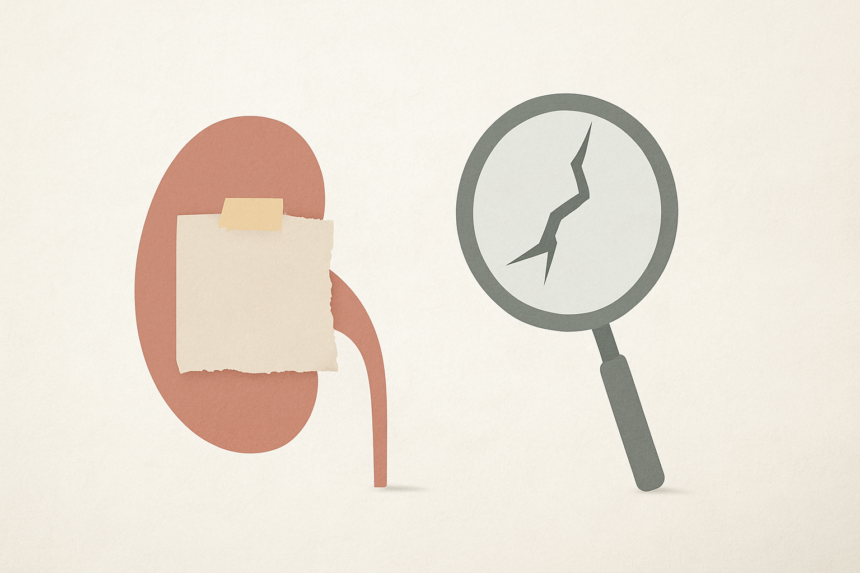
Scientific chart showing creatine safety data from clinical trials
Comprehensive analysis of 26,000 participants definitively debunks persistent myth that creatine damages kidneys. Elevated creatinine reflects normal metabolism, not kidney dysfunction.
SHARE
🎧 Listen to this article4:25 min · 625 words · GMJ Audio

Updated 28/05/2026

Contents
      • Creatine Safety Profile Across Major Studies
  • Biochemical Misinterpretation Behind Kidney Concerns
  • Meta-Analysis Confirms No Actual Kidney Damage
  • Largest Safety Database Provides Definitive Evidence
    • Key takeaways
  • Frequently asked questions
    • Why do doctors sometimes express concern about creatine and kidneys?
    • Should people with existing kidney problems avoid creatine?
    • How much creatine was used in the safety studies?
3 min read|625 words

A comprehensive safety analysis of creatine supplementation involving over 26,000 participants has definitively debunked the persistent myth that creatine damages kidneys, according to Kreider et al. (Journal of the International Society of Sports Nutrition, 2025). The concern stems from a misinterpretation of routine blood tests that show elevated creatinine levels during creatine use.

26,000
participants analyzed in largest creatine safety review to date

Creatine Safety Profile Across Major Studies

Side effect prevalence in clinical trials, 2025 analysis

Gastrointestinal Issues
4.6%
General Discomfort
4.21%
Kidney Function Changes

2%

Source: Kreider et al., JISSN, 2025 | Georgian Medical Journal News

Submit Your Paper
GMJ_Submit_Banner

Biochemical Misinterpretation Behind Kidney Concerns

The kidney damage myth originates from a fundamental misunderstanding of creatinine metabolism. According to research published in the Journal of the International Society of Sports Nutrition, creatine supplementation does raise serum creatinine levels, but this reflects increased substrate turnover rather than kidney dysfunction.

Creatine stored in skeletal muscle as phosphocreatine degrades spontaneously at approximately 2% per day into creatinine, which is filtered by the kidneys. When creatine supplementation increases total body stores, more creatinine is naturally produced, triggering lower calculated kidney filtration rates on standard tests.

🎙️ Related Podcast Episodes
🎧 #8 | WHO Food Safety Surveillance: Strengthening Global Systems to Detect and Prevent Foodborne Diseases · 19m
🎧 #2 Ethical and Legal Frameworks for Including Critically Ill Patients in Clinical Research | GMJ Official Podcast · 17m
🎧 #28 | GMJ Podcast | SheniEkimi.ge #1: Top 5 Evidence-Based Public Health News · 19m
🎧 #27 | WHO Calls for Environmentally Friendly and Less Invasive Oral Health Care · 21m
🎧 #26 | Denmark Becomes First EU Country to Eliminate Mother-to-Child Transmission of HIV and · 14m

Meta-Analysis Confirms No Actual Kidney Damage

A 2025 systematic review and meta-analysis of 21 studies directly addressed this concern by examining multiple kidney function markers. The analysis found that while creatine was associated with a small increase in serum creatinine (mean difference: 0.07 micromol/L), all other renal health indicators remained unchanged.

Measured glomerular filtration rate, cystatin C levels, proteinuria, and albuminuria—the markers that actually reflect kidney health independent of creatinine metabolism—showed no negative changes. For more evidence-based analysis of new studies on supplement safety, our research digest provides comprehensive coverage.

Largest Safety Database Provides Definitive Evidence

Dr. Richard Kreider and colleagues conducted the most comprehensive creatine safety analysis to date, reviewing 685 human clinical trials (Kreider et al., Journal of the International Society of Sports Nutrition, 2025). This massive dataset represents the gold standard for supplement safety assessment, far exceeding previous analyses in scope and statistical power.

The research team systematically examined adverse events across all study populations, finding that genuine side effects were limited to minor gastrointestinal issues in a small percentage of users. Healthcare professionals seeking clinical updates on supplement recommendations now have definitive guidance.

Creatine supplementation increases creatinine production through normal metabolic pathways without impairing actual kidney filtration or causing renal damage

— Research findings from Kreider et al., Journal of the International Society of Sports Nutrition, 2025

Key takeaways

  • Elevated creatinine during creatine use reflects increased substrate turnover, not kidney damage
  • 26,000-participant analysis found no evidence of renal function impairment from creatine supplementation (Kreider et al., 2025)
  • Multiple kidney health markers beyond creatinine remain unchanged during creatine use

Frequently asked questions

Why do doctors sometimes express concern about creatine and kidneys?

Standard kidney function tests rely on creatinine levels to calculate estimated filtration rates. When creatine supplementation increases creatinine production, these calculations suggest reduced kidney function, but direct measurements of actual kidney health show no impairment.

Should people with existing kidney problems avoid creatine?

Individuals with pre-existing kidney disease should consult their healthcare provider before starting any supplement regimen. While research shows no kidney damage in healthy populations, those with compromised renal function require individualized medical guidance.

How much creatine was used in the safety studies?

The safety analysis reviewed studies using standard supplementation protocols, typically 3-5 grams daily for maintenance following optional loading phases. These dosages represent the most commonly recommended and researched amounts for athletic performance.

The definitive resolution of the creatine-kidney myth represents a significant advancement in evidence-based sports nutrition guidance. Healthcare providers can now confidently address patient concerns with robust scientific evidence, while athletes and fitness enthusiasts can make informed decisions based on comprehensive safety data rather than persistent misconceptions.

Source: The most persistent myth about creatine is that it damages your kidneys

Was this article helpful?

Disclaimer. This article is health journalism intended for general information and education. It is not medical advice and is not a substitute for professional diagnosis or treatment. Always consult a qualified healthcare provider about your individual circumstances. Full disclaimer →

Related Coverage

Adaptive Deep Brain Stimulation Restores Walking in Parkinson's Disease: Nature Medicine StudyJul 11, 2026
Brain-Computer Interface Restores Speech in ALS Patient After Two Years of Home UseJul 11, 2026
Oral GLP-1 medication shows major promise for type 2 diabetes: weight loss and blood sugar control in pivotal trialJul 11, 2026
Calcium and Vitamin D Supplements Show Limited Benefit for Fracture Prevention in Older Adults, Major Review FindsJul 11, 2026
Related reference
  • Creatine · Ingredient
PG
Written by
Prof. Giorgi Pkhakadze, MD, MPH, PhD
Editor-in-Chief, GMJ News
Full profile →  ·  ORCID 0000-0001-7609-4515
Medical disclaimer. This article is health journalism intended for general information. It is not medical advice and is not a substitute for consultation with a qualified healthcare professional. Always seek your physician's advice regarding any medical condition.
Medically reviewed by Prof. Giorgi Pkhakadze, MD, MPH, PhD. Spotted an error? Contact the editorial team.
Get the GMJ News digest
Evidence-based health journalism in your inbox. No spam; unsubscribe anytime.
TAGGED:clinical researchcreatinekidney functionsports nutritionsupplement safety
Share This Article
Facebook LinkedIn Bluesky Copy Link Print
GMJ
ByGMJ Research Desk
Follow:
GMJ Research Desk is part of GMJ News, the newsroom of the Georgian Medical Journal (gmj.ge), published by the Public Health Institute of Georgia. Every article is editorially reviewed before publication.
Leave a Comment Leave a Comment

Leave a Reply Cancel reply

Your email address will not be published. Required fields are marked *

Submit Your Paper →

Georgia's peer-reviewed open-access medical journal. No APC until January 2027.
Submit Manuscript →
Nearly half of Americans now cost-insecure for healthcare, hitting 5-year low

A new West Health-Gallup Center survey finds that just 49% of Americans…

Life-threatening skin infection: what clinicians need to know about necrotising fasciitis

Necrotising fasciitis, a rapidly progressive soft tissue infection, kills approximately 25% of…

Can Humans Grow a Third Set of Adult Teeth? What the Evidence Actually Shows

Humans naturally develop only two sets of teeth—primary and permanent—due to genetic…

Submit Your Paper to GMJ

No APC until January 2027.
Submit Manuscript →

You Might Also Like

Glucosamine supplement pills with brain health warning concept illustrationIllustrative image · Photo by Anna Shvets on Pexels (Pexels License)
Clinical UpdatesNew StudiesPharmacy & PrescribingPracticeResearch Digest

Popular Joint Supplement Glucosamine Linked to 25% Higher Alzheimer’s Risk

By
GMJ Practice Desk
06/07/2026
Medical laboratory equipment and healthcare infrastructure representing gene therapy capabilities in AfricaIllustrative image · Photo by Roger Brown on Pexels (Pexels License)
New StudiesResearch Digest

Africa Needs Infrastructure Investment for Next-Generation Sickle Cell Therapies, BMJ Study Shows

By
GMJ Research Desk
21/06/2026
Diagram showing zinc and copper mineral absorption competition in intestinal cells
Clinical UpdatesPractice

High-Dose Zinc Supplements May Create Copper Deficiency, Warn Nutrition Experts

By
GMJ Practice Desk
27/05/2026
Scientific illustration showing gut bacteria and brain connection in infant development
New StudiesResearch Digest

Gut bacteria present at birth may influence autism and ADHD risk in children

By
GMJ Research Desk
06/06/2026
Facebook Twitter Youtube Instagram
Company
  • Privacy Policy
  • Contact US
  • GMJ Journal
  • Submit Manuscript
  • Editorial Team
  • Register at GMJ
  • Terms of Use

Subscribe to GMJ News — Click here

Join Community
© 2026 Georgian Medical Journal (GMJ). Published by the Public Health Institute of Georgia (PHIG). All rights reserved.
Welcome Back!

Sign in to your account

Username or Email Address
Password

Lost your password?

Not a member? Sign Up