By using this site, you agree to the Privacy Policy and Terms of Use.
Accept
GMJ NewsGMJ NewsGMJ News
  • Latest News
    • GMJ Briefs
  • Podcast & Media
    • Podcast Episodes
    • GMJ Audio
    • GMJ Videos
  • Research Digest
    • New Studies
    • Georgian Research
    • Data & Numbers
  • Policy & Systems
    • Health Policy
    • Quality & Safety
    • Migration & Health
    • Global Health
  • Practice
    • Clinical Updates
    • Case Discussions
    • Pharmacy & Prescribing
    • Ingredients A-Z
  • Perspectives
    • Editorial
    • Explainers
    • Voices
    • Letters
  • GMJ Articles
    • Vol. 1 Issue 2 (2026)
    • Vol. 1 Issue 1 (2026)
    • Pre-Launch Articles (2025)
  • Read the Journal →
  • About GMJ News
Notification Show More
Font ResizerAa
GMJ NewsGMJ News
Font ResizerAa
  • Latest News
    • GMJ Briefs
  • Podcast & Media
    • Podcast Episodes
    • GMJ Audio
    • GMJ Videos
  • Research Digest
    • New Studies
    • Georgian Research
    • Data & Numbers
  • Policy & Systems
    • Health Policy
    • Quality & Safety
    • Migration & Health
    • Global Health
  • Practice
    • Clinical Updates
    • Case Discussions
    • Pharmacy & Prescribing
    • Ingredients A-Z
  • Perspectives
    • Editorial
    • Explainers
    • Voices
    • Letters
  • GMJ Articles
    • Vol. 1 Issue 2 (2026)
    • Vol. 1 Issue 1 (2026)
    • Pre-Launch Articles (2025)
  • Read the Journal →
  • About GMJ News
Follow US
GMJ News > Perspectives > Explainers > Can Humans Grow a Third Set of Adult Teeth? What the Evidence Actually Shows
ExplainersPerspectives

Can Humans Grow a Third Set of Adult Teeth? What the Evidence Actually Shows

GMJ
Last updated: 09/07/2026 15:51
By
GMJ Perspectives Desk
Share
9 Min Read
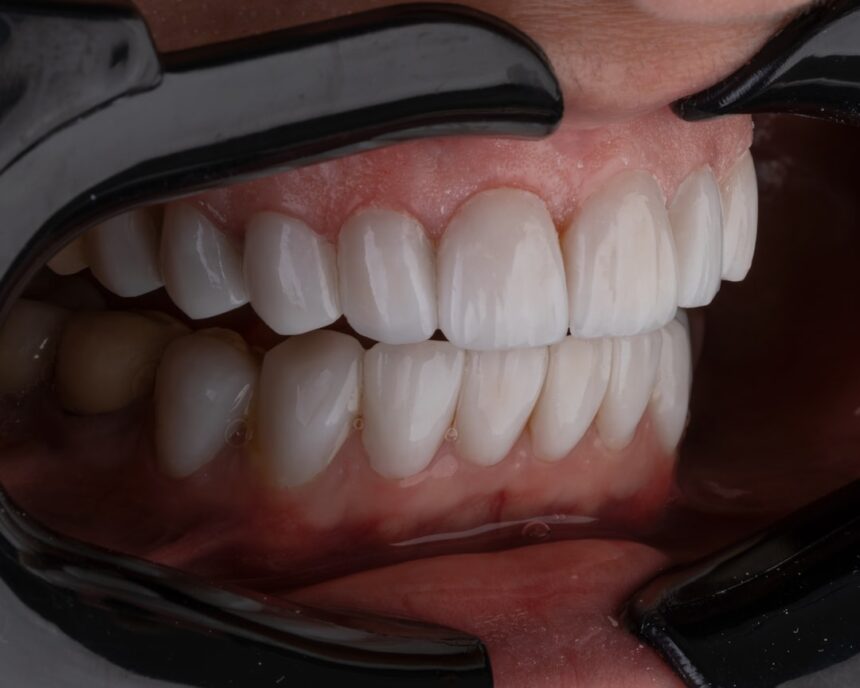
Dental anatomy diagram showing primary and permanent teeth development across the human lifespanIllustrative image · Photo by Kamal Hoseinianzade on Unsplash (Unsplash License)
Humans naturally develop only two sets of teeth—primary and permanent—due to genetic programming. While supernumerary teeth occasionally occur, they represent rare anomalies, not evidence of latent third-set capacity. — Photo by Kamal Hoseinianzade on Unsplash (Unsplash License)
SHARE
6 min read|1,126 words
✓ Reviewed by Prof. Giorgi Pkhakadze, MD, MPH, PhD · ORCID 0000-0001-7609-4515

The possibility of growing a third set of adult teeth has periodically captured public attention, but the biological reality remains constrained by fundamental developmental limitations. A BBC examination of this question reveals that while some rare cases of supernumerary teeth (extra teeth beyond the normal set) do occur in humans, the prospect of reliably regenerating an entire functional third dentition remains outside current biological possibilities.

Contents
    • Key takeaways
  • Why humans stop at two sets of teeth
  • Supernumerary teeth: rare variations, not a solution
      • Tooth Development: Two Generations by Design
  • Continuous tooth replacement in other species
  • Regenerative dentistry: current state and future directions
    • What this means
  • Frequently asked questions
    • Can supernumerary teeth grow into a full third set?
    • Do some humans naturally have genes for a third set of teeth?
    • When will scientists be able to grow replacement teeth?

Key takeaways

  • Humans naturally develop only two sets of teeth: primary (baby) teeth and permanent adult teeth, determined by developmental genetics
  • Supernumerary teeth (extra teeth) occur rarely in humans, but represent isolated developmental variations, not a pathway to full third dentition
  • Some animal species, including certain sharks and reptiles, continuously replace teeth throughout life—a capacity humans lack
  • Current dental research focuses on regenerative approaches, but no clinically proven method yet produces functional replacement teeth at scale

Why humans stop at two sets of teeth

The human dentition develops through precisely orchestrated genetic and molecular signals during embryonic development and childhood. Unlike sharks, which evolved continuous tooth replacement as an adaptive advantage, humans—like most mammals—possess only two generations of teeth encoded in our developmental blueprint. The permanent teeth emerge after primary teeth are shed, but no genetic programming calls for a third set to develop.

This two-set limitation reflects our evolutionary history. Primates and other mammals with similar lifespans evolved efficient masticatory systems adequate for their natural survival period. Humans’ extended lifespan, however, has created a modern challenge: our permanent teeth must function for 70+ years, and wear, disease, or loss creates significant practical problems that evolution did not anticipate.

Supernumerary teeth: rare variations, not a solution

Tooth Development: Two Generations by Design

Human dental development across the lifespan—primary teeth followed by permanent dentition, with no third generation encoded genetically

Submit Your Paper
GMJ_Submit_Banner
Primary (baby) teeth
20 teeth
Permanent adult teeth
32 teeth
Third set (natural)

0 teeth

Source: Human dental anatomy, developmental biology | Georgian Medical Journal News

🎙️ Related Podcast Episodes
🎧 #37 | GMJ Podcast | NAD⁺ Injections and “NAD Boosters” — Public Health Risks and Regulatory Implications · 20m
🎧 #31 | GMJ Podcast | Daily Multivitamins and Biological Ageing — COSMOS Trial · 21m

Some humans are born with supernumerary teeth—extra teeth beyond the normal complement of 32 permanent teeth. These occur in approximately 1–4% of the population in developed nations, according to orthodontic literature, but they represent isolated developmental anomalies rather than evidence of a latent capacity for third-set generation. Supernumerary teeth emerge unpredictably, often in abnormal positions, and frequently require extraction to prevent crowding or misalignment.

The presence of these rare extra teeth does not indicate that humans possess dormant tooth-generating capacity. Rather, they result from variations in the signaling pathways that normally limit tooth bud formation to two generations. Understanding the genetic mechanisms behind supernumerary teeth may inform regenerative research, but the teeth themselves offer no clinical pathway to reliable third-set growth.

Continuous tooth replacement in other species

Sharks, crocodilians, and some reptiles possess functional systems for lifelong tooth replacement, evolving specialized stem cell populations that continuously generate new teeth throughout their lives. These animals replaced worn or lost teeth without surgery or intervention—a biological solution refined over hundreds of millions of years of evolution. Humans never developed such machinery.

The research community studying regenerative dentistry has examined how other vertebrates maintain tooth-generating capacity in hopes of unlocking similar mechanisms in humans. However, the molecular and genetic requirements for continuous replacement appear deeply embedded in species-specific developmental pathways. Simply transplanting shark-like tooth regeneration into human tissue has proven far more complex than early optimistic rhetoric suggested.

Humans possess only two sets of teeth—primary and permanent—because our developmental genetics encode exactly two generations of tooth formation. No latent third set lies waiting to emerge.

— Human dental developmental biology consensus, supported by decades of embryological research

Regenerative dentistry: current state and future directions

Contemporary dental research pursues several promising but still-experimental avenues for tooth regeneration, including stem cell-based approaches, scaffold technologies, and gene therapy strategies. Scientists at major institutions are working to understand how to coax dormant epithelial and mesenchymal cells into building functional tooth structures outside the body and within the oral cavity.

However, no clinically established method yet produces whole, functional replacement teeth that integrate seamlessly into the jaw, achieve proper occlusion (bite alignment), and maintain longevity comparable to natural teeth. Recent clinical updates in regenerative dentistry show incremental progress—lab-grown tooth structures, bioprinted scaffolds, and enhanced biomimetic materials—but the leap from laboratory promise to routine clinical application remains several years distant.

The practical alternative for tooth loss remains dental implants, bridges, and dentures. While not biological replacements, modern implant dentistry has achieved high success rates (90–95% long-term survival, according to clinical implant research) and provides functional restoration that serves most patients well for decades.

What this means

For patients: Do not expect a natural third set of teeth to emerge. If teeth are lost or severely damaged, discuss evidence-based options—implants, prosthetics, or bridges—with a dentist. Monitor emerging regenerative therapies, but understand they remain experimental.
For clinicians: Counsel patients realistically about tooth replacement options. Recognize that supernumerary teeth are anomalies, not harbingers of regenerative capacity. Stay informed about advancing regenerative techniques, but continue recommending proven interventions.
For policymakers: Support continued investment in regenerative dentistry research while ensuring public dental health messaging does not overstate the timeline for clinical translation. Consider dental coverage policies that balance current standard-of-care treatments with emerging biotechnology potential.

Frequently asked questions

Can supernumerary teeth grow into a full third set?

No. Supernumerary teeth are random developmental variations affecting 1–4% of people. They are isolated anomalies, not the beginning of a third dentition. Most require removal to prevent crowding or misalignment.

Do some humans naturally have genes for a third set of teeth?

Human developmental genetics encode exactly two tooth generations. No known human genotype carries instructions for a functional third set. Ongoing research into tooth development may eventually inform regenerative approaches, but no dormant third-set capacity has been identified.

When will scientists be able to grow replacement teeth?

Regenerative dentistry shows promise in laboratory and early clinical settings, but no clinically proven whole-tooth regeneration technology is yet routine. Current best practices—implants and prosthetics—remain the standard. Advances may accelerate in the next 5–10 years, but timelines remain uncertain.

The question of a third set of teeth reflects a deep human desire to overcome biological limits. While modern medicine has extended lifespans and improved quality of life in countless ways, we remain bound by the developmental decisions evolution made for our species millions of years ago. Rather than await a biological third set, investing in preventive oral health, early intervention for decay or loss, and adoption of proven replacement technologies offers the most reliable path to lasting dental health across the human lifespan. As new studies in regenerative medicine progress, clinicians and patients should remain informed but realistic about timelines and clinical applicability.

Source: BBC: Can we grow a third set of teeth? Dr Oscar examines the truth behind the headlines

Was this article helpful?

Disclaimer. This article is health journalism intended for general information and education. It is not medical advice and is not a substitute for professional diagnosis or treatment. Always consult a qualified healthcare provider about your individual circumstances. Full disclaimer →

Related Coverage

Native Hawaiian Adults Face Mobility Decline Years Earlier Than PeersJul 10, 2026
Health & Migration: policy is moving faster than the dataJul 6, 2026
Plant-Based Diet Quality More Important Than Processing Level for Chronic Disease PreventionJul 2, 2026
French Doctor's Perspective on Treating Trauma While Living Through War Reveals Medical Community's Hidden StrugglesJul 2, 2026
PG
Written by
Prof. Giorgi Pkhakadze, MD, MPH, PhD
Editor-in-Chief, GMJ News
Full profile →  ·  ORCID 0000-0001-7609-4515
Medical disclaimer. This article is health journalism intended for general information. It is not medical advice and is not a substitute for consultation with a qualified healthcare professional. Always seek your physician's advice regarding any medical condition.
Medically reviewed by Prof. Giorgi Pkhakadze, MD, MPH, PhD. Spotted an error? Contact the editorial team.

Get the GMJ News digest
Evidence-based health journalism in your inbox. No spam; unsubscribe anytime.
TAGGED:dental healthgenetic constraintsoral biologyregenerative dentistrytooth development
Share This Article
Facebook LinkedIn Bluesky Copy Link Print
GMJ
ByGMJ Perspectives Desk
Follow:
GMJ Perspectives Desk is part of GMJ News, the newsroom of the Georgian Medical Journal (gmj.ge), published by the Public Health Institute of Georgia. Every article is editorially reviewed before publication.
Leave a Comment Leave a Comment

Leave a Reply Cancel reply

Your email address will not be published. Required fields are marked *

Submit Your Paper →

Georgia's peer-reviewed open-access medical journal. No APC until January 2027.
Submit Manuscript →
Life-threatening skin infection: what clinicians need to know about necrotising fasciitis

Necrotising fasciitis, a rapidly progressive soft tissue infection, kills approximately 25% of…

Ebola Recoveries Offer Clinical and Public Health Insights Amid DRC Outbreak

Documented recoveries from Ebola virus disease in the Democratic Republic of Congo…

Adaptive Deep Brain Stimulation Restores Walking in Parkinson’s Disease: Nature Medicine Study

A new study in Nature Medicine demonstrates that deep brain stimulation devices…

Submit Your Paper to GMJ

No APC until January 2027.
Submit Manuscript →

You Might Also Like

Medical professionals discussing community health and reconciliation approachesIllustrative image · "Access to healthcare after the floods" by DFID - UK Department for International Development is licensed under CC BY 2.0. To view a copy of this license, visit https://creativecommons.org/licenses/by/2.0/. (CC BY 2.0)
LettersPerspectives

Medical Journal Letters Highlight Reconciliation Challenges in Crisis-Affected Communities

By
GMJ Perspectives Desk
17/06/2026
Diagram showing nutrient absorption sites along the human gastrointestinal tract from stomach to large intestine
Explainers

How Your 7-Meter Gut Functions as a Molecular Assembly Line for Nutrient Absorption

By
GMJ Perspectives Desk
21/05/2026
Colorful array of whole plant foods including vegetables, fruits, nuts and grains representing healthful plant-based dietIllustrative image · Photo by Fuzzy Rescue on Pexels (Pexels License)
Clinical UpdatesExplainersNew StudiesPerspectivesPracticeResearch Digest

Plant-Based Diet Quality More Important Than Processing Level for Chronic Disease Prevention

By
GMJ Practice Desk
02/07/2026
Young child looking at skincare products with concerned expressionIllustrative image · Photo by Anna on Pexels (Pexels License)
ExplainersPerspectives

Cosmeticorexia: How Social Media Drives Children’s Obsessive Skincare Behaviour

By
GMJ Perspectives Desk
17/06/2026
Facebook Twitter Youtube Instagram
Company
  • Privacy Policy
  • Contact US
  • GMJ Journal
  • Submit Manuscript
  • Editorial Team
  • Register at GMJ
  • Terms of Use

Subscribe to GMJ News — Click here

Join Community
© 2026 Georgian Medical Journal (GMJ). Published by the Public Health Institute of Georgia (PHIG). All rights reserved.
Welcome Back!

Sign in to your account

Username or Email Address
Password

Lost your password?

Not a member? Sign Up