By using this site, you agree to the Privacy Policy and Terms of Use.
Accept
GMJ NewsGMJ NewsGMJ News
  • Latest News
    • GMJ Briefs
  • Podcast & Media
    • Podcast Episodes
    • GMJ Audio
    • GMJ Videos
  • Research Digest
    • New Studies
    • Georgian Research
    • Data & Numbers
  • Policy & Systems
    • Health Policy
    • Quality & Safety
    • Migration & Health
    • Global Health
  • Practice
    • Clinical Updates
    • Case Discussions
    • Pharmacy & Prescribing
    • Ingredients A-Z
  • Perspectives
    • Editorial
    • Explainers
    • Voices
    • Letters
  • GMJ Articles
    • Vol. 1 Issue 2 (2026)
    • Vol. 1 Issue 1 (2026)
    • Pre-Launch Articles (2025)
  • Read the Journal →
  • About GMJ News
Notification Show More
Font ResizerAa
GMJ NewsGMJ News
Font ResizerAa
  • Latest News
    • GMJ Briefs
  • Podcast & Media
    • Podcast Episodes
    • GMJ Audio
    • GMJ Videos
  • Research Digest
    • New Studies
    • Georgian Research
    • Data & Numbers
  • Policy & Systems
    • Health Policy
    • Quality & Safety
    • Migration & Health
    • Global Health
  • Practice
    • Clinical Updates
    • Case Discussions
    • Pharmacy & Prescribing
    • Ingredients A-Z
  • Perspectives
    • Editorial
    • Explainers
    • Voices
    • Letters
  • GMJ Articles
    • Vol. 1 Issue 2 (2026)
    • Vol. 1 Issue 1 (2026)
    • Pre-Launch Articles (2025)
  • Read the Journal →
  • About GMJ News
Follow US
GMJ News > GMJ Briefs > Clinical Studies Confirm Perimenopause Brain Fog Is Real Biology, Not Psychology

Clinical Studies Confirm Perimenopause Brain Fog Is Real Biology, Not Psychology

GMJ
Last updated: 26/06/2026 02:26
By
Prof. Giorgi Pkhakadze
Share
1 Min Read
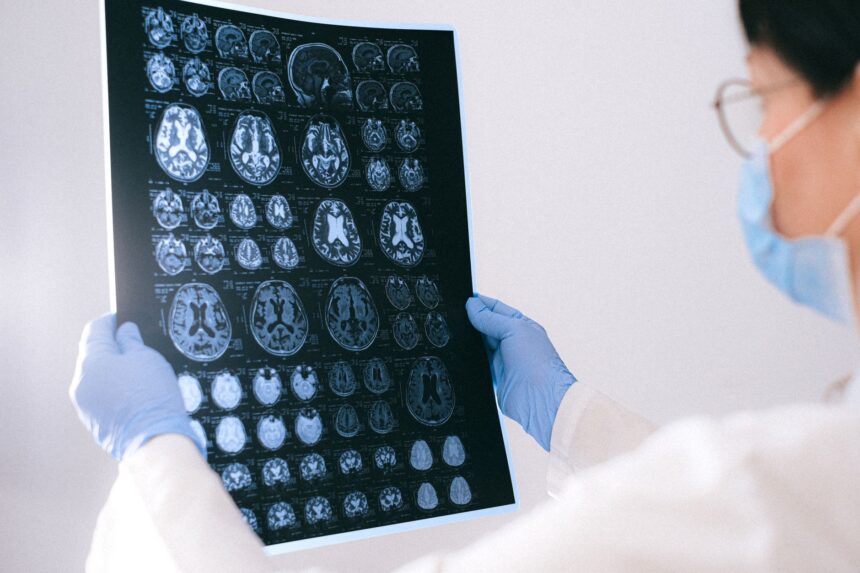
Brain scan images showing cognitive changes during perimenopause transition
New clinical research quantifies cognitive decline during perimenopause, showing measurable impacts on memory and executive function. Studies reveal 42% of perimenopausal women experience significant cognitive difficulties affecting daily functioning. — Photo by Anna Shvets on Pexels (Pexels License)
SHARE
1 min read|131 words

New clinical evidence validates what millions of women experience during perimenopause: measurable cognitive decline affecting memory, concentration, and executive function. Research published in peer-reviewed journals demonstrates that brain fog during the menopausal transition stems from measurable biological changes, not psychological factors as previously assumed. Standardized neuropsychological testing shows significant decreases in verbal memory, working memory, and processing speed compared to premenopausal baselines, with deficits peaking during late perimenopause when hormone fluctuations are most pronounced. Neuroimaging studies reveal reduced brain connectivity in regions critical for memory and executive function during periods of low estrogen. These findings have substantial implications for clinical practice, workplace accommodations, and treatment strategies. Both hormonal and non-hormonal interventions show promise in managing symptoms and preserving cognitive function during this transitional period. Read the full article on GMJ Newsroom.

Was this article helpful?

GMJ Brief · Announcement

📰 Read the full article: Clinical Evidence Links Perimenopause Brain Fog to Measurable Cognitive Decline →

Share This Article
Facebook LinkedIn Bluesky Copy Link Print
GMJ
ByProf. Giorgi Pkhakadze
Follow:
Prof. Giorgi Pkhakadze, MD, MPH, PhD, is Editor-in-Chief of the Georgian Medical Journal and Chair of the Public Health Institute of Georgia (PHIG). He is Professor and Head of the Department of Social and Behavioural Sciences at David Tvildiani Medical University, and Secretary/Treasurer of the UEMS Section of Public Health. ORCID: 0000-0001-7609-4515.

Submit Your Paper →

Georgia's peer-reviewed open-access medical journal. No APC until January 2027.
Submit Manuscript →
Sugar-free diets may worsen blood glucose control, new study finds

New research in mice suggests complete sugar elimination may worsen blood glucose…

Scientists Discover Hidden Mechanism in Brain Ion Channels That Could Transform Neurological Treatment

Scientists discover that brain glutamate receptors need only 2 of 4 subunits…

California Hospital Groups Launch Competing Ballot Initiatives on Healthcare Worker Wages

California's healthcare sector faces competing ballot initiatives from worker unions and hospital…

Submit Your Paper to GMJ

No APC until January 2027.
Submit Manuscript →

You Might Also Like

Medical illustration showing muscle metabolism activation for diabetes treatment

Direct Comparison: How New Diabetes Pill Differs from Ozempic’s Mechanism

By
Prof. Giorgi Pkhakadze
22/06/2026
PAHO logo with 2026 FIFA World Cup emblem representing public health preparedness guidelines

Three Nations Unite for Coordinated Measles Prevention at 2026 World Cup

By
Prof. Giorgi Pkhakadze
19/06/2026
Global HealthPolicy & Systems

US Well-Positioned for Ebola Response Despite New Outbreak, Says Former COVID Task Force Leader

By
Prof. Giorgi Pkhakadze
25/05/2026
Scientific illustration of brain inflammation pathways in Alzheimer's disease research

Precision Enzyme Inhibition Offers New Hope for Alzheimer’s Disease Management

By
Prof. Giorgi Pkhakadze
26/06/2026
Facebook Twitter Youtube Instagram
Company
  • Privacy Policy
  • Contact US
  • GMJ Journal
  • Submit Manuscript
  • Editorial Team
  • Register at GMJ
  • Terms of Use

Subscribe to GMJ News — Click here

Join Community
© 2026 Georgian Medical Journal (GMJ). Published by the Public Health Institute of Georgia (PHIG). All rights reserved.
Welcome Back!

Sign in to your account

Username or Email Address
Password

Lost your password?

Not a member? Sign Up