By using this site, you agree to the Privacy Policy and Terms of Use.
Accept
GMJ NewsGMJ NewsGMJ News
  • Latest News
    • GMJ Briefs
  • Podcast & Media
    • Podcast Episodes
    • GMJ Audio
    • GMJ Videos
  • Research Digest
    • New Studies
    • Georgian Research
    • Data & Numbers
  • Policy & Systems
    • Health Policy
    • Quality & Safety
    • Migration & Health
    • Global Health
  • Practice
    • Clinical Updates
    • Case Discussions
    • Pharmacy & Prescribing
    • Ingredients A-Z
  • Perspectives
    • Editorial
    • Explainers
    • Voices
    • Letters
  • GMJ Articles
    • Vol. 1 Issue 2 (2026)
    • Vol. 1 Issue 1 (2026)
    • Pre-Launch Articles (2025)
  • Read the Journal →
  • About GMJ News
Notification Show More
Font ResizerAa
GMJ NewsGMJ News
Font ResizerAa
  • Latest News
    • GMJ Briefs
  • Podcast & Media
    • Podcast Episodes
    • GMJ Audio
    • GMJ Videos
  • Research Digest
    • New Studies
    • Georgian Research
    • Data & Numbers
  • Policy & Systems
    • Health Policy
    • Quality & Safety
    • Migration & Health
    • Global Health
  • Practice
    • Clinical Updates
    • Case Discussions
    • Pharmacy & Prescribing
    • Ingredients A-Z
  • Perspectives
    • Editorial
    • Explainers
    • Voices
    • Letters
  • GMJ Articles
    • Vol. 1 Issue 2 (2026)
    • Vol. 1 Issue 1 (2026)
    • Pre-Launch Articles (2025)
  • Read the Journal →
  • About GMJ News
Follow US
GMJ News > Policy & Systems > Global Health > Therapeutic Food Saves 7 Million Children in 30 Years, Yet 45 Million Still Lack Access
Global HealthPolicy & Systems

Therapeutic Food Saves 7 Million Children in 30 Years, Yet 45 Million Still Lack Access

GMJ
Last updated: 06/07/2026 02:06
By
GMJ Policy Desk
Share
5 Min Read
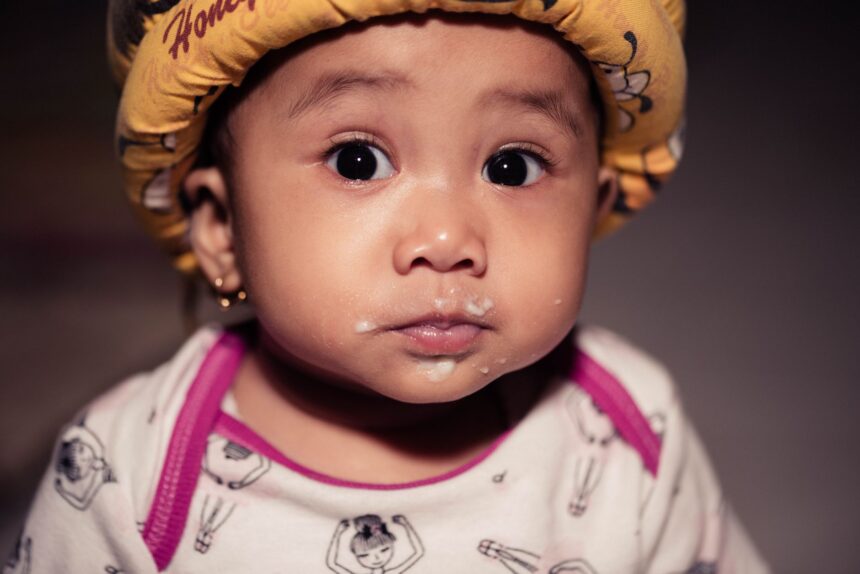
Infographic showing global malnutrition treatment statistics and RUTF access gapsIllustrative image · Photo by Tri Warno on Pexels (Pexels License)
UNICEF analysis reveals therapeutic food has saved 7 million children over 30 years, but 45 million still need treatment. Only 5 million currently receive this life-saving intervention, creating an 89% treatment gap. — Photo by Tri Warno on Pexels (Pexels License)
SHARE
3 min read|684 words

Three decades after its development, ready-to-use therapeutic food (RUTF) has transformed treatment for severe acute malnutrition, saving an estimated 7 million children’s lives. However, according to UNICEF’s latest analysis, 45 million children under five still require this life-saving intervention but lack access to treatment.

Contents
      • Global Severe Acute Malnutrition Treatment Gap
  • Three Decades of Innovation Transform Child Survival
  • Treatment Gap Persists Despite Proven Efficacy
  • Economic and Operational Barriers Limit Scale-Up
  • Innovation Pipeline Offers Hope for Expanded Access
    • Key takeaways
  • Frequently asked questions
    • What is ready-to-use therapeutic food (RUTF)?
    • How effective is RUTF treatment?
    • Why do so many children still lack access to RUTF?
7 million
children’s lives saved by therapeutic food over 30 years

Global Severe Acute Malnutrition Treatment Gap

Children requiring RUTF treatment vs. those receiving it, 2024

45m
children need
treatment
5m
currently receive
RUTF
40m
without access
to treatment

Source: UNICEF, 2024 | Georgian Medical Journal News

Three Decades of Innovation Transform Child Survival

Ready-to-use therapeutic food emerged in the 1990s as a revolutionary approach to treating severe acute malnutrition in children. The World Health Organization defines severe acute malnutrition as a condition affecting children whose weight-for-height is below -3 standard deviations of the median, or who have visible severe wasting.

Submit Your Paper
GMJ_Submit_Banner

RUTF consists of a nutrient-dense paste containing peanuts, milk powder, oil, sugar, and essential vitamins and minerals. Unlike previous hospital-based treatments, RUTF can be administered at home by caregivers, dramatically expanding access to life-saving care in resource-limited settings.

🎙️ Related Podcast Episodes
🎧 #25 | WHO Warns: Childhood Hearing Loss Must Be Addressed Early · 19m
🎧 #21 | WHO Issues New Guidance on Novel Snakebite Treatments · 14m
🎧 #15 | WHO: One in Two People Facing Cataract Blindness Still Need Access to Surgery · 21m
🎧 #11 | WHO Urges Schools Worldwide to Promote Healthy Eating for Children · 20m
🎧 #10 | WHO Child-Friendly Cities: Safe and Inclusive Public Spaces for Children · 18m

Treatment Gap Persists Despite Proven Efficacy

Despite three decades of success, significant barriers prevent millions of children from accessing RUTF treatment. UNICEF data indicate that only 5 million of the 45 million children requiring treatment currently receive it, representing an 89% treatment gap.

The highest burden of severe acute malnutrition remains concentrated in sub-Saharan Africa and South Asia, where conflict, climate change, and economic instability compound access challenges. Supply chain disruptions and limited healthcare infrastructure further restrict RUTF distribution to remote communities.

For more insights on global health initiatives addressing malnutrition, visit our Global Health section.

Economic and Operational Barriers Limit Scale-Up

Cost remains a significant barrier to RUTF access, with treatment courses ranging from $40 to $200 per child depending on the duration and severity of malnutrition. Production capacity constraints also limit availability, as most RUTF manufacturing occurs in high-income countries rather than regions with the greatest need.

Local production initiatives have emerged in several African countries, but regulatory frameworks and quality assurance systems require strengthening to ensure product safety and efficacy. The FDA’s regulatory guidance provides frameworks that could be adapted for international RUTF production standards.

Innovation Pipeline Offers Hope for Expanded Access

Recent developments in RUTF formulation and delivery mechanisms show promise for addressing current gaps. Alternative protein sources and locally-sourced ingredients are being tested to reduce costs and improve cultural acceptability.

Digital health platforms are also being deployed to improve case detection and treatment monitoring in remote areas. These innovations, combined with increased funding commitments from donor governments, could significantly expand RUTF access over the next decade.

For updates on nutrition research and policy developments, explore our Health Policy coverage.

RUTF has achieved cure rates of 85-90% when properly administered, making it one of the most effective interventions for preventing child mortality in humanitarian settings.

— UNICEF Nutrition Programme Analysis, 2024

Key takeaways

  • 7 million children’s lives have been saved through RUTF treatment over 30 years
  • 89% treatment gap persists, with 40 million children lacking access to needed care
  • Local production and digital health innovations could dramatically expand access

Frequently asked questions

What is ready-to-use therapeutic food (RUTF)?

RUTF is a nutrient-dense paste containing peanuts, milk powder, oil, sugar, and essential vitamins designed to treat severe acute malnutrition in children. It requires no preparation and can be administered at home by caregivers.

How effective is RUTF treatment?

RUTF achieves cure rates of 85-90% when properly administered, according to UNICEF data. Treatment typically lasts 6-8 weeks depending on the child’s nutritional status and response.

Why do so many children still lack access to RUTF?

Major barriers include high costs ($40-200 per treatment course), limited production capacity, supply chain disruptions, and inadequate healthcare infrastructure in affected regions. Geographic remoteness and conflict further compound access challenges.

Addressing the global RUTF treatment gap will require coordinated efforts across multiple sectors, including increased funding for procurement and distribution, expanded local production capacity, and strengthened healthcare systems in affected regions. The success of the past three decades demonstrates that with adequate resources and political commitment, closing this gap is achievable within the next decade.

Source: FAST FACTS: 30 years of life-saving therapeutic food for children, yet millions more still need it – UNICEF

Was this article helpful?

Disclaimer. This article is health journalism intended for general information and education. It is not medical advice and is not a substitute for professional diagnosis or treatment. Always consult a qualified healthcare provider about your individual circumstances. Full disclaimer →

Related Coverage

Climate Change May Turn North America and Europe into Chikungunya Hotspots by 2070Jul 8, 2026
Educational Intervention Shows Promise in Tackling Female Genital Mutilation in Tanzania's High-Prevalence RegionJul 7, 2026
New Framework Addresses Global Displacement Crisis Affecting 120 Million PeopleJul 7, 2026
IOM calls for expanded regular migration pathways to reduce irregular flows and enhance developmentJul 7, 2026
PG
Written by
Prof. Giorgi Pkhakadze, MD, MPH, PhD
Editor-in-Chief, GMJ News
Full profile →  ·  ORCID 0000-0001-7609-4515
Medical disclaimer. This article is health journalism intended for general information. It is not medical advice and is not a substitute for consultation with a qualified healthcare professional. Always seek your physician's advice regarding any medical condition.
Medically reviewed by Prof. Giorgi Pkhakadze, MD, MPH, PhD. Spotted an error? Contact the editorial team.

Get the GMJ News digest
Evidence-based health journalism in your inbox. No spam; unsubscribe anytime.
TAGGED:child healthglobal-healthmalnutritionRUTFUNICEF
Share This Article
Facebook LinkedIn Bluesky Copy Link Print
GMJ
ByGMJ Policy Desk
Follow:
GMJ Policy Desk is part of GMJ News, the newsroom of the Georgian Medical Journal (gmj.ge), published by the Public Health Institute of Georgia. Every article is editorially reviewed before publication.
Leave a Comment Leave a Comment

Leave a Reply Cancel reply

Your email address will not be published. Required fields are marked *

Submit Your Paper →

Georgia's peer-reviewed open-access medical journal. No APC until January 2027.
Submit Manuscript →
Japanese scientists develop supercharged vitamin K compounds that may regenerate brain neurons

Japanese researchers have developed enhanced vitamin K compounds that show three times…

Climate Change May Turn North America and Europe into Chikungunya Hotspots by 2070

Climate modeling shows North America and Europe could become chikungunya transmission zones…

Bacteriophage Therapy Saves Patient from Antibiotic-Resistant Skull Infection

French physicians successfully used bacteriophage therapy to cure a life-threatening antibiotic-resistant skull…

Submit Your Paper to GMJ

No APC until January 2027.
Submit Manuscript →

You Might Also Like

Medical professional discussing opioid treatment medication policyIllustrative image · Photo by MART PRODUCTION on Pexels (Pexels License)
Health PolicyPolicy & Systems

Republican Opposition to Opioid Treatment Medications Sparks Policy Debate

By
GMJ Policy Desk
25/06/2026
Japanese medical students and young doctors in hospital setting representing workforce crisisIllustrative image · Photo by RDNE Stock project on Pexels (Pexels License)
Health PolicyPolicy & Systems

Young doctors flee core specialties in Japan’s ‘silent strike’ amid financial pressures

By
GMJ Policy Desk
06/07/2026
Map showing malaria prevention coverage across sub-Saharan African countries
New StudiesResearch Digest

Child Protection from Malaria Varies Dramatically Across Sub-Saharan Africa

By
GMJ Research Desk
24/05/2026
Botswana health workers celebrating WHO Gold Tier HIV elimination achievement
Global HealthPolicy & Systems

Botswana Becomes First Country to Achieve WHO Gold Tier Status for Eliminating Mother-to-Child HIV Transmission

By
GMJ Policy Desk
10/06/2026
Facebook Twitter Youtube Instagram
Company
  • Privacy Policy
  • Contact US
  • GMJ Journal
  • Submit Manuscript
  • Editorial Team
  • Register at GMJ
  • Terms of Use

Subscribe to GMJ News — Click here

Join Community
© 2026 Georgian Medical Journal (GMJ). Published by the Public Health Institute of Georgia (PHIG). All rights reserved.
Welcome Back!

Sign in to your account

Username or Email Address
Password

Lost your password?

Not a member? Sign Up