By using this site, you agree to the Privacy Policy and Terms of Use.
Accept
GMJ NewsGMJ NewsGMJ News
  • Latest News
    • GMJ Briefs
  • Podcast & Media
    • Podcast Episodes
    • GMJ Audio
    • GMJ Videos
  • Research Digest
    • New Studies
    • Georgian Research
    • Data & Numbers
  • Policy & Systems
    • Health Policy
    • Quality & Safety
    • Migration & Health
    • Global Health
  • Practice
    • Clinical Updates
    • Case Discussions
    • Pharmacy & Prescribing
    • Ingredients A-Z
  • Perspectives
    • Editorial
    • Explainers
    • Voices
    • Letters
  • GMJ Articles
    • Vol. 1 Issue 2 (2026)
    • Vol. 1 Issue 1 (2026)
    • Pre-Launch Articles (2025)
  • Read the Journal →
  • About GMJ News
Notification Show More
Font ResizerAa
GMJ NewsGMJ News
Font ResizerAa
  • Latest News
    • GMJ Briefs
  • Podcast & Media
    • Podcast Episodes
    • GMJ Audio
    • GMJ Videos
  • Research Digest
    • New Studies
    • Georgian Research
    • Data & Numbers
  • Policy & Systems
    • Health Policy
    • Quality & Safety
    • Migration & Health
    • Global Health
  • Practice
    • Clinical Updates
    • Case Discussions
    • Pharmacy & Prescribing
    • Ingredients A-Z
  • Perspectives
    • Editorial
    • Explainers
    • Voices
    • Letters
  • GMJ Articles
    • Vol. 1 Issue 2 (2026)
    • Vol. 1 Issue 1 (2026)
    • Pre-Launch Articles (2025)
  • Read the Journal →
  • About GMJ News
Follow US
GMJ News > Policy & Systems > Global Health > Educational Intervention Shows Promise in Tackling Female Genital Mutilation in Tanzania’s High-Prevalence Region
Global HealthPolicy & Systems

Educational Intervention Shows Promise in Tackling Female Genital Mutilation in Tanzania’s High-Prevalence Region

GMJ
Last updated: 06/07/2026 02:06
By
GMJ Policy Desk
Share
6 Min Read
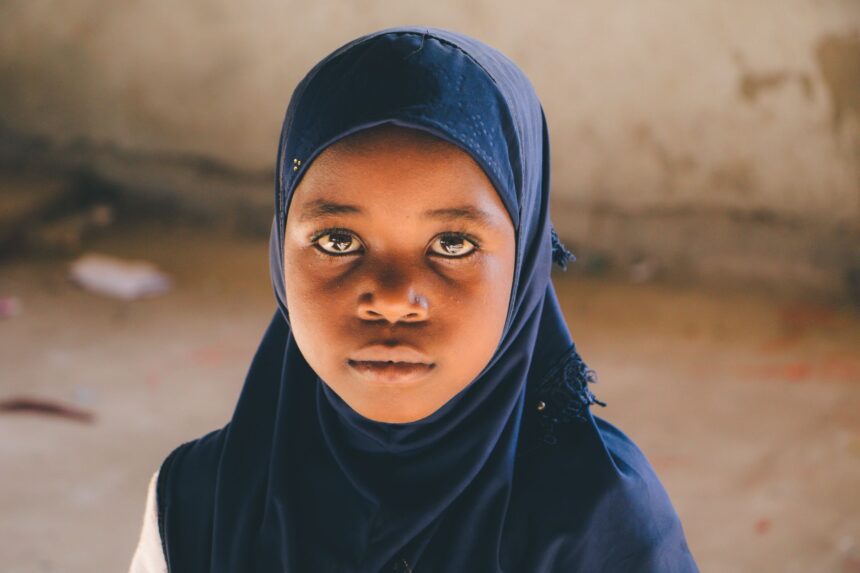
Educational materials and community health workers in Tanzania conducting FGM awareness interventionIllustrative image · Photo by Binti Malu on Pexels (Pexels License)
A community education program in Tanzania's Dodoma Region increased FGM awareness scores by 15 percentage points among young adults. Nearly 96% of participants believed FGM is harmful after the intervention, though under-reporting suggests the practice continues clandestinely. — Photo by Binti Malu on Pexels (Pexels License)
SHARE
4 min read|718 words

A community-based educational intervention targeting young adults in Tanzania’s Dodoma Region—the country’s second-highest for female genital mutilation prevalence—demonstrated significant improvements in awareness and attitudes toward abandoning the practice. The study, published in PLOS Global Public Health, focused on an often-overlooked age group critical for intergenerational change.

Contents
      • Awareness Outcomes After FGM Educational Intervention
  • Quasi-experimental study targets critical age group
  • Significant awareness gains despite persistent challenges
  • Qualitative findings reveal ‘hidden system’ of continued practice
    • Key takeaways
  • Frequently asked questions
    • What is female genital mutilation and why is it practiced?
    • How effective are educational interventions in reducing FGM?
    • Why focus on young adults aged 15-19 for FGM prevention?
15.04%
increase in awareness scores among young adults after educational intervention

Awareness Outcomes After FGM Educational Intervention

Percentage of young adults by key awareness indicators, Dodoma Region, Tanzania

Know FGM violates human rights
97.6%
Believe FGM is harmful
96.5%
Want FGM abandonment
95.8%
Report FGM continuation
50.9%

Source: Kimario et al., PLOS Global Public Health, 2025 | Georgian Medical Journal News

Quasi-experimental study targets critical age group

Researchers led by Dr. Leah Barthalome Kimario from the Kilimanjaro Christian Medical University College conducted a mixed-methods quasi-experimental study in Chamwino District, Dodoma Region. The intervention focused on young adults aged 15-19, a demographic researchers identified as crucial for fostering intergenerational change in global health practices.

Submit Your Paper
GMJ_Submit_Banner

The primary study component involved 452 young adults from schools and hospitals who completed both baseline and follow-up surveys. Additional components included a clinical audit of 3,770 delivering mothers and in-depth interviews with ten young adult mothers who had undergone FGM, according to the PLOS Global Public Health publication.

🎙️ Related Podcast Episodes
🎧 #33 | GMJ Podcast | Public Health Policy as Education in NCD Prevention — Commentary by Owen Thomas · 21m
🎧 #25 | WHO Warns: Childhood Hearing Loss Must Be Addressed Early · 19m
🎧 #17 | WHO: Global Population Requiring Trachoma Interventions Falls Below 100 Million · 16m
🎧 #15 | WHO: One in Two People Facing Cataract Blindness Still Need Access to Surgery · 21m

Significant awareness gains despite persistent challenges

The mean awareness score increased by 15.04 percentage points, from 44.08% at baseline to 59.12% at endline (p

However, the research revealed concerning disparities between self-reported and observed FGM prevalence. While 7.3% of women self-reported positive FGM status at baseline, clinical observations identified FGM in 16.6% of delivering mothers over nine months. This finding suggests significant under-reporting, potentially due to the practice’s illegal status in Tanzania since 1998, as noted by migration and health researchers.

Qualitative findings reveal ‘hidden system’ of continued practice

In-depth interviews with young mothers who had undergone FGM revealed three key themes that researchers termed “The hidden system,” “Blood and lies,” and “Intergenerational revolt.” These findings, published in the study’s qualitative analysis, highlighted the clandestine nature of continued FGM practice despite legal prohibitions.

The “hidden system” theme revealed how FGM continues in secret, often involving deception of younger generations about the true nature and consequences of the practice. “Blood and lies” captured the physical and psychological trauma associated with FGM, while “Intergenerational revolt” described young women’s growing resistance to perpetuating the practice, according to the research team’s thematic analysis.

The theory-informed, community-engaged intervention significantly improved awareness and attitudes among more than 1,700 community members, with 95.8% expressing desire for FGM abandonment by the study’s conclusion.

— Dr. Leah Barthalome Kimario, Kilimanjaro Christian Medical University College (PLOS Global Public Health, 2025)

Key takeaways

  • Educational interventions can significantly increase FGM awareness among young adults, with 15.04 percentage point improvement demonstrated
  • Under-reporting of FGM prevalence remains substantial, with observed rates (16.6%) more than double self-reported rates (7.3%)
  • Nearly all participants (97.6%) recognized FGM as a human rights violation after the intervention, indicating strong potential for attitude change

Frequently asked questions

What is female genital mutilation and why is it practiced?

Female genital mutilation involves procedures that intentionally alter or cause injury to female genital organs for non-medical reasons. According to the World Health Organization, it is practiced for cultural, religious, and social reasons within families and communities, despite having no health benefits and often causing serious health complications.

How effective are educational interventions in reducing FGM?

This Tanzania study demonstrated significant awareness improvements, with mean scores increasing 15.04 percentage points after intervention. However, the research also revealed persistent under-reporting and continued clandestine practice, suggesting education alone may require complementary approaches for maximum effectiveness.

Why focus on young adults aged 15-19 for FGM prevention?

Researchers identified this age group as critical for intergenerational change because they are approaching reproductive age and decision-making roles within families. The study found 95.8% of participants expressed desire for FGM abandonment after the intervention, suggesting strong potential for breaking cycles of practice.

The study’s findings suggest that while educational interventions can significantly improve awareness and attitudes toward FGM abandonment, addressing the practice’s hidden and clandestine nature requires sustained, multi-faceted approaches. The researchers’ focus on young adults represents a promising strategy for achieving intergenerational change, particularly when combined with broader community engagement and policy enforcement efforts.

Source: Targeting a future generation free from female genital mutilation: A mixed-methods quasi-experimental study of an awareness intervention in central Tanzania

Was this article helpful?

Disclaimer. This article is health journalism intended for general information and education. It is not medical advice and is not a substitute for professional diagnosis or treatment. Always consult a qualified healthcare provider about your individual circumstances. Full disclaimer →

Related Coverage
New Framework Addresses Global Displacement Crisis Affecting 120 Million PeopleJul 7, 2026
IOM calls for expanded regular migration pathways to reduce irregular flows and enhance developmentJul 7, 2026
IOM Launches Global Calendar of Health and Migration Events for 2026Jul 7, 2026
WOAH Calls for Standardised Trade Rules as Countries Deploy HPAI Vaccination StrategiesJul 7, 2026
PG
Written by
Prof. Giorgi Pkhakadze, MD, MPH, PhD
Editor-in-Chief, GMJ News
Full profile →  ·  ORCID 0000-0001-7609-4515
Medical disclaimer. This article is health journalism intended for general information. It is not medical advice and is not a substitute for consultation with a qualified healthcare professional. Always seek your physician's advice regarding any medical condition.
Medically reviewed by Prof. Giorgi Pkhakadze, MD, MPH, PhD. Spotted an error? Contact the editorial team.

Get the GMJ News digest
Evidence-based health journalism in your inbox. No spam; unsubscribe anytime.
TAGGED:community healthfemale genital mutilationhealth educationhuman rightsTanzania
Share This Article
Facebook LinkedIn Bluesky Copy Link Print
GMJ
ByGMJ Policy Desk
Follow:
GMJ Policy Desk is part of GMJ News, the newsroom of the Georgian Medical Journal (gmj.ge), published by the Public Health Institute of Georgia. Every article is editorially reviewed before publication.
Leave a Comment Leave a Comment

Leave a Reply Cancel reply

Your email address will not be published. Required fields are marked *

Submit Your Paper →

Georgia's peer-reviewed open-access medical journal. No APC until January 2027.
Submit Manuscript →
Spain Reports 30% Rise in Imported Toxocariasis Cases Among International Travelers

Barcelona International Health Unit diagnosed 127 imported toxocariasis cases over ten years,…

Organizational Support Protects Community Counselors from Trauma Stress in Kenya Study

Community counselors in Kenya showed lower trauma stress with strong organizational support.…

Self-initiated CT screening linked to early lung cancer detection in Taiwan

Taiwan study reveals 68% increase in early-stage lung cancer diagnoses among never-smoking…

Submit Your Paper to GMJ

No APC until January 2027.
Submit Manuscript →

You Might Also Like

Medical professionals reviewing air quality data and wood stove health impact researchIllustrative image · Photo by Fabricio Vega on Pexels (Pexels License)
Health PolicyPolicy & Systems

Edinburgh Physicians Challenge Wood Burning Industry’s Health Claims After Lobbying Investigation

By
GMJ Policy Desk
22/06/2026
Pediatrician examining child with digital device showing AI interfaceIllustrative image · Photo by Pavel Danilyuk on Pexels (Pexels License)
Health PolicyPolicy & Systems

Pediatrician calls for clinical trials to evaluate AI tools for children’s development

By
GMJ Policy Desk
02/07/2026
Hospital corridor during healthcare strike with reduced staffingIllustrative image · 4 of the earliest Junior Doctors outside Norfolk and Norwich University Hospital NNUH A3 (26649205806).jpg by Roger Blackwell from Norwich, UK / CC BY 2.0 via Wikimedia Commons (CC BY 2.0)
Health PolicyPolicy & Systems

UK Hospital Strike Forces Widespread Cancellations as Pay Dispute Escalates

By
GMJ Policy Desk
28/06/2026
Microscopic image of Echinococcus multilocularis tapeworm parasiteIllustrative image · Photo by fr0ggy5 on Unsplash (Unsplash License)
Clinical UpdatesGlobal HealthNew StudiesPolicy & SystemsPracticeResearch Digest

Fatal Tapeworm Disease Spreads to Pacific Northwest Wild Animals for First Time

By
GMJ Practice Desk
07/07/2026
Facebook Twitter Youtube Instagram
Company
  • Privacy Policy
  • Contact US
  • GMJ Journal
  • Submit Manuscript
  • Editorial Team
  • Register at GMJ
  • Terms of Use

Subscribe to GMJ News — Click here

Join Community
© 2026 Georgian Medical Journal (GMJ). Published by the Public Health Institute of Georgia (PHIG). All rights reserved.
Welcome Back!

Sign in to your account

Username or Email Address
Password

Lost your password?

Not a member? Sign Up