


Home › Topics › Primary Health Care
Primary Health Care
GMJ News knowledge hub · last reviewed September 2026 · Georgian Medical Journal
SummaryStatisticsGlossaryGMJ newsFAQDocumentsOrganizationsResearch
Primary health care (PHC) is the foundation of universal health coverage and the most equitable, cost-effective approach to achieving health for all: the 1978 Alma-Ata Declaration first proclaimed 'Health for All by 2000' through PHC, and the 2018 Astana Declaration renewed this commitment (WHO). 90% of essential health services can be delivered through strong primary health care — reducing hospital admissions, controlling chronic diseases and responding to health emergencies. Community health workers, family medicine, preventive care and health promotion are its cornerstones.
Key messages
The backbone of UHC
Primary health care (PHC) is the most equitable and cost-effective way to achieve universal health coverage. 90% of essential health services — prevention, promotion, treatment, rehabilitation, palliative care — can and should be delivered through strong PHC (WHO).
Alma-Ata and Astana
The 1978 Alma-Ata Declaration proclaimed Health for All through PHC; the 2018 Astana Declaration renewed this commitment, calling for countries to strengthen PHC as the foundation of UHC and to engage communities.
Community health workers
Community health workers (CHWs) — trained, trusted members of the communities they serve — extend PHC to remote and underserved populations. They are the most cost-effective frontline health workers for many primary care functions.
Benefits of strong PHC
Countries with strong PHC systems have: better health outcomes; lower hospitalisation rates; greater equity; more efficient health spending; higher patient trust; and stronger resilience during health emergencies. PHC countries outperformed in COVID-19 response.
Multisectoral — beyond the clinic
PHC is more than medical care: it includes health education, nutrition, family planning, immunisation, basic sanitation, prevention and treatment of common diseases. WHO defines it as an approach spanning health, social, economic and environmental determinants.
Primary care must be high quality
The quality of primary care — not just coverage — determines health outcomes. WHO's integrated primary care approach combines person-centred care with a network of services, information systems and community engagement.
Key statistics
UHC service coverage index by region 2015-2023 — WHO/World Bank
Source: WHO/World Bank UHC Service Coverage Index. Progress has stalled across all regions since 2019.
Glossary of key terms
Latest GMJ coverage

Community Walking Groups Show Mental Health Benefits for Bereaved Adults
08/07/2026
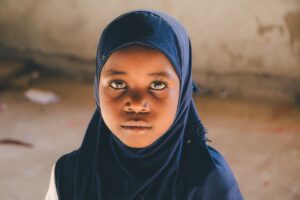
Educational Intervention Shows Promise in Tackling Female Genital Mutilation in Tanzania’s High-Prevalence Region
07/07/2026

Healthcare Professionals Break Barriers Around Women’s Health Taboos in Open Discussion Event
02/07/2026

Arts Engagement Shows Promise as ‘Social Prescribing’ for Health and Medical Empathy
30/06/2026
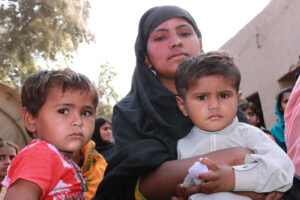
Medical Journal Letters Highlight Reconciliation Challenges in Crisis-Affected Communities
17/06/2026

Amish Health Practices Challenge Modern Public Health Assumptions, Expert Analysis Shows
07/06/2026
Frequently asked questions 12 Q&A — structured for Google featured snippets and AI discovery
Knowledge hub: guidelines, conventions and reports
Organizations working in migration and health
Related health topics
Universal health coverageMental healthChild healthMaternal healthAgeingPatient safety
About this hub. Produced by the GMJ News Editorial Team as a public-good service. Every statistic is linked to its primary source. Documents are preserved in the GMJ Repository with full attribution. Georgian Medical Journal · Contact the editorial team