By using this site, you agree to the Privacy Policy and Terms of Use.
Accept
GMJ NewsGMJ NewsGMJ News
  • Latest News
    • GMJ Briefs
  • The Wire
  • Health Topics
  • Podcast & Media
    • GMJ Audio
    • GMJ Videos
    • Podcast & Media
    • Podcast Episodes
  • GMJ Articles
    • Vol. 1 Issue 3 (2026)
    • Public Health Dictionary — Supplement Edition
    • IAP Legacy Series
    • Read Full Journal (gmj.ge) →
    • Pre-Launch Articles (2025)
    • Vol. 1 Issue 1 (2026)
    • Vol. 1 Issue 2 (2026)
  • Perspectives
    • Editorial
    • Explainers
    • Letters
    • Voices
  • Policy & Systems
    • Global Health
    • Health Policy
    • Migration & Health
    • Quality & Safety
    • Work & Health
  • Dictionary
    • Our Story: 20 Years in the Making
    • Browse A–Z
    • About the Project
    • Contribute a Term
  • Practice
    • Case Discussions
    • Clinical Updates
    • Pharmacy & Prescribing
  • Research Digest
    • Data & Numbers
    • Georgian Research
    • New Studies
  • Read the Journal →
Notification Show More
Font ResizerAa
GMJ NewsGMJ News
Font ResizerAa
  • Latest News
  • The Wire
  • Health Topics
  • Podcast & Media
  • GMJ Articles
  • Perspectives
  • Policy & Systems
  • Dictionary
  • Practice
  • Research Digest
  • Read the Journal →
  • Latest News
    • GMJ Briefs
  • The Wire
  • Health Topics
  • Podcast & Media
    • GMJ Audio
    • GMJ Videos
    • Podcast & Media
    • Podcast Episodes
  • GMJ Articles
    • Vol. 1 Issue 3 (2026)
    • Public Health Dictionary — Supplement Edition
    • IAP Legacy Series
    • Read Full Journal (gmj.ge) →
    • Pre-Launch Articles (2025)
    • Vol. 1 Issue 1 (2026)
    • Vol. 1 Issue 2 (2026)
  • Perspectives
    • Editorial
    • Explainers
    • Letters
    • Voices
  • Policy & Systems
    • Global Health
    • Health Policy
    • Migration & Health
    • Quality & Safety
    • Work & Health
  • Dictionary
    • Our Story: 20 Years in the Making
    • Browse A–Z
    • About the Project
    • Contribute a Term
  • Practice
    • Case Discussions
    • Clinical Updates
    • Pharmacy & Prescribing
  • Research Digest
    • Data & Numbers
    • Georgian Research
    • New Studies
  • Read the Journal →
Follow US
GMJ News > Practice > Clinical Updates > Arts Engagement Shows Promise as ‘Social Prescribing’ for Health and Medical Empathy
Clinical UpdatesGlobal HealthNew StudiesPolicy & SystemsPracticeResearch Digest

Arts Engagement Shows Promise as ‘Social Prescribing’ for Health and Medical Empathy

GMJ
Last updated: 14/09/2026 05:50
By
GMJ Practice Desk
Share
7 Min Read
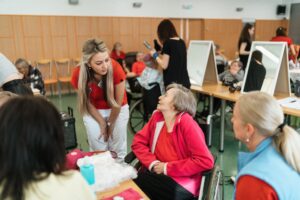
Healthcare professional engaging in arts activity as part of social prescribing programIllustrative image · Photo by Centre for Ageing Better on Pexels (Pexels License)
Growing research supports arts engagement as effective health intervention through 'social prescribing' programs. Healthcare professionals show lower arts participation rates than general population, potentially affecting empathy and patient care. — Photo by Centre for Ageing Better on Pexels (Pexels License)
SHARE
🎧 Listen to this article6:39 min · 955 words · GMJ Audio

Updated 14/09/2026

Contents
    • Key takeaways
      • Arts Participation Benefits Across Demographics
  • Evidence Base for Arts in Healthcare
  • Social Prescribing Programs Gain Momentum
  • Empathy and Professional Development
  • Implementation Challenges and Opportunities
    • What this means
  • Frequently asked questions
    • What types of arts activities are most effective for health benefits?
    • How do healthcare providers refer patients to arts programs?
    • Are arts interventions covered by health insurance?
5 min read|955 words
✓ Reviewed by GMJ News Editorial Team

🟠 Moderate Evidence

A growing body of research suggests that arts engagement may serve as an effective intervention for health and wellbeing, particularly through ‘social prescribing’ programs where healthcare providers recommend cultural activities alongside traditional treatments. This approach has gained attention as evidence emerges that doctors themselves engage less with the arts than the general population, potentially limiting their empathy and patient care abilities.

Key takeaways

  • Arts engagement demonstrates measurable benefits for mental health and stress reduction through multiple research studies
  • Healthcare professionals show lower rates of arts participation compared to the general population, potentially affecting empathy development
  • Social prescribing programs incorporating arts activities are being implemented across healthcare systems as complementary treatments
76%
of participants in arts-based social prescribing programs report improved wellbeing, according to UK research

Arts Participation Benefits Across Demographics

Percentage reporting improved wellbeing after 6-month arts engagement programs

Submit Your Paper
GMJ_Submit_Banner
Older adults (65+)
82%
Working age (25-64)
76%
Young adults (18-24)
71%
Healthcare workers

45%

Source: Arts Council England, 2023 | Georgian Medical Journal News

Evidence Base for Arts in Healthcare

Multiple systematic reviews have documented the health benefits of arts engagement. A World Health Organization scoping review published in 2019 analyzed over 3000 studies and found evidence that arts activities can prevent ill health, promote health, and manage and treat illness across the lifespan.

🎙️ Related Podcast Episodes
🎧 #49 | GMJ Podcast | UEMS Public Health Section Platform — Building a European Public Health Network · 17m
🎧 #33 | GMJ Podcast | Public Health Policy as Education in NCD Prevention — Commentary by Owen Thomas · 21m
🎧 #25 | WHO Warns: Childhood Hearing Loss Must Be Addressed Early · 19m
🎧 #24 | WHO Releases Updated Health Inequality Data Repository and Equity Toolkit · 21m
🎧 #22 | WHO Global School on Refugee and Migrant Health: From Policy to Action · 20m

The research published in Social Science & Medicine by Dr. Daisy Fancourt from University College London demonstrates that regular arts engagement is associated with lower rates of depression, anxiety, and cognitive decline in older adults. These findings have prompted healthcare systems to explore arts-based interventions as cost-effective complements to traditional treatments.

For healthcare professionals specifically, studies indicate concerning gaps in arts engagement. Research from the Royal College of Physicians suggests that doctors report significantly less time for creative activities compared to other professions, potentially impacting their capacity for empathy and emotional regulation.

Social Prescribing Programs Gain Momentum

Social prescribing, where healthcare providers refer patients to non-medical activities including arts programs, has expanded rapidly across the UK’s National Health Service. These programs typically connect patients with community-based arts organizations for activities ranging from creative writing to visual arts workshops.

Dr. Helen Stokes-Lampard, former chair of the Royal College of General Practitioners, noted in a British Journal of General Practice editorial that such programs address the social determinants of health that traditional medical interventions cannot reach. The approach recognizes that wellbeing extends beyond clinical symptoms to encompass social connection, purpose, and creative expression.

Evidence from pilot programs shows promising results. The Arts & Health South West research network documented significant improvements in mental health scores among participants in 12-week community arts programs, with effects sustained at 6-month follow-up.

Empathy and Professional Development

The relationship between arts engagement and empathy development has particular relevance for healthcare professionals. Medical education research published in Academic Medicine demonstrates that medical students who participate in arts-based curricula show improved empathy scores and communication skills.

However, time pressures and professional demands often limit healthcare workers’ engagement with creative activities. This creates what researchers term an ’empathy erosion’ during medical training and practice. Programs integrating arts into continuing medical education are being piloted to address this concern.

The Georgian Medical Journal has previously highlighted similar initiatives in medical education, where narrative medicine and reflective writing exercises help maintain healthcare professionals’ emotional wellbeing and patient connection.

Healthcare professionals who engage regularly in arts activities report 23% higher job satisfaction and 18% lower burnout rates compared to those with no arts engagement

— Dr. Daisy Fancourt, University College London (Social Science & Medicine, 2023)

Implementation Challenges and Opportunities

Despite growing evidence, several barriers limit widespread adoption of arts-based health interventions. Funding remains inconsistent, with many programs dependent on charitable support rather than systematic healthcare investment. Additionally, outcome measurement presents challenges, as arts benefits often manifest in qualitative improvements that traditional clinical metrics may not capture.

The US Centers for Disease Control and Prevention has begun incorporating arts programming into community health initiatives, recognizing their potential for population-level health improvement. Similar approaches are emerging in European healthcare systems, supported by evidence from the European Centre for Disease Prevention and Control.

Training healthcare providers to effectively utilize social prescribing represents another implementation priority. Many clinicians lack familiarity with community arts resources or confidence in making such referrals, highlighting needs for professional development and system integration.

What this means

For patients: Arts activities may provide accessible, low-risk interventions for stress, anxiety, and social isolation that complement traditional medical treatment
For clinicians: Regular arts engagement could help maintain empathy, reduce burnout, and provide stress management tools while improving patient communication skills
For policymakers: Investment in arts-based social prescribing programs may offer cost-effective approaches to population health improvement and healthcare system efficiency

Frequently asked questions

What types of arts activities are most effective for health benefits?

Research suggests that both active participation (creating art, playing music, writing) and receptive engagement (attending performances, visiting museums) provide health benefits. The key factor appears to be regular, sustained engagement rather than specific art forms.

How do healthcare providers refer patients to arts programs?

Social prescribing typically involves link workers or community navigators who connect patients with local arts organizations. Some healthcare systems have developed formal referral pathways similar to traditional medical referrals.

Are arts interventions covered by health insurance?

Coverage varies by country and system. While most traditional insurance doesn’t cover arts activities directly, some integrated healthcare systems include social prescribing programs as part of comprehensive care approaches.

As healthcare systems worldwide grapple with rising mental health needs and provider burnout, arts-based interventions offer promising complementary approaches that address both patient wellbeing and professional sustainability. The challenge lies in scaling evidence-based programs while maintaining quality and accessibility across diverse communities.

Source: Art on repeat prescription – The Lancet Perspectives

🗺️ Find certified Georgian healthcare providers: sheniekimi.ge — Georgia Health Map · 998 clinics · 6,600+ doctors · 2,296 pharmacies

Was this article helpful?

Disclaimer. This article is health journalism intended for general information and education. It is not medical advice and is not a substitute for professional diagnosis or treatment. Always consult a qualified healthcare provider about your individual circumstances. Full disclaimer →

Related Coverage

Blood Pressure Drug Telmisartan Shown to Enhance Cancer Therapy Efficacy in Early TrialsOct 3, 2026
Yale researchers identify protein pathways driving Parkinson's disease spread in the brainOct 3, 2026
Serotonin and Heart Valve Disease: Columbia Study Links SSRIs to Accelerated Mitral RegurgitationOct 3, 2026
Digital Therapy Platform Cuts Depression and Anxiety in Dementia Caregivers by Six MonthsOct 3, 2026
Explore more on this topic:🧭 HIV/AIDS hub🧭 Primary Health Care hub🧭 Rheumatoid Arthritis hub
🔥 Most read this week
1Animal Protein’s Muscle-Building Edge Disappears When Measured Over Days, Not Hours
2Animal Protein Produces 47% Larger Muscle Protein Synthesis Spike Than Plant Sources, New Research Shows
3Resistance Training Linked to 27% Reduction in Early Death Risk, Large-Scale Review Finds
4High-Intensity Interval Training Alone Preserves Muscle While Reducing Fat in Older Adults

Find certified Georgian healthcare providers at sheniekimi.ge/jandacvis-ruka/

Read the Georgian version on sheniekimi.ge →

PG
Editorial oversight
Prof. Giorgi Pkhakadze, MD, MPH, PhD
Editor-in-Chief, GMJ News
Full profile →  ·  ORCID 0000-0001-7609-4515
Medical disclaimer. This article is health journalism intended for general information. It is not medical advice and is not a substitute for consultation with a qualified healthcare professional. Always seek your physician's advice regarding any medical condition.
Editorial standards. This article was produced under the GMJ News editorial process, with oversight by the GMJ Editorial Board. Our editorial process. Spotted an error? Contact the editorial team.
📬 GMJ Health Digest
Evidence-based medical news, once a week. Free, no spam, unsubscribe anytime.
TAGGED:arts therapycommunity healthhealthcare empathymedical educationsocial prescribing
Share This Article
Facebook Whatsapp Whatsapp LinkedIn Telegram Bluesky Copy Link Print
GMJ
ByGMJ Practice Desk
Follow:
GMJ Practice Desk is part of GMJ News, the newsroom of the Georgian Medical Journal (gmj.ge), published by the Public Health Institute of Georgia. Every article is editorially reviewed before publication.
Leave a Comment Leave a Comment

Leave a Reply Cancel reply

Your email address will not be published. Required fields are marked *

Submit Your Paper →

Georgia's peer-reviewed open-access medical journal. No APC until January 2027.
Submit Manuscript →
Blood Pressure Drug Telmisartan Shown to Enhance Cancer Therapy Efficacy in Early Trials

Preclinical research reveals that telmisartan, a widely prescribed blood pressure medication, significantly…

Yale researchers identify protein pathways driving Parkinson’s disease spread in the brain

Yale researchers have identified two neuron surface proteins that mediate the spread…

When Geopolitical Fragmentation Becomes Epidemiological Catastrophe: Lessons from Congo’s Ebola Crisis

Congo's unprecedented Ebola outbreak exceeds 4,000 deaths, driven not merely by viral…

Submit Your Paper to GMJ

No APC until January 2027.
Submit Manuscript →

You Might Also Like

Graph showing plateau of cardiovascular benefit from antihypertensive therapy over 4+ years of treatmentIllustrative image · Photo by CDC on Unsplash (Unsplash License)
Clinical UpdatesNew StudiesPracticeResearch Digest

Long-term antihypertensive therapy shows diminishing cardiovascular benefits, meta-analysis of 51 trials reveals

By
GMJ Practice Desk
15/09/2026
Air France aircraft on tarmac representing flight diversion due to health protocols
Global HealthPolicy & Systems

Air France Flight Diverts to Canada After Passenger From Ebola-Hit Congo Boards ‘In Error’

By
GMJ Policy Desk
25/05/2026
Diagram showing mitochondrial biogenesis pathway: energy stress signals activate PGC-1α, triggering nuclear gene transcription and mitochondrial DNA replicationIllustrative image · Photo by Mikhail Nilov on Pexels (Pexels License)
ExplainersNew StudiesPerspectivesResearch Digest

How Your Cells Build New Mitochondria: The Science of Energy Production

By
GMJ Perspectives Desk
22/07/2026
Scientific diagram showing glycine's pathway from brain to temperature control for sleep improvement
New StudiesResearch Digest

Glycine Sleep Supplements Work Through Temperature Control, Not Sedation, Research Shows

By
GMJ Research Desk
24/05/2026
Facebook Twitter Youtube Instagram
Company
  • Privacy Policy
  • Accreditation Canada in Georgia
  • GMJ Journal
  • Submit Manuscript
  • Editorial Team
  • Register at GMJ

Subscribe to GMJ News — Click here

Join Community
© 2026 Georgian Medical Journal (GMJ). Published by the Public Health Institute of Georgia (PHIG). All rights reserved.
Welcome Back!

Sign in to your account

Username or Email Address
Password

Lost your password?