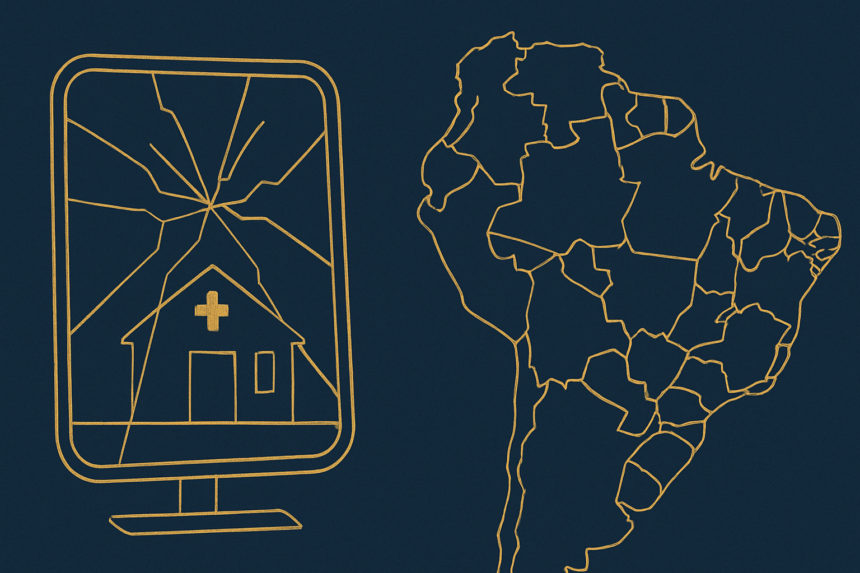
When Geopolitical Fragmentation Becomes Epidemiological Catastrophe: Lessons from Congo’s Ebola Crisis
The Democratic Republic of Congo faces an Ebola outbreak of unprecedented proportions—now exceeding 4,000 deaths and climbing with no clear trajectory toward containment. This is not merely a medical emergency confined to Central Africa. It represents a fundamental breakdown in the international public health architecture that has evolved since the West African epidemic of 2014–2016, and it exposes a critical vulnerability in how geopolitical fragmentation actively undermines epidemiological control.
As Editor-in-Chief of a regional medical journal, I must speak plainly: we are witnessing a failure of coordination at multiple scales, and the burning of treatment centers is merely the visible manifestation of deeper systemic collapse. The question is no longer whether we can contain Ebola—we have the technical capacity. The question is whether fractured global governance can deploy that capacity before the outbreak overwhelms regional and international response systems entirely.
The Mathematics of Fragmentation
Ebola containment follows epidemiological principles as immutable as physics. Rapid case identification, isolation, safe burial practices, and contact tracing create a mathematical envelope around transmission. Break that envelope—burn a treatment center, allow cases to circulate in rebel-controlled zones, fragment international funding streams—and exponential growth becomes inevitable.
The current outbreak demonstrates this with alarming clarity. When security situations prevent epidemiologists from accessing populations, when treatment centers become targets for destruction by groups hostile to international intervention, and when cases emerge in regions beyond government control, we are no longer addressing an infectious disease problem. We are addressing a governance problem that medicine alone cannot solve.
Six new Ebola cases documented in rebel-held Eastern Congo represent more than statistical additions to case counts. They represent the collapse of surveillance capacity itself. A case unknown to public health authorities is a case that cannot be isolated, and cannot be traced. In fragmented territory, this becomes the norm rather than the exception.
Funding Without Coordination Is Theater
International donors have committed resources to Congo’s Ebola response. Yet funds dispersed through competing channels, without unified command structure and security coordination, become inefficient at best and counterproductive at worst. A treatment center burned to the ground represents not merely lost infrastructure but destroyed trust, wasted resources, and—most critically—lost opportunity for case containment.
The security environment in Eastern Congo cannot be separated from the epidemiological challenge. Armed groups, political instability, and the historical context of international interventions create an atmosphere where health workers are viewed with suspicion. This is not an oversight in response planning; it is the central reality that must inform strategy. Yet international response mechanisms often treat security as a logistical consideration rather than a fundamental determinant of outbreak control.
The Precedent Problem
Congo has experienced multiple Ebola outbreaks. The infrastructure for response exists on paper. Protocols are established. Yet this outbreak is the fastest-growing in history. This suggests our existing international framework, despite technical sophistication, lacks the adaptive capacity to function when political and security conditions fragment response efforts.
We cannot strengthen epidemiological containment while ignoring geopolitical realities. The international response must explicitly integrate security cooperation, not as an afterthought, but as a primary component of outbreak control strategy. This requires sustained diplomatic engagement, burden-sharing among regional and international actors, and honest acknowledgment that some areas may remain inaccessible to response teams for extended periods.
Toward Fragmentation-Aware Public Health
Moving forward requires three concrete shifts. First, international outbreak response protocols must incorporate explicit security and political analysis from the outbreak’s outset, not months into escalation. Second, funding mechanisms must incentivize unified command structures rather than parallel initiatives. Third, response strategies must include realistic contingencies for areas where conventional outbreak control cannot function, including community-based approaches that do not require sustained international presence.
The 4,000 deaths in Congo represent a failure of international coordination as much as a biological crisis. Until we acknowledge that geopolitical fragmentation is itself a public health determinant—not merely a context for public health work—we will continue to develop technical solutions to governance problems. That approach has demonstrably failed.
The Ebola virus does not recognize borders or political allegiances. Our response systems must operate with equal indifference to fragmentation.
Was this article helpful?
Disclaimer. This article is health journalism intended for general information and education. It is not medical advice and is not a substitute for professional diagnosis or treatment. Always consult a qualified healthcare provider about your individual circumstances. Full disclaimer →
Related Coverage




Editorial standards. This article was produced under the GMJ News editorial process, with oversight by the GMJ Editorial Board. Our editorial process. Spotted an error? Contact the editorial team.