By using this site, you agree to the Privacy Policy and Terms of Use.
Accept
GMJ NewsGMJ NewsGMJ News
  • Latest News
    • GMJ Briefs
  • Podcast & Media
    • Podcast Episodes
    • GMJ Audio
    • GMJ Videos
  • Research Digest
    • New Studies
    • Georgian Research
    • Data & Numbers
  • Policy & Systems
    • Health Policy
    • Quality & Safety
    • Migration & Health
    • Global Health
  • Practice
    • Clinical Updates
    • Case Discussions
    • Pharmacy & Prescribing
    • Ingredients A-Z
  • Perspectives
    • Editorial
    • Explainers
    • Voices
    • Letters
  • GMJ Articles
    • Vol. 1 Issue 2 (2026)
    • Vol. 1 Issue 1 (2026)
    • Pre-Launch Articles (2025)
  • Read the Journal →
  • About GMJ News
Notification Show More
Font ResizerAa
GMJ NewsGMJ News
Font ResizerAa
  • Latest News
    • GMJ Briefs
  • Podcast & Media
    • Podcast Episodes
    • GMJ Audio
    • GMJ Videos
  • Research Digest
    • New Studies
    • Georgian Research
    • Data & Numbers
  • Policy & Systems
    • Health Policy
    • Quality & Safety
    • Migration & Health
    • Global Health
  • Practice
    • Clinical Updates
    • Case Discussions
    • Pharmacy & Prescribing
    • Ingredients A-Z
  • Perspectives
    • Editorial
    • Explainers
    • Voices
    • Letters
  • GMJ Articles
    • Vol. 1 Issue 2 (2026)
    • Vol. 1 Issue 1 (2026)
    • Pre-Launch Articles (2025)
  • Read the Journal →
  • About GMJ News
Follow US
GMJ News > Research Digest > New Studies > Resistance Training Linked to 27% Reduction in Early Death Risk, Large-Scale Review Finds
New StudiesResearch Digest

Resistance Training Linked to 27% Reduction in Early Death Risk, Large-Scale Review Finds

GMJ
Last updated: 04/06/2026 10:50
By
GMJ News Desk
Share
6 Min Read
Person lifting weights in gym representing resistance training for longevity
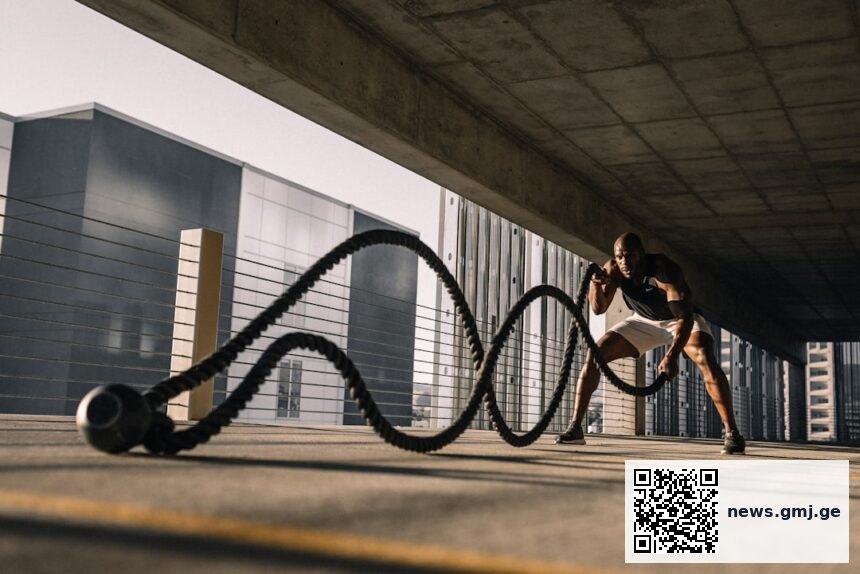
New systematic review of 480,000+ adults shows resistance training reduces early death risk by up to 27%. Benefits appear independent of aerobic exercise, challenging current public health guidelines. — Photo: Karsten Winegeart / Pexels
SHARE
4 min read|710 words
✓ Editorially Reviewed by Prof. Giorgi Pkhakadze, MD, MPH, PhD — GMJ News Desk

🟢 Strong Evidence

Contents
    • Key takeaways
      • Study at a Glance
      • Mortality Risk Reduction by Exercise Type
  • Systematic Review Reveals Dose-Response Relationship
  • Unique Biological Mechanisms Beyond Cardiovascular Benefits
  • Clinical Guidelines May Need Updating
    • What this means
  • Frequently asked questions
    • How much resistance training is needed for mortality benefits?
    • Does resistance training work without aerobic exercise?
    • What types of resistance training were included?

Regular resistance training can reduce the risk of premature death by up to 27%, according to a comprehensive systematic review and meta-analysis examining data from over 480,000 adults. The findings, published in the British Journal of Sports Medicine, provide the strongest evidence to date that weight training delivers substantial longevity benefits beyond cardiovascular exercise alone.

Key takeaways

  • Resistance training reduces all-cause mortality risk by 15% on average, with optimal benefits at 27% reduction
  • Even minimal weight training (30-60 minutes weekly) shows significant protective effects
  • Benefits are independent of aerobic exercise, suggesting unique biological pathways

Study at a Glance

Source British Journal of Sports Medicine
Study type Systematic review and meta-analysis
Sample size N = 480,000+ adults
Population Adults aged 18+ from multiple cohorts
Country International (US, UK, Australia)
27%
maximum reduction in early death risk from optimal resistance training

Mortality Risk Reduction by Exercise Type

Percentage reduction in all-cause mortality risk

Combined aerobic + resistance
40%
Resistance training only
27%
Aerobic exercise only
20%

Source: British Journal of Sports Medicine, 2024 | Georgian Medical Journal News

Submit Your Paper
GMJ_Submit_Banner

Systematic Review Reveals Dose-Response Relationship

The meta-analysis, led by researchers from Tohoku University in Japan, examined 16 prospective cohort studies tracking participants for up to 25 years. Dr. Haruki Momma, the study’s lead author, found that resistance training showed a clear dose-response pattern, with benefits plateauing at approximately 130-140 minutes per week.

The World Health Organization currently recommends at least two days of muscle-strengthening activities per week, but this research suggests even smaller amounts provide meaningful protection. Participants who engaged in just 30-60 minutes of weekly resistance training showed a 15% reduction in mortality risk.

Unique Biological Mechanisms Beyond Cardiovascular Benefits

Unlike previous studies focusing primarily on aerobic exercise, this analysis revealed that resistance training provides independent protective effects through distinct biological pathways. The research suggests weight training improves insulin sensitivity, bone mineral density, and muscle mass preservation—factors directly linked to healthy aging.

Professor Stuart Phillips from McMaster University, who was not involved in the study, noted that resistance training addresses sarcopenia, the age-related loss of muscle mass that affects up to 50% of adults over 80. The clinical implications extend beyond mortality to include reduced fracture risk and maintained functional independence.

Regular resistance training was associated with a 15% lower risk of all-cause mortality, with maximum benefits observed at 130-140 minutes per week

— Dr. Haruki Momma, Tohoku University (British Journal of Sports Medicine, 2024)

Clinical Guidelines May Need Updating

The findings challenge current public health messaging that predominantly emphasizes cardiovascular exercise for longevity. While the CDC’s Physical Activity Guidelines include resistance training recommendations, they receive less attention than aerobic exercise targets.

Dr. Jennifer Heisz from McMaster University’s NeuroFit Lab emphasized that the research supports integrating both exercise modalities. “The combination of aerobic and resistance training provided the greatest mortality reduction at 40%,” she noted in accompanying commentary published in the same journal issue.

This aligns with emerging health policy discussions about updating exercise prescriptions for aging populations, particularly as resistance training requires no specialized equipment and can be performed safely at home.

What this means

For patients: Adding just two 15-30 minute weight training sessions weekly can significantly reduce early death risk, even without changing aerobic exercise habits
For clinicians: Exercise prescriptions should specifically include resistance training targets, not just cardiovascular recommendations, especially for older adults
For policymakers: Public health campaigns need rebalancing to promote resistance training with equal emphasis as aerobic exercise for population longevity

Frequently asked questions

How much resistance training is needed for mortality benefits?

The research shows benefits starting at just 30-60 minutes per week, with optimal protection at 130-140 minutes weekly. This translates to roughly two 20-minute sessions per week for meaningful results.

Does resistance training work without aerobic exercise?

Yes, the study found resistance training provides independent mortality benefits even when participants didn’t meet aerobic exercise guidelines. However, combining both types provides the greatest protection.

What types of resistance training were included?

The studies included weight lifting, resistance machines, bodyweight exercises, and resistance bands. The key factor was progressive overload—gradually increasing resistance over time.

These findings represent a significant shift in longevity research, providing robust evidence that resistance training deserves equal status with aerobic exercise in public health recommendations. As populations age globally, the research offers a practical, accessible intervention that could substantially reduce healthcare burdens while improving quality of life for millions.

Source: Could lifting weights actually help you live longer?

Was this article helpful?

Related Coverage

Global Youth Deaths Rise to 2.1 Million Despite Medical AdvancesJun 5, 2026
Dual PET Imaging Simultaneously Tracks Cancer Progression and Heart Inflammation During TreatmentJun 5, 2026
Jakarta Hospital Survey Reveals High Antibiotic Resistance in Common Bacterial InfectionsJun 5, 2026
CCHF Virus Found in 17% of Mauritanian Livestock, New Study ShowsJun 5, 2026
TAGGED:exerciselongevitymortalityresistance trainingweight training
Share This Article
Facebook LinkedIn Bluesky Copy Link Print
Leave a Comment Leave a Comment

Leave a Reply Cancel reply

Your email address will not be published. Required fields are marked *

Submit Your Paper →

Georgia's peer-reviewed open-access medical journal. No APC until January 2027.
Submit Manuscript →
AI Arms Race in Medical Billing Creates New Barriers to Patient Care

Healthcare providers and insurers are deploying AI systems against each other in…

FDA Issues Early Alert for Abiomed Catheter Kit Linked to Blood Clot Formation

FDA warns that prolonged use of Abiomed 14Fr Low Profile Introducer catheter…

PAHO Urges Enhanced Measles Surveillance Ahead of 2026 FIFA World Cup

PAHO issues urgent recommendations for enhanced measles surveillance and vaccination as countries…

Submit Your Paper to GMJ

No APC until January 2027.
Submit Manuscript →

You Might Also Like

Scientific comparison chart showing magnesium supplement bioavailability percentages
New Studies

Magnesium Supplement Chemistry: Why Marketing Claims Don’t Match Absorption Science

By
GMJ News Desk
22/05/2026
Rural healthcare facility with digital health monitoring equipment
New StudiesResearch Digest

Real-world data could revolutionize rural health research when RCTs prove impractical

By
GMJ News Desk
30/05/2026
Diagram showing inflammatory reflex pathway from brain through vagus nerve to spleen and immune response
New StudiesResearch Digest

Brain-Immune Connection: How the Inflammatory Reflex Controls Disease

By
GMJ News Desk
22/05/2026
Medical illustration showing leukemia cells being targeted by combination drug therapy
New StudiesResearch Digest

Novel Drug Combination Achieves 83% Remission Rate in High-Risk Leukemia

By
GMJ News Desk
26/05/2026
Facebook Twitter Youtube Instagram
Company
  • Privacy Policy
  • Contact US
  • GMJ Journal
  • Submit Manuscript
  • Editorial Team
  • Register at GMJ
  • Terms of Use

Subscribe to GMJ News — Click here

Join Community
© 2026 Georgian Medical Journal (GMJ). Published by the Public Health Institute of Georgia (PHIG). All rights reserved.
Welcome Back!

Sign in to your account

Username or Email Address
Password

Lost your password?

Not a member? Sign Up