


Home › Topics › Patient Safety & Healthcare Accreditation
Patient Safety & Healthcare Accreditation
GMJ News knowledge hub · last reviewed September 2026 · Georgian Medical Journal
SummaryStatisticsGlossaryGMJ newsFAQDocumentsOrganizationsResearch
Unsafe care is a leading cause of avoidable harm worldwide: the WHO estimates that roughly 1 in 10 patients is harmed in health care, and more than half of that harm is preventable. The WHO Global Patient Safety Action Plan 2021–2030 calls for eliminating avoidable harm as a core aim of health systems, while external evaluation frameworks — JCI's International Patient Safety Goals (IPSG), Accreditation Canada's Qmentum program, and ISQua-endorsed national schemes — translate safety science into hospital practice. GMJ News tracks this field closely; in Georgia, the Public Health Institute of Georgia serves as Accreditation Canada's partner, and professionals can study the discipline in depth in the GMJ Academy accreditation and patient-safety courses.
Key messages
Scale of harm
Unsafe care kills an estimated 2.6 million people per year in low- and middle-income countries alone. WHO estimates that 1 in every 10 patients is harmed in hospital in high-income countries — making unsafe healthcare one of the ten leading causes of death and disability worldwide.
Preventable
At least 50% of patient harm in healthcare is preventable. The most common types — medication errors, healthcare-associated infections (HAIs), unsafe surgical procedures and diagnostic errors — are largely avoidable with evidence-based safety systems.
World Patient Safety Day
The WHO World Patient Safety Day (17 September) — established by the World Health Assembly (WHA72.6, 2019) — coordinates global action on patient safety. Each year focuses on a different theme; 2023 focused on engaging patients in their own safety.
Accreditation as quality engine
Healthcare accreditation — systematic external assessment against rigorous standards — is the most validated mechanism for driving sustained quality improvement. Accreditation Canada is the leading international accreditation body, now operating in Georgia through PHIG and Accreditation Sans Frontières (ASF).
Seven global challenges
WHO's Global Patient Safety Challenges address the highest-burden safety failures: medication safety, surgical safety (Safe Surgery Saves Lives), healthcare-associated infections (Clean Care is Safer Care), injection safety, radiation safety, sepsis management and diagnostic errors.
Data gap
Patient safety is chronically under-measured: in most countries, incident reporting systems are incomplete, adverse event surveillance is weak and error rates are underestimated. Building safety data systems is a prerequisite for improvement.
Key statistics
Global burden of patient harm (% of DALYs) by type — WHO Global Patient Safety Report 2021
Glossary of key terms
Latest GMJ coverage

UK Updates Medicine Labelling Standards: New Guidance on Best Practice for Pharmaceutical Packaging
17/09/2026
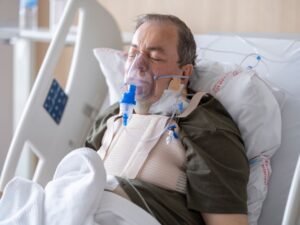
Hamilton Medical Updates Safety Instructions for Breathing Circuit Sets After FDA Alert
17/09/2026

UK Updates Hepatitis B Screening and Neonatal Immunisation Pathway for Pregnant Women
21/08/2026

Onsite Training and Mentorship Accelerates Childhood Cancer Diagnosis in Ethiopia
18/08/2026

Patient Left in Hospital After Insurer Delays Lifesaving Immune-Boosting Drug
18/08/2026
Independent Inquiry Finds Systemic Racism in Maternity Care Undermines Patient Safety
14/08/2026
Frequently asked questions 12 Q&A — structured for Google featured snippets and AI discovery
Knowledge hub: guidelines, conventions and reports
Organizations working in migration and health
Related health topics
AMRSepsisUniversal health coverageMigration and healthCardiovascular diseaseMental health
About this hub. Produced by the GMJ News Editorial Team as a public-good service. Every statistic is linked to its primary source. Documents are preserved in the GMJ Repository with full attribution. Georgian Medical Journal · Contact the editorial team