


Home › Topics › Urinary Tract Infections
Urinary Tract Infections
GMJ News knowledge hub · last reviewed September 2026 · Georgian Medical Journal
SummaryStatisticsGlossaryGMJ newsFAQDocumentsOrganizationsResearch
Urinary tract infections (UTIs) are the most common bacterial infections in community and healthcare settings globally — causing an estimated 400 million symptomatic episodes per year, with women bearing approximately 30-fold greater burden than men due to anatomical, hormonal and microbiome differences (WHO). Escherichia coli causes approximately 80% of uncomplicated community UTIs. Rising antimicrobial resistance — particularly ESBL-producing Enterobacteriaceae — is dramatically complicating UTI treatment globally, reducing first-line antibiotic options and increasing reliance on carbapenems for multidrug-resistant uropathogens. Recurrent UTIs (≥2 episodes in 6 months) affect approximately 25% of women who have had a first episode.
Key messages
400 million episodes/year — most common bacterial infection
Urinary tract infections cause approximately 400 million symptomatic episodes per year globally — the most common bacterial infection in community settings worldwide, accounting for 8-10 million physician visits per year in the US alone (WHO).
Women bear 30x higher burden
Women are approximately 30 times more likely than men to develop a UTI — due to shorter urethra, proximity to anal flora, and hormonal changes affecting vaginal microbiome. Approximately 50% of women have at least one UTI in their lifetime; 25% develop recurrent UTI.
E. coli causes 80% of uncomplicated UTIs
Escherichia coli causes approximately 80% of community-acquired uncomplicated UTIs. Klebsiella, Proteus, Enterococcus and Staphylococcus saprophyticus are other common uropathogens.
AMR is the defining treatment challenge
Rising antimicrobial resistance — particularly ESBL (extended-spectrum beta-lactamase) producing Enterobacteriaceae — is dramatically limiting first-line treatment options globally, reducing the effectiveness of trimethoprim, fluoroquinolones and nitrofurantoin in many regions, and increasing reliance on IV carbapenems for severe UTI.
Complicated vs uncomplicated UTI
Uncomplicated UTI (healthy premenopausal women with no structural abnormalities): short-course antibiotics (3-7 days). Complicated UTI (pregnancy, men, elderly, catheter-associated, structural abnormalities, immunosuppression): longer courses and broader-spectrum antibiotics; investigation needed.
Recurrent UTI management
Recurrent UTI (≥2 in 6 months or ≥3 in 12 months): low-dose antibiotic prophylaxis; post-coital single-dose prophylaxis; patient-initiated self-treatment; or non-antibiotic approaches (vaginal oestrogen in postmenopausal women; D-mannose; methenamine hippurate).
Key statistics
UTI resistance trends — % of E. coli isolates resistant to key antibiotics (ECDC/WHO)
Glossary of key terms
Latest GMJ coverage

New antibiotic combinations show promise against resistant urinary tract infections
21/05/2026

Rare Lymphatic-Urinary Fistula Causes Milky Urine in NEJM Case Report
08/07/2026

Ketamine Bladder Syndrome in Adolescents: A Call for Urgent International Surveillance and Clinical Preparedness
23/09/2026

WHO Adopts New Decade-Long Strategy to Combat Antimicrobial Resistance Through 2036
12/08/2026
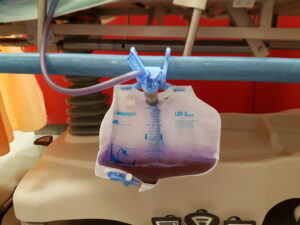
Purple Urine Bag Syndrome: A Rare but Treatable Condition in Long-Term Care
05/08/2026

Surgical Menopause Linked to Severe Urogenital Symptoms Compared to Natural Menopause
25/06/2026
Frequently asked questions 12 Q&A — structured for Google featured snippets and AI discovery
Knowledge hub: guidelines, conventions and reports
Organizations working in migration and health
Related health topics
AMRKidney diseaseWomen's healthPatient safety (CAUTI)UrosepsisUrological conditions
About this hub. Produced by the GMJ News Editorial Team as a public-good service. Every statistic is linked to its primary source. Documents are preserved in the GMJ Repository with full attribution. Georgian Medical Journal · Contact the editorial team