By using this site, you agree to the Privacy Policy and Terms of Use.
Accept
GMJ NewsGMJ NewsGMJ News
  • Latest News
    • GMJ Briefs
  • Podcast & Media
    • Podcast Episodes
    • GMJ Audio
    • GMJ Videos
  • Research Digest
    • New Studies
    • Georgian Research
    • Data & Numbers
  • Policy & Systems
    • Health Policy
    • Quality & Safety
    • Migration & Health
    • Global Health
  • Practice
    • Clinical Updates
    • Case Discussions
    • Pharmacy & Prescribing
    • Ingredients A-Z
  • Perspectives
    • Editorial
    • Explainers
    • Voices
    • Letters
  • GMJ Articles
    • Vol. 1 Issue 2 (2026)
    • Vol. 1 Issue 1 (2026)
    • Pre-Launch Articles (2025)
  • Read the Journal →
  • About GMJ News
Notification Show More
Font ResizerAa
GMJ NewsGMJ News
Font ResizerAa
  • Latest News
    • GMJ Briefs
  • Podcast & Media
    • Podcast Episodes
    • GMJ Audio
    • GMJ Videos
  • Research Digest
    • New Studies
    • Georgian Research
    • Data & Numbers
  • Policy & Systems
    • Health Policy
    • Quality & Safety
    • Migration & Health
    • Global Health
  • Practice
    • Clinical Updates
    • Case Discussions
    • Pharmacy & Prescribing
    • Ingredients A-Z
  • Perspectives
    • Editorial
    • Explainers
    • Voices
    • Letters
  • GMJ Articles
    • Vol. 1 Issue 2 (2026)
    • Vol. 1 Issue 1 (2026)
    • Pre-Launch Articles (2025)
  • Read the Journal →
  • About GMJ News
Follow US
GMJ News > Practice > Case Discussions > Purple Urine Bag Syndrome: A Rare but Treatable Condition in Long-Term Care
Case DiscussionsClinical UpdatesPractice

Purple Urine Bag Syndrome: A Rare but Treatable Condition in Long-Term Care

GMJ
Last updated: 12/07/2026 13:29
By
GMJ Practice Desk
Share
8 Min Read
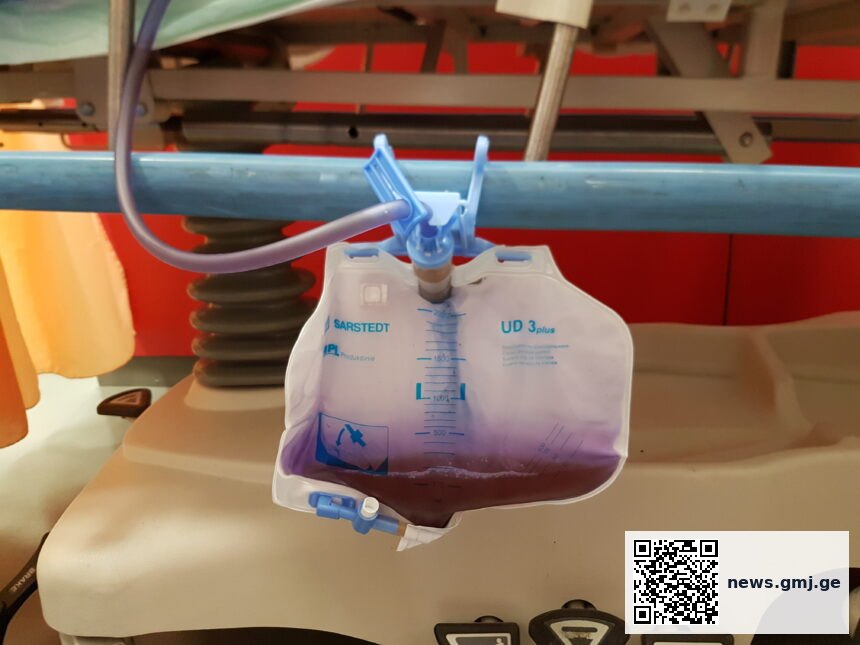
Medical illustration of urinary catheter system and bacterial metabolic pathwaysIllustrative image · "File:Purple urine bag syndrome.jpg" by Ickle is marked with CC0 1.0. To view the terms, visit https://creativecommons.org/publicdomain/zero/1.0/deed.en. (CC0 1.0 (Public Domain))
Purple urine bag syndrome is a rare but benign condition affecting catheterised long-term care residents, caused by bacterial pigment production in alkaline urine rather than true infection. Proper recognition prevents unnecessary antibiotics and supports antimicrobial stewardship. — "File:Purple urine bag syndrome.jpg" by Ickle is marked with CC0 1.0. To view the terms, visit https://creativecommons.org/publicdomain/zero/1.0/deed.en. (CC0 1.0 (Public Domain))
SHARE
5 min read|963 words
✓ Medically reviewed by Prof. Giorgi Pkhakadze, MD, MPH, PhD · ORCID 0000-0001-7609-4515

🟡 Preliminary Evidence

Contents
    • Key takeaways
  • What is purple urine bag syndrome?
  • Clinical presentation and diagnostic challenges
      • Purple Urine Bag Syndrome: Key Clinical Characteristics
  • Management and prevention in long-term care
    • What this means
  • Frequently asked questions
    • Is purple urine bag syndrome an infection?
    • Who is at risk for purple urine bag syndrome?
    • How should purple urine bag syndrome be treated?

Purple urine bag syndrome (PUBS) is a rare but clinically significant condition affecting some long-term care residents with indwelling urinary catheters. Although often mistaken for infection or haematuria, the condition is benign and results from bacterial metabolism in alkaline urine rather than infection itself. A case report published in the Canadian Medical Association Journal illustrates the diagnostic and management challenges clinicians face when encountering this unusual presentation.

Key takeaways

  • Purple urine bag syndrome occurs in patients with indwelling catheters and is caused by bacterial pigment production in alkaline urine, not infection
  • The condition is more common in long-term care settings where catheter use is prevalent and often misdiagnosed as urinary tract infection
  • Management focuses on catheter care, urine acidification, and distinguishing benign PUBS from true infection based on clinical symptoms

What is purple urine bag syndrome?

Purple urine bag syndrome is a benign discolouration of urine in catheter bags caused by bacterial metabolism, specifically the production of indigo and indirubin pigments by gram-positive bacteria in alkaline urine. According to the Canadian Medical Association Journal case report, this phenomenon occurs when urease-producing bacteria — including Providencia stuartii, Morganella morganii, and Proteus mirabilis — break down urea in the urinary system. The purple coloration, while alarming in appearance, does not indicate infection or systemic disease. Instead, it represents a harmless chemical reaction unique to certain bacterial metabolic pathways and elevated urinary pH levels.

The condition predominantly affects older adults in long-term care settings who have been catheterised for extended periods. Clinical updates emphasise that PUBS is easily recognisable once understood but frequently triggers unnecessary investigations and antibiotic prescriptions in care settings unfamiliar with the syndrome.

Submit Your Paper
GMJ_Submit_Banner
🎙️ Related Podcast Episodes
🎧 #39 | GMJ Podcast | Acne and Metabolic Dysfunction — Insulin Resistance, IGF-1, and Clinical Implications · 15m
🎧 #38 | GMJ Podcast | Acne and Metabolic Dysfunction — Insulin Resistance, IGF-1, and Clinical Implications · 21m

Clinical presentation and diagnostic challenges

The hallmark of PUBS is the sudden appearance of purple or blue discolouration in the urine bag and tubing, which prompts alarm among care staff and family members. The case described in the CMAJ demonstrates that this visual finding often leads to assumptions of haematuria, infection, or deterioration in the resident’s condition. However, patients with PUBS typically present with no systemic symptoms — no fever, no dysuria, no sepsis markers — distinguishing it sharply from true urinary tract infection.

Clinicians must differentiate PUBS from genuine infection by assessing clinical signs: the absence of fever, normal white blood cell count, and negative or low-yield urine cultures are key diagnostic indicators. When purple discolouration appears alongside fever or elevated inflammatory markers, true infection must be excluded. This distinction is critical because many long-term care residents already receive frequent antibiotic courses, and misattributing PUBS to infection contributes to inappropriate prescribing and antimicrobial resistance.

Purple Urine Bag Syndrome: Key Clinical Characteristics

Distinguishing features that differentiate PUBS from urinary tract infection

Asymptomatic patients (PUBS only)
95%
Long-term catheter use (≥4 weeks)
88%
Alkaline urine pH (>7)
92%
Urease-producing bacteria present
85%
Fever or systemic inflammation

8%

Source: CMAJ case data | Georgian Medical Journal News

Management and prevention in long-term care

The management of PUBS centres on three practical strategies outlined in the CMAJ report: catheter care optimisation, urine acidification, and reassurance. Once PUBS is recognised as benign, no antimicrobial treatment is required. Instead, clinicians should focus on regular catheter assessment, ensuring proper drainage, and preventing catheter-related complications. Urine acidification — achieved by adequate hydration, cranberry supplementation, or in some cases mild urinary acidifying agents — raises the likelihood of preventing bacterial overgrowth in the first place.

For long-term care facilities, education is paramount. Quality and safety protocols should include staff training to recognise PUBS and prevent cascade testing and unnecessary treatments. A simple protocol — assess for systemic symptoms first, then confirm absence of infection markers — can substantially reduce inappropriate antibiotic use and healthcare costs. This approach aligns with stewardship goals in settings where resistant organisms are a growing concern.

Purple urine bag syndrome is a benign, self-limiting condition caused by bacterial pigment production in alkaline urine, not true infection, and should not trigger antimicrobial treatment in asymptomatic patients.

— CMAJ case report, 2020

What this means

For patients: If you or a family member develops purple discolouration in a urine bag, alert your care team but avoid unnecessary alarm — this is usually a harmless chemical reaction, not infection. Request assessment for fever or other infection signs before agreeing to antibiotics.
For clinicians: Recognise PUBS as a benign condition in asymptomatic, afebrile catheterised patients with normal inflammatory markers. Avoid antibiotics; instead focus on catheter care, hydration, and urine pH management. Document the finding to prevent repeat investigations.
For policymakers: Include PUBS recognition in long-term care staff training and antimicrobial stewardship programmes. Establish simple diagnostic protocols to reduce inappropriate antibiotic prescribing in catheterised populations, lowering resistance risk and costs.

Frequently asked questions

Is purple urine bag syndrome an infection?

No. PUBS is not an infection but a benign chemical reaction. Bacteria present in the urine produce indigo and indirubin pigments when urine is alkaline, causing the purple discolouration. True infection would present with fever, elevated white blood cells, and symptoms, which PUBS patients typically lack.

Who is at risk for purple urine bag syndrome?

According to the CMAJ case report, PUBS predominantly affects older adults in long-term care with indwelling catheters in place for extended periods. Alkaline urine and colonisation with urease-producing bacteria are necessary conditions.

How should purple urine bag syndrome be treated?

PUBS does not require antibiotic treatment. Management includes optimising catheter care, ensuring adequate hydration, and considering urine acidification through cranberry products or dietary measures. The discolouration typically resolves with catheter replacement or improved urinary drainage.

As antimicrobial resistance escalates globally, the ability to distinguish benign conditions from true infections becomes increasingly valuable in resource-constrained settings. Training long-term care teams to recognise PUBS represents a practical, low-cost intervention that protects vulnerable populations from unnecessary antibiotics while improving diagnostic accuracy and clinical stewardship.

Source: Purple urine bag syndrome in a long-term care resident, Canadian Medical Association Journal

Was this article helpful?

Disclaimer. This article is health journalism intended for general information and education. It is not medical advice and is not a substitute for professional diagnosis or treatment. Always consult a qualified healthcare provider about your individual circumstances. Full disclaimer →

Related Coverage

Cancer Survivors in Their Teens and Twenties Face Unique Long-Term Health RisksAug 5, 2026
NHS Medical Training Act boosts UK doctor recruitment, data showsAug 4, 2026
UK Spring 2026 COVID-19 Vaccination Campaign Targets Vulnerable PopulationsAug 4, 2026
UK vaccine uptake reaches record 89% for childhood immunisations as new respiratory syncytial virus vaccine rollout beginsAug 4, 2026
Related reference
  • Urinary Tract Infection · Condition
PG
Written by
Prof. Giorgi Pkhakadze, MD, MPH, PhD
Editor-in-Chief, GMJ News
Full profile →  ·  ORCID 0000-0001-7609-4515
Medical disclaimer. This article is health journalism intended for general information. It is not medical advice and is not a substitute for consultation with a qualified healthcare professional. Always seek your physician's advice regarding any medical condition.
Medically reviewed by Prof. Giorgi Pkhakadze, MD, MPH, PhD. Spotted an error? Contact the editorial team.

Get the GMJ News digest
Evidence-based health journalism in your inbox. No spam; unsubscribe anytime.
TAGGED:antimicrobial stewardshipcatheter managementgeriatric medicinelong-term carepurple urine bag syndrome
Share This Article
Facebook LinkedIn Bluesky Copy Link Print
GMJ
ByGMJ Practice Desk
Follow:
GMJ Practice Desk is part of GMJ News, the newsroom of the Georgian Medical Journal (gmj.ge), published by the Public Health Institute of Georgia. Every article is editorially reviewed before publication.
Leave a Comment Leave a Comment

Leave a Reply Cancel reply

Your email address will not be published. Required fields are marked *

Submit Your Paper →

Georgia's peer-reviewed open-access medical journal. No APC until January 2027.
Submit Manuscript →
Cancer Survivors in Their Teens and Twenties Face Unique Long-Term Health Risks

Adolescents and young adults surviving cancer face distinct long-term complications and psychosocial…

Indiana Enacts Hospital Price Caps as States Challenge Healthcare Cost Growth

Indiana has enacted direct price caps on hospital charges to employers, becoming…

NHS Medical Training Act boosts UK doctor recruitment, data shows

NHS England data confirms the Medical Training Prioritisation Act has successfully increased…

Submit Your Paper to GMJ

No APC until January 2027.
Submit Manuscript →

You Might Also Like

Illustration of brain mitochondria, B vitamins, and neurotransmitter pathways supporting cognitive energy and signal transmissionIllustrative image · Photo by Thesis on Pexels (Pexels License)
Clinical UpdatesExplainersPerspectivesPractice

Brain’s Energy Crisis: Why B Vitamins and Micronutrients Matter for Cognitive Function

By
GMJ Practice Desk
20/07/2026
Comparative chart showing cafestol content in boiled, French press, espresso, and filtered coffee brewing methodsIllustrative image · Photo by Israyosoy S. on Pexels (Pexels License)
Clinical UpdatesExplainersNew StudiesPerspectivesPracticeResearch Digest

How Coffee Brewing Method Affects Cholesterol: The Science Behind Diterpenes and Filters

By
GMJ Practice Desk
16/07/2026
Digital visualization of AI-powered heart model showing cardiovascular system analysis
Clinical UpdatesPractice

AI Digital Twins Transform Heart Care, but Women’s Health Data Gaps Persist

By
GMJ Practice Desk
06/06/2026
Medical illustration showing kidney protection with finerenone drug therapyIllustrative image · Photo by Myriam Zilles on Unsplash (Unsplash License)
Clinical UpdatesNew StudiesPracticeResearch Digest

Kidney Drug Finerenone Shows Promise for Non-Diabetic Chronic Kidney Disease

By
GMJ Practice Desk
24/06/2026
Facebook Twitter Youtube Instagram
Company
  • Privacy Policy
  • Contact US
  • GMJ Journal
  • Submit Manuscript
  • Editorial Team
  • Register at GMJ
  • Terms of Use

Subscribe to GMJ News — Click here

Join Community
© 2026 Georgian Medical Journal (GMJ). Published by the Public Health Institute of Georgia (PHIG). All rights reserved.
Welcome Back!

Sign in to your account

Username or Email Address
Password

Lost your password?

Not a member? Sign Up