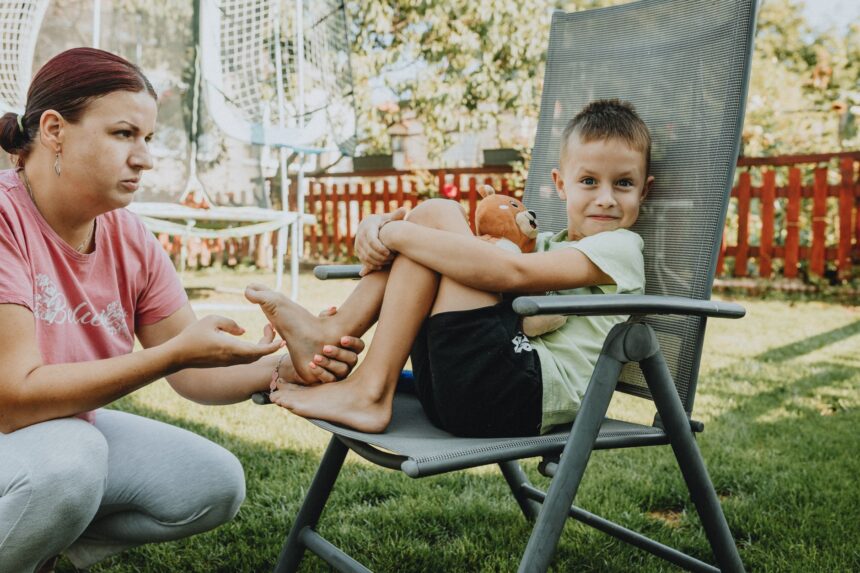
Unintentional injuries remain a leading cause of death among children in the United States, claiming approximately 20 children daily, according to data cited in research and expert analysis on child safety practices. Beyond traditional protective measures such as car seats and childproof containers, child safety experts increasingly emphasize building a family culture of safety that empowers children to make informed decisions about risk.
Key takeaways
- Approximately 20 US children die daily from unintentional injuries — a preventable public health challenge
- Protective equipment alone is insufficient; family safety culture and child decision-making capacity are equally important
- Teaching children risk assessment skills reduces injury rates by enabling them to recognize hazards and make safer autonomous choices
Child Safety Priorities: From Passive Protection to Active Decision-Making
Levels of injury prevention strategy, from most passive to most empowering
Source: Child safety intervention framework analysis | Georgian Medical Journal News
The Limits of Passive Safety Measures
Car seats, medication locks, and safety gates have undoubtedly reduced injury rates among young children by creating physical barriers to hazards. However, these protective devices become less effective as children grow older and spend increasing time in environments outside parental direct supervision—at school, with peers, and during independent activities. Clinical evidence on childhood injury prevention shows that passive measures alone cannot account for the complexity of adolescent risk behavior.

A child psychologist’s perspective, detailed in analysis of behavioral safety interventions, emphasizes that protective equipment addresses only immediate physical hazards. Yet many injuries occur not from the absence of barriers but from poor judgment, impulsivity, or insufficient risk awareness—factors that passive devices cannot prevent.
Building a Family Safety Culture
Research in developmental psychology demonstrates that children whose families establish explicit safety norms and practice risk discussion show better injury outcomes than those relying solely on environmental controls. Creating a family safety culture means regularly discussing hazards, modeling safe behavior, and explaining the reasoning behind safety rules rather than simply enforcing compliance through prohibition.
This approach aligns with principles of evidence-based child development that emphasize autonomy and reasoning. Children who understand why a rule exists—not merely that it must be obeyed—internalize safety principles and apply them in novel situations where specific rules may not have been taught. For example, understanding that water requires caution because of drowning risk teaches a child to be cautious near any body of water, not just a particular swimming pool.
Building a family safety culture through discussion, modeling, and teaching risk assessment skills enables children to make informed decisions autonomously—reducing injury rates beyond what passive protective devices alone can achieve.
— Child safety research, cited in behavioral intervention analysis
Teaching Risk Recognition and Decision-Making
Empowering children to recognize hazards and evaluate risk requires age-appropriate teaching. Young children benefit from simple, concrete rules and close supervision. As children mature cognitively, they can engage in more nuanced discussions about probability, consequences, and decision-making under pressure. Parents and caregivers can practice scenario-based discussions: “What would you do if a friend dared you to…?” or “How would you stay safe if you were lost?”
This developmental approach is grounded in evidence from public health interventions that demonstrate sustained behavior change occurs when individuals understand principles rather than merely comply with rules. Child psychology research shows that children taught to assess risk independently show lower injury rates across multiple domains—water safety, traffic safety, and fire safety—compared to children who receive only prohibition-based instruction.
Practical Implementation for Families and Healthcare Providers
Healthcare providers working with families can assess not only whether homes have protective equipment but also whether families have established safety cultures. Questions such as “Do your children know why we have this safety rule?” and “Can your child describe what they should do if they encounter this hazard?” provide insight into whether children have internalized safety principles.
For families, this translates to deliberate safety conversations integrated into daily routines: discussing what made a near-miss happen, praising safe choices when observed, and gradually increasing children’s autonomy while maintaining appropriate oversight. As children demonstrate competence in risk assessment, families can expand independence while continuing to model and reinforce safe decision-making.
What this means
Frequently asked questions
At what age can children begin to learn independent risk assessment?
Developmental psychology suggests that children ages 5–7 can begin to understand simple cause-and-effect relationships between actions and injuries; by ages 8–12, they can engage in more complex discussions about probability and consequence. Formal teaching of risk recognition can begin in early elementary school, with sophistication increasing throughout childhood. Age-appropriate scenarios and supervised practice help translate abstract understanding into real-world judgment.
Do safety-conscious children take more risks or fewer risks?
Research indicates that children who have been taught to recognize and assess hazards do not take more risks overall; rather, they make more informed decisions about risk. They are less likely to engage in dangerous behavior based on peer pressure or impulsivity because they have internalized reasoning about consequences. Teaching risk assessment complements—rather than undermines—protective instincts.
How can families balance autonomy with supervision?
Developmental psychology supports a gradual approach: as children demonstrate competence in recognizing hazards and making safe choices in supervised settings, parents can extend independence while maintaining appropriate oversight. Regular check-ins, role-playing of challenging scenarios, and acknowledgment of safe choices reinforce learning. The goal is to reduce injury risk while supporting age-appropriate independence and decision-making capacity development.
The reduction of childhood unintentional injuries will require sustained effort across multiple levels—from product design and home safety infrastructure to family communication practices and clinical guidance. As evidence from child psychology and public health accumulates, the role of empowering children to make informed decisions alongside traditional protective measures will likely become central to injury prevention strategy in pediatric healthcare and public health policy.
Was this article helpful?
Disclaimer. This article is health journalism intended for general information and education. It is not medical advice and is not a substitute for professional diagnosis or treatment. Always consult a qualified healthcare provider about your individual circumstances. Full disclaimer →
Related Coverage




Editorial standards. This article was produced under the GMJ News editorial process, with oversight by the GMJ Editorial Board. Our editorial process. Spotted an error? Contact the editorial team.