


Home › Topics › Kidney Disease
Kidney Disease
GMJ News knowledge hub · last reviewed September 2026 · Georgian Medical Journal
SummaryStatisticsGlossaryGMJ newsFAQDocumentsOrganizationsResearch
Chronic kidney disease (CKD) affects an estimated 850 million people globally — more than diabetes and cancer combined — yet approximately 90% of those affected are unaware they have it until the disease is advanced (WHO/ISN). CKD causes 2.4 million deaths per year, making it one of the world's fastest-growing causes of mortality. The disease shares risk factors with diabetes, hypertension and obesity — and is driven by an epidemic of CKD of unknown cause (CKDu) in agricultural workers in Central America and South Asia.
Key messages
850 million affected
Chronic kidney disease (CKD) affects an estimated 850 million people worldwide — more than diabetes and cancer combined — and causes approximately 2.4 million deaths per year (ISN/Lancet 2019).
Silent until advanced
CKD is largely asymptomatic until advanced stages, when it may present with fatigue, fluid retention, anaemia and uraemia. Approximately 90% of people with CKD are unaware of their condition until severe damage has occurred.
Shared risk factors
CKD shares risk factors with NCDs: diabetes (the leading cause of CKD globally), hypertension, obesity, cardiovascular disease and smoking. Controlling these reduces CKD risk and slows progression.
CKDu — a new epidemic
CKD of unknown cause (CKDu) — primarily affecting male agricultural workers aged 20-50 — is an epidemic in Central America (Costa Rica, El Salvador, Nicaragua) and parts of South Asia (Sri Lanka, India). It is distinct from diabetic nephropathy and appears linked to repeated dehydration, heat stress, agrochemicals and NSAIDs.
Dialysis access gap
End-stage kidney disease requires renal replacement therapy — dialysis or transplantation — yet more than 2 million people who could benefit from these life-saving treatments globally cannot access them. The annual cost of dialysis ($15,000-80,000) is unaffordable in LMICs.
Prevention is possible
Up to 50% of CKD cases are preventable through: controlling blood pressure and blood sugar; avoiding NSAIDs and nephrotoxic medicines; adequate hydration; reducing dietary sodium; and early detection through urine albumin and eGFR testing.
Key statistics
Global CKD deaths per year (millions) 2000-2019 — GBD
Source: Global Burden of Disease study. CKD is one of the fastest-growing causes of death globally.
Glossary of key terms
Latest GMJ coverage

US Chronic Kidney Disease Profile Shifts: Diabetes-Linked Cases Rise While Overall Rate Plateaus
24/09/2026
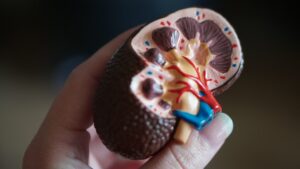
Half of kidney transplant candidates never begin evaluation, US study reveals
18/08/2026

FDA Restricts Sunscreen Ingredient as Rural Dialysis Clinics Face Closure Crisis
11/08/2026
Obinutuzumab Outperforms Tacrolimus for Primary Membranous Nephropathy
09/07/2026
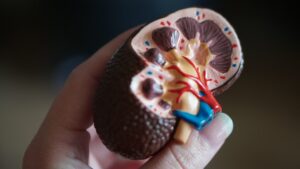
WHO Kidney Health Resolution Needs Urgent Implementation Framework, Lancet Editorial Warns
30/06/2026

Kidney Drug Finerenone Shows Promise for Non-Diabetic Chronic Kidney Disease
24/06/2026
Frequently asked questions 12 Q&A — structured for Google featured snippets and AI discovery
Knowledge hub: guidelines, conventions and reports
Organizations working in migration and health
Related health topics
DiabetesHypertensionCVDSepsis (AKI)Occupational health (CKDu)Nutrition
About this hub. Produced by the GMJ News Editorial Team as a public-good service. Every statistic is linked to its primary source. Documents are preserved in the GMJ Repository with full attribution. Georgian Medical Journal · Contact the editorial team