Updated 13/09/2026
🟠 Moderate Evidence
A new study published in Advanced Science demonstrates that intelligence/" class="gmj-dict-autolink" title="Dictionary: Artificial Intelligence">artificial intelligence can predict the collapse of ultrasound-induced microbubbles, potentially making focused ultrasound delivery to the brain safer and more precise. Researchers at Georgia Institute of Technology, led by Associate Professor Costas Arvanitis, developed an AI model that forecasts bubble dynamics during procedures designed to temporarily open the blood–brain barrier—a critical protective layer that normally prevents most molecules from entering brain tissue.
Key takeaways
- AI algorithms can predict microbubble collapse during focused ultrasound procedures, improving control and safety
- The blood–brain barrier normally blocks drug delivery; temporary opening via ultrasound requires precise bubble management
- This advance could accelerate clinical applications for brain tumours, neurodegenerative diseases, and diagnostic imaging
Study at a Glance
| Source | Advanced Science |
| Study type | Experimental/computational study |
| Lead institution | Georgia Institute of Technology |
| Focus | AI prediction of microbubble dynamics in ultrasound-mediated blood–brain barrier opening |
| Application | Safe drug delivery and diagnostic imaging to brain tissue |
Focused Ultrasound: From Bubble Dynamics to Clinical Delivery
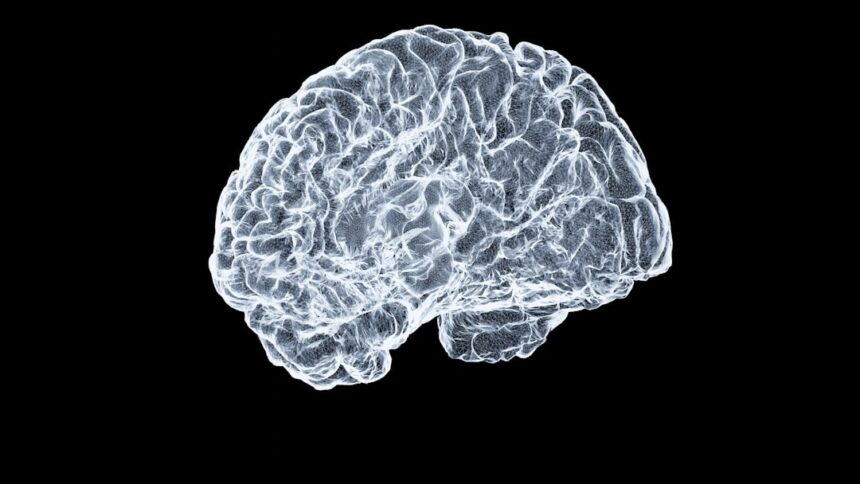
AI-guided prediction enables safer control of microbubble collapse during blood–brain barrier opening procedures

Source: Georgia Institute of Technology / Advanced Science, 2026 | Georgian Medical Journal News
How AI Enhances Precision in Ultrasound Therapy
Focused ultrasound, when combined with microbubbles injected into the bloodstream, can temporarily open the blood–brain barrier by creating controlled cavitation—the formation and collapse of gas bubbles. However, uncontrolled bubble collapse risks damaging surrounding brain tissue. Associate Professor Costas Arvanitis and his team at Georgia Institute of Technology developed an AI model that monitors bubble behaviour in real time and predicts imminent collapse, allowing clinicians to adjust ultrasound parameters before damage occurs.
According to the research published in Advanced Science, the AI system processes acoustic signals to forecast bubble dynamics within milliseconds, enabling safer delivery windows. This represents a major advance toward translating focused ultrasound from experimental use into routine clinical practice for therapeutic and diagnostic brain interventions.
AI prediction of microbubble collapse enables clinicians to maintain the precise control necessary for safe, repeated opening of the blood–brain barrier—a critical requirement for effective drug delivery to brain tissue.
— Associate Professor Costas Arvanitis, Georgia Institute of Technology (Advanced Science, 2026)
Clinical Applications and Therapeutic Implications
The blood–brain barrier’s impermeability, while protective, severely limits the ability of therapeutic drugs to reach brain tumours, Alzheimer’s disease, Parkinson’s disease, and other central nervous system disorders. Current approaches either bypass the barrier entirely (via invasive surgery) or use chemotherapy drugs so toxic they can cross the barrier unassisted. Focused ultrasound with AI-guided bubble control offers a non-invasive middle path.
Associate Professor Arvanitis’ work suggests that this technology could enable clinicians to deliver monoclonal antibodies, small-molecule inhibitors, and gene therapies directly to diseased brain tissue while minimizing off-target effects. The research demonstrates computational predictability of bubble dynamics, a prerequisite for regulatory approval and clinical translation. Early-stage trials in humans are expected within the next 2–3 years at centres specializing in focused ultrasound procedures.
Regulatory Pathway and Future Development
The U.S. Food and Drug Administration (FDA) and the European Medicines Agency (EMA) have already approved focused ultrasound devices for certain applications—including essential tremor and uterine fibroids—but blood–brain barrier opening remains investigational. The addition of AI-guided prediction addresses one of the major regulatory hurdles: demonstrating reproducible safety and efficacy. Computational modelling that predicts outcome improves device labelling and clinical protocol standardization, both critical for regulatory review.
International research consortia, including collaborators at Massachusetts General Hospital and University College London, are building on Georgia Tech’s AI framework to conduct larger preclinical studies. These efforts will determine optimal ultrasound frequencies, microbubble sizes, and dosing schedules needed to enter clinical trials. Health policy bodies in the EU and FDA are expected to issue guidance on AI-assisted medical device oversight within 12–18 months, potentially accelerating the path to clinical adoption.
What this means
Frequently asked questions
What is the blood–brain barrier and why is it hard to deliver drugs across it?
The blood–brain barrier is a selective membrane lining brain blood vessels that blocks most large molecules—including most antibodies and chemotherapy drugs—from entering brain tissue. This protects the brain from toxins but also prevents most therapeutic drugs from reaching brain tumours and neurodegenerative diseases. Current methods require either invasive surgery, systemic toxins, or no treatment.
How do focused ultrasound microbubbles open the blood–brain barrier?
Microbubbles injected into the bloodstream are exposed to focused ultrasound waves, which cause them to oscillate and collapse in a controlled manner. This mechanical disruption temporarily widens gaps between cells in the blood–brain barrier, allowing therapeutic drugs to diffuse into brain tissue. The effect is reversible and non-invasive, unlike surgical approaches.
Why is AI prediction of bubble collapse important for safety?
Uncontrolled or excessive bubble collapse can damage brain tissue through acoustic streaming and mechanical stress. AI models predict when collapse is imminent, allowing clinicians to adjust ultrasound parameters in real time, maintaining the therapeutic window without causing injury. This precision is essential before clinical trials and regulatory approval can proceed.
As focused ultrasound technology matures and AI prediction systems are validated in larger preclinical studies, the next major milestone will be initiation of Phase 1 human trials. Success in these trials could fundamentally change how neurologists and neuro-oncologists treat brain disease, shifting from systemic toxicity toward precision, image-guided local delivery. Integration of AI-guided ultrasound into standard neurosurgical centres could begin within 3–5 years if current development timelines hold.
Source: AI-guided ultrasound improves blood–brain barrier opening procedures by predicting bubble collapse
🗺️ Find certified Georgian healthcare providers: sheniekimi.ge — Georgia Health Map · 998 clinics · 6,600+ doctors · 2,296 pharmacies
Was this article helpful?
Disclaimer. This article is health journalism intended for general information and education. It is not medical advice and is not a substitute for professional diagnosis or treatment. Always consult a qualified healthcare provider about your individual circumstances. Full disclaimer →
Related Coverage




Editorial standards. This article was produced under the GMJ News editorial process, with oversight by the GMJ Editorial Board. Our editorial process. Spotted an error? Contact the editorial team.