By using this site, you agree to the Privacy Policy and Terms of Use.
Accept
GMJ NewsGMJ NewsGMJ News
  • Latest News
    • GMJ Briefs
  • Podcast & Media
    • Podcast Episodes
    • GMJ Audio
    • GMJ Videos
  • Research Digest
    • New Studies
    • Georgian Research
    • Data & Numbers
  • Policy & Systems
    • Health Policy
    • Quality & Safety
    • Migration & Health
    • Global Health
  • Practice
    • Clinical Updates
    • Case Discussions
    • Pharmacy & Prescribing
    • Ingredients A-Z
  • Perspectives
    • Editorial
    • Explainers
    • Voices
    • Letters
  • GMJ Articles
    • Vol. 1 Issue 2 (2026)
    • Vol. 1 Issue 1 (2026)
    • Pre-Launch Articles (2025)
  • Read the Journal →
  • About GMJ News
Notification Show More
Font ResizerAa
GMJ NewsGMJ News
Font ResizerAa
  • Latest News
    • GMJ Briefs
  • Podcast & Media
    • Podcast Episodes
    • GMJ Audio
    • GMJ Videos
  • Research Digest
    • New Studies
    • Georgian Research
    • Data & Numbers
  • Policy & Systems
    • Health Policy
    • Quality & Safety
    • Migration & Health
    • Global Health
  • Practice
    • Clinical Updates
    • Case Discussions
    • Pharmacy & Prescribing
    • Ingredients A-Z
  • Perspectives
    • Editorial
    • Explainers
    • Voices
    • Letters
  • GMJ Articles
    • Vol. 1 Issue 2 (2026)
    • Vol. 1 Issue 1 (2026)
    • Pre-Launch Articles (2025)
  • Read the Journal →
  • About GMJ News
Follow US
GMJ News > Research Digest > New Studies > New AI Model Strips Personal Data From ECGs While Preserving Heart Risk Information
New StudiesPolicy & SystemsQuality & SafetyResearch Digest

New AI Model Strips Personal Data From ECGs While Preserving Heart Risk Information

GMJ
Last updated: 08/07/2026 19:35
By
GMJ Research Desk
Share
8 Min Read
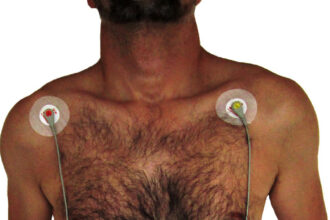
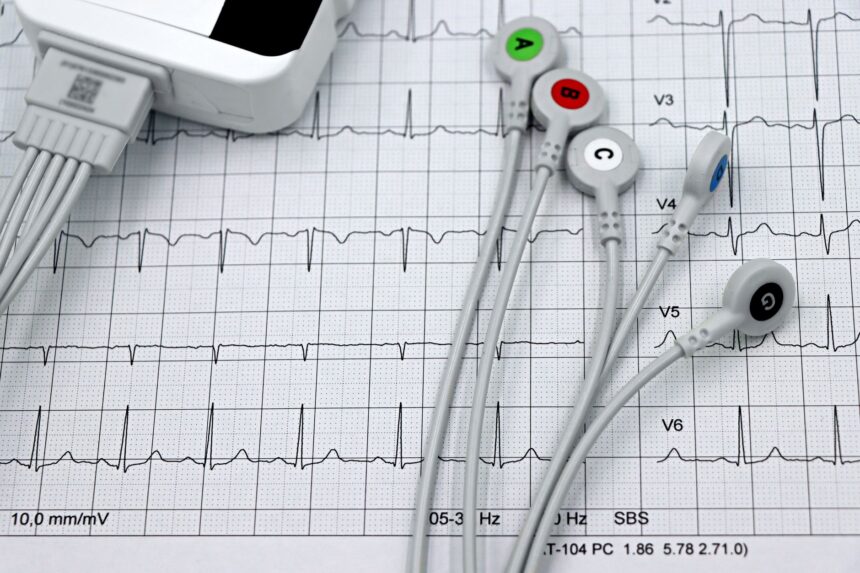
Illustration of privacy protection in electrocardiogram artificial intelligence systemsIllustrative image · Photo by Marta Branco on Pexels (Pexels License)
Artificial intelligence can extract age, sex, race, and individual identity from standard ECG recordings without patient knowledge. Researchers at the University of Kansas have developed a privacy-preserving AI model that removes these demographic markers while preserving clinical cardiac risk information. — Photo by Marta Branco on Pexels (Pexels License)
SHARE
5 min read|992 words
✓ Medically reviewed by Prof. Giorgi Pkhakadze, MD, MPH, PhD · ORCID 0000-0001-7609-4515

🟡 Preliminary Evidence

Contents
    • Key takeaways
      • Privacy Threats in AI-Enhanced ECGs
  • The Hidden Privacy Problem in Modern Cardiac Diagnostics
  • How PP-VAE Preserves Clinical Value While Removing Personal Identifiers
  • Clinical and Regulatory Implications
    • What this means
  • Frequently asked questions
    • Can an ECG identify me as an individual?
    • Does my hospital remove this information before sharing my ECG?
    • Will privacy-preserving ECGs affect my diagnosis or treatment?

Electrocardiograms (ECGs) have long been considered simple recordings of heart electrical activity, but artificial intelligence systems can now extract sensitive personal information—including age, sex, race, and identity—from these signals, raising significant privacy concerns. Researchers at the University of Kansas have developed a privacy-preserving AI model called PP-VAE (Privacy-Preserving Variational Autoencoder) designed to remove these demographic and identifying markers while maintaining clinically relevant cardiac risk information.

Key takeaways

  • Modern AI-enhanced ECGs can extract sensitive demographic data and individual identity without explicit consent
  • A new privacy-preserving model (PP-VAE) removes age, sex, and race information while retaining diagnostic heart risk signals
  • The technology addresses growing concerns about biometric data leakage in routine clinical diagnostics
5+ demographic variables
Modern AI systems can extract from standard ECG signals, according to University of Kansas research

Privacy Threats in AI-Enhanced ECGs

Types of personal information extractable from modern electrocardiogram signals

Identity
High risk
Exact age
High risk
Sex/Gender
High risk
Race/Ethnicity
Significant risk
Health status markers
Moderate risk

Source: University of Kansas research team | Georgian Medical Journal News

Submit Your Paper
GMJ_Submit_Banner

The Hidden Privacy Problem in Modern Cardiac Diagnostics

The ability of artificial intelligence to extract demographic information from ECGs represents an under-recognized breach in patient privacy. While ECGs have been collected for decades as a standard diagnostic tool, the integration of deep learning algorithms has transformed these recordings into potential sources of biometric identification and sensitive demographic inference without explicit patient consent or awareness.

🎙️ Related Podcast Episodes
🎧 #37 | GMJ Podcast | NAD⁺ Injections and “NAD Boosters” — Public Health Risks and Regulatory Implications · 20m
🎧 #36 | GMJ Podcast | Artificial Intelligence and Doctor–Patient Communication — Evidence from Georgian Clinics · 18m
🎧 #28 | GMJ Podcast | SheniEkimi.ge #1: Top 5 Evidence-Based Public Health News · 19m

According to the University of Kansas team’s research, standard ECG files—which healthcare systems routinely archive and share for clinical collaboration—now contain extractable markers that can identify individuals or reveal protected health information. This capability exists independently of any intentional data collection design and poses challenges for data sharing, research collaboration, and patient privacy protection in an increasingly interconnected healthcare ecosystem. See also Quality & Safety coverage on related diagnostic data governance issues.

How PP-VAE Preserves Clinical Value While Removing Personal Identifiers

The privacy-preserving variational autoencoder (PP-VAE) developed by the University of Kansas research team uses a machine learning approach to strip demographic and identifying information from ECG signals while retaining the physiological features necessary for clinical risk assessment. The model is designed to remove age, sex, race, and identity-linked features from ECGs while maintaining the cardiac waveform characteristics that clinicians rely on for diagnosis.

This approach addresses a fundamental challenge in privacy-protective AI: balancing data utility against privacy risk. By selectively removing only the demographic and identifying components while preserving disease-relevant signals, the PP-VAE allows ECGs to be shared for research, clinical collaboration, and artificial intelligence development without exposing patients’ sensitive personal attributes. This technology aligns with growing international standards for health policy around patient data protection and informed consent in medical AI applications.

Clinical and Regulatory Implications

The emergence of privacy threats in routine diagnostic data highlights a gap between patient expectations and technical reality in modern healthcare systems. Many patients and clinicians assume that basic diagnostic tools like ECGs contain only medical information; the discovery that these files encode demographic and identity markers challenges that assumption and raises questions about consent processes and data minimization practices in clinical workflows.

The development of privacy-preserving models like PP-VAE provides a practical pathway for healthcare organizations and researchers to mitigate these risks. However, widespread adoption will require awareness among hospital information technology departments, institutional review boards evaluating research protocols, and clinical governance structures overseeing data sharing agreements. For a broader perspective on healthcare data governance, see SheniEkimi’s coverage of patient rights and data protection.

Modern AI systems can extract age, sex, race, and individual identity from standard ECG signals, but privacy-preserving models like PP-VAE can remove these data while maintaining diagnostic accuracy for cardiac risk assessment.

— University of Kansas research team

What this means

For patients: Your ECG records contain extractable personal information beyond what you may expect. Advocate for privacy-preserving approaches when your ECG is shared for research or clinical collaboration, and ask healthcare providers whether privacy-protection measures are applied to your diagnostic data.
For clinicians: Be aware that ECGs shared with colleagues, research institutions, or AI vendors may carry risks of demographic inference or biometric identification. Implementing privacy-preserving models during data preprocessing can protect patient privacy while preserving diagnostic utility for clinical and research applications.
For policymakers: Healthcare data governance frameworks should mandate privacy impact assessments for diagnostic data sharing, encourage adoption of privacy-preserving AI techniques in clinical workflows, and establish informed consent protocols that explicitly address the extraction of demographic and biometric information from routine diagnostic tools.

Frequently asked questions

Can an ECG identify me as an individual?

Yes, according to University of Kansas research, modern AI systems can extract individual identity markers from ECG signals with high accuracy. This occurs because each person’s cardiac electrical patterns contain unique biometric features that machine learning models can learn to recognize, similar to fingerprint or facial recognition technologies.

Does my hospital remove this information before sharing my ECG?

Most hospitals currently do not apply privacy-preserving techniques to ECGs before sharing them for clinical collaboration or research. Standard de-identification protocols (removing names, medical record numbers) do not address the demographic and biometric information embedded in the ECG signal itself. You can inquire with your healthcare provider about whether privacy-preserving models are used when your data is shared.

Will privacy-preserving ECGs affect my diagnosis or treatment?

No. Privacy-preserving models like PP-VAE are specifically designed to remove only demographic and identifying information while preserving the cardiac disease markers that clinicians need for diagnosis and risk assessment. Studies from the University of Kansas indicate that clinical utility is maintained while privacy is improved.

As healthcare systems increasingly integrate artificial intelligence into diagnostic workflows and share clinical data across institutional boundaries, privacy-protective technologies like PP-VAE will likely become essential infrastructure rather than optional enhancements. The University of Kansas development demonstrates that privacy and clinical utility need not be mutually exclusive, paving the way for a new standard in responsible AI deployment in cardiology and beyond.

Source: ECG privacy model shields age, sex and race while preserving heart risk signals

Was this article helpful?

Disclaimer. This article is health journalism intended for general information and education. It is not medical advice and is not a substitute for professional diagnosis or treatment. Always consult a qualified healthcare provider about your individual circumstances. Full disclaimer →

Related Coverage
Silent spread of chronic wasting disease raises cross-species transmission concernsJul 9, 2026
AI-Guided Ultrasound Predicts Bubble Collapse to Improve Brain Barrier OpeningJul 9, 2026
Orforglipron Shows Clinically Significant HbA1c Reductions in Type 2 DiabetesJul 9, 2026
Plasma protein signatures reveal how individual cell types age and predict disease riskJul 9, 2026
PG
Written by
Prof. Giorgi Pkhakadze, MD, MPH, PhD
Editor-in-Chief, GMJ News
Full profile →  ·  ORCID 0000-0001-7609-4515
Medical disclaimer. This article is health journalism intended for general information. It is not medical advice and is not a substitute for consultation with a qualified healthcare professional. Always seek your physician's advice regarding any medical condition.
Medically reviewed by Prof. Giorgi Pkhakadze, MD, MPH, PhD. Spotted an error? Contact the editorial team.

Get the GMJ News digest
Evidence-based health journalism in your inbox. No spam; unsubscribe anytime.
TAGGED:artificial intelligencecardiac diagnosticsECGpatient dataprivacy
Share This Article
Facebook LinkedIn Bluesky Copy Link Print
GMJ
ByGMJ Research Desk
Follow:
GMJ Research Desk is part of GMJ News, the newsroom of the Georgian Medical Journal (gmj.ge), published by the Public Health Institute of Georgia. Every article is editorially reviewed before publication.
Leave a Comment Leave a Comment

Leave a Reply Cancel reply

Your email address will not be published. Required fields are marked *

Submit Your Paper →

Georgia's peer-reviewed open-access medical journal. No APC until January 2027.
Submit Manuscript →
Silent spread of chronic wasting disease raises cross-species transmission concerns

Researchers have found that chronic wasting disease can spread silently through asymptomatic…

AI-Guided Ultrasound Predicts Bubble Collapse to Improve Brain Barrier Opening

Researchers at Georgia Institute of Technology have developed an AI system that…

Orforglipron Shows Clinically Significant HbA1c Reductions in Type 2 Diabetes

Two phase III randomised controlled trials presented at the American Diabetes Association…

Submit Your Paper to GMJ

No APC until January 2027.
Submit Manuscript →

You Might Also Like

Healthcare worker examining infant in African clinic setting
New StudiesResearch Digest

Severe Infant Symptoms Paradoxically Reduce Healthcare Seeking in Sub-Saharan Africa

By
GMJ Research Desk
24/05/2026
Medical tourism safety warning with CDC logo and surgical complications infographic
Policy & SystemsQuality & Safety

CDC Reports Severe Complications from Medical Tourism Cosmetic Procedures

By
GMJ Policy Desk
03/06/2026
Scientific illustration of heart rhythm monitoring related to e-cigarette researchIllustrative image · "Heart Monitor" by medipics1066 is marked with Public Domain Mark 1.0. To view the terms, visit https://creativecommons.org/publicdomain/mark/1.0/. (Public Domain Mark)
New StudiesResearch Digest

E-cigarette cooling ingredients linked to heart rhythm disorders in lab study

By
GMJ Research Desk
30/06/2026
Automated compounding system with syringe labels in hospital pharmacy setting
Policy & SystemsQuality & Safety

FDA Recalls Omnicell Syringe Labels After Automated Compounding System Failures

By
GMJ Policy Desk
25/05/2026
Facebook Twitter Youtube Instagram
Company
  • Privacy Policy
  • Contact US
  • GMJ Journal
  • Submit Manuscript
  • Editorial Team
  • Register at GMJ
  • Terms of Use

Subscribe to GMJ News — Click here

Join Community
© 2026 Georgian Medical Journal (GMJ). Published by the Public Health Institute of Georgia (PHIG). All rights reserved.
Welcome Back!

Sign in to your account

Username or Email Address
Password

Lost your password?

Not a member? Sign Up