By using this site, you agree to the Privacy Policy and Terms of Use.
Accept
GMJ NewsGMJ NewsGMJ News
  • Latest News
    • GMJ Briefs
  • Podcast & Media
    • Podcast Episodes
    • GMJ Audio
    • GMJ Videos
  • Research Digest
    • New Studies
    • Georgian Research
    • Data & Numbers
  • Policy & Systems
    • Health Policy
    • Quality & Safety
    • Migration & Health
    • Global Health
  • Practice
    • Clinical Updates
    • Case Discussions
    • Pharmacy & Prescribing
    • Ingredients A-Z
  • Perspectives
    • Editorial
    • Explainers
    • Voices
    • Letters
  • GMJ Articles
    • Vol. 1 Issue 2 (2026)
    • Vol. 1 Issue 1 (2026)
    • Pre-Launch Articles (2025)
  • Read the Journal →
  • About GMJ News
Notification Show More
Font ResizerAa
GMJ NewsGMJ News
Font ResizerAa
  • Latest News
    • GMJ Briefs
  • Podcast & Media
    • Podcast Episodes
    • GMJ Audio
    • GMJ Videos
  • Research Digest
    • New Studies
    • Georgian Research
    • Data & Numbers
  • Policy & Systems
    • Health Policy
    • Quality & Safety
    • Migration & Health
    • Global Health
  • Practice
    • Clinical Updates
    • Case Discussions
    • Pharmacy & Prescribing
    • Ingredients A-Z
  • Perspectives
    • Editorial
    • Explainers
    • Voices
    • Letters
  • GMJ Articles
    • Vol. 1 Issue 2 (2026)
    • Vol. 1 Issue 1 (2026)
    • Pre-Launch Articles (2025)
  • Read the Journal →
  • About GMJ News
Follow US
GMJ News > Practice > Clinical Updates > Why higher zinc supplement doses don’t deliver proportionally more absorption
Clinical UpdatesExplainersPerspectivesPractice

Why higher zinc supplement doses don’t deliver proportionally more absorption

GMJ
Last updated: 12/07/2026 13:29
By
GMJ Practice Desk
Share
9 Min Read
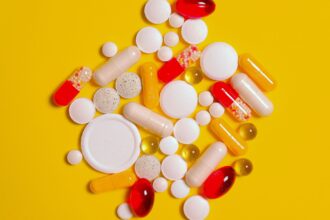
Bar chart showing zinc absorption efficiency declining from 73% at 2mg dose to 37% at 30mg doseIllustrative image · Photo by Supliful - Supplements On Demand on Unsplash (Unsplash License)
Zinc supplements marketed at 30mg, 50mg, or higher doses deliver far less additional absorbed zinc than their higher prices suggest. A controlled study found that absorption drops from 73% at 2mg to just 37% at 30mg, with a physiological ceiling around 11mg of net absorbed zinc per dose. — Photo by Supliful - Supplements On Demand on Unsplash (Unsplash License)
SHARE
6 min read|1,148 words
✓ Medically reviewed by Prof. Giorgi Pkhakadze, MD, MPH, PhD · ORCID 0000-0001-7609-4515

🟠 Moderate Evidence

Contents
    • Key takeaways
      • Study at a Glance
      • Zinc absorption efficiency declines sharply with increasing dose
  • The saturable transporter limits net absorption
  • The mathematics of dose escalation reveal diminishing returns
  • Implications for supplementation strategy and micronutrient bioavailability
    • What this means
  • Frequently asked questions
    • Does taking zinc with food affect absorption differently at higher doses?
    • Can I improve zinc absorption by spacing doses throughout the day?
    • Does this same saturation principle apply to other supplements like vitamin C or iron?

Most zinc supplements are marketed in doses of 15mg, 25mg, 30mg, or 50mg with the implicit assumption that higher doses deliver proportionally more absorbable zinc. They do not. Research published in the American Journal of Clinical Nutrition reveals that zinc absorption is governed by a saturable cellular transporter, and absorption efficiency declines sharply as dose increases, reaching a functional ceiling around 11mg of net absorbed zinc per dose regardless of how much is ingested.

Key takeaways

  • Zinc absorption declines from 73% at 2mg to just 37% at 30mg, according to dual-isotope tracer measurements in Tran et al. (Am J Clin Nutr, 2004)
  • The ZIP4 transporter on intestinal cells (enterocytes) becomes saturated; increasing dose from 20mg to 30mg adds only 0.2mg of additional absorbed zinc
  • This same saturation principle applies to other micronutrient transporters, limiting the efficacy of megadose supplementation strategies

Study at a Glance

Source American Journal of Clinical Nutrition
Study type Controlled human absorption study (dual-isotope tracer method)
Sample size N = 8 healthy adults
Intervention Six escalating doses of aqueous zinc sulfate (2mg, 5mg, 10mg, 15mg, 20mg, 30mg) labeled with stable zinc isotopes
Primary outcome Fractional absorption (%) and absolute zinc absorbed (mg) by dose
37%
Fractional zinc absorption at a 30mg dose, compared to 73% absorption at 2mg, according to Tran et al. (Am J Clin Nutr, 2004)

Zinc absorption efficiency declines sharply with increasing dose

Fractional absorption (%) of aqueous zinc sulfate by dose, in healthy adults (n=8); Tran et al., 2004

2mg
73%
5mg
67%
10mg
71%
15mg
63%
20mg
54%
30mg
37%

Source: Tran et al., Am J Clin Nutr, 2004 | Georgian Medical Journal News

Submit Your Paper
GMJ_Submit_Banner

The saturable transporter limits net absorption

The primary zinc transporter on the apical membrane of intestinal enterocytes is ZIP4 (encoded by SLC39A4). This is a carrier-mediated, saturable transporter—meaning it has a finite capacity to move zinc from the intestinal lumen into the cell. At low luminal concentrations, ZIP4 operates at high efficiency and captures most available zinc. As the concentration rises past the transporter’s capacity, additional zinc is left unabsorbed and excreted.

According to Tran et al.’s measurements using dual-isotope tracer methodology, the absolute amount of zinc absorbed plateaued around 11mg per dose in this cohort. A secondary passive diffusion component exists but contributes minimally at supplemental dose ranges. This is identical saturation kinetics observed with vitamin C absorption through the SVCT1 transporter: the biology imposes a ceiling that no further dose increase can overcome in a single administration.

The mathematics of dose escalation reveal diminishing returns

The efficiency loss is mathematically dramatic. Going from 20mg to 30mg—a 50% increase in ingested dose—added only 0.2mg of additional absorbed zinc (from ~10.8mg to ~11mg absorbed). This represents a 98% reduction in marginal benefit relative to the marginal dose increase. In practical terms, a consumer taking a 50mg zinc supplement is absorbing roughly the same absolute quantity as someone taking 15mg, despite ingesting more than three times as much.

One methodological note: the 10mg dose showed slightly higher absorption (71%) than the 5mg dose (67%), which may appear to contradict the general downward trend. According to Tran et al., this reflects genuine biological variability in a small sample (n=8) rather than measurement error, and it is an honest reminder that dose-response curves in vivo are not perfectly smooth. The overall trend is robust, but individual data points carry noise inherent to human physiology.

Implications for supplementation strategy and micronutrient bioavailability

These findings challenge the common marketing narrative that “more is better” in micronutrient supplementation. From a clinical pharmacology standpoint, the data suggest that splitting a 30mg dose into two 15mg administrations hours apart might theoretically improve net absorption by allowing the transporter time to recover between doses, though this strategy has not been formally tested. The findings also apply broadly to other micronutrient transporters with similar saturable kinetics, suggesting that megadose supplementation strategies may offer little additional benefit beyond certain physiological thresholds.

At 2mg zinc sulfate, 73% fractional absorption was achieved. At 30mg, absorption dropped to 37%. The absolute amount absorbed plateaued around 11mg, with increases in dose above 20mg yielding minimal additional zinc bioavailability.

— Tran et al., Am J Clin Nutr, 2004

What this means

For patients: Standard 15mg to 25mg zinc supplements likely deliver most of the bioavailable zinc you would absorb from higher marketed doses (30–50mg). Splitting doses across the day may improve total absorption, though evidence is limited. Consult a clinician before starting supplementation, particularly if taking medications or managing chronic illness.
For clinicians: When recommending zinc supplementation for immunosupport, wound healing, or age-related deficiency, doses above 25mg per single administration offer minimal additional benefit due to transporter saturation. Emphasis should be placed on absorption-optimizing factors (fasting state, timing relative to food, drug interactions) rather than dose escalation alone. Consider clinical outcome data rather than dose size as the primary efficacy metric.
For policymakers: Regulatory agencies and public health authorities should ensure that supplement labeling reflects the saturable nature of micronutrient absorption, preventing consumer misconceptions about dose-response relationships. Dietary reference intake (DRI) recommendations should align with data on physiologically achievable absorption rather than ingested dose alone.

Frequently asked questions

Does taking zinc with food affect absorption differently at higher doses?

Food can influence zinc absorption by modifying pH and interaction with dietary ligands, but the fundamental saturation of ZIP4 persists regardless of food state. Studies on absorption kinetics show that while the absolute amount absorbed may shift slightly with meals, the ceiling effect remains; higher doses still do not yield proportionally more bioavailable zinc. Individual bioavailability studies in your population of interest would be needed to refine this guidance.

Can I improve zinc absorption by spacing doses throughout the day?

The saturation model suggests this could work: administering two 15mg doses 8 hours apart might allow ZIP4 time to recover and operate at higher efficiency on the second dose. However, controlled studies directly comparing split versus single doses in humans are sparse. Theoretically sound, but unproven in published literature. Any dosing change should be discussed with a healthcare provider.

Does this same saturation principle apply to other supplements like vitamin C or iron?

Yes. Iron absorption is governed by the DMT1 transporter, which saturates similarly. Vitamin C absorption is limited by SVCT1 saturation. This is a general principle in micronutrient bioavailability: once a transporter reaches capacity, additional dose increases yield diminishing or negligible returns in net absorption. This reinforces the evidence-based recommendation to prioritize food-based sources and appropriate-dose supplementation over megadose strategies.

The zinc absorption data from Tran et al. exemplify a fundamental principle in pharmacokinetics: ingested dose is not the same as bioavailable dose. As personalized medicine and micronutrient optimization gain prominence in preventive health, understanding transporter saturation becomes essential for clinicians counseling patients on supplementation, and for policymakers designing evidence-based dietary guidance. Future research should explore whether timed, multi-dose strategies or novel delivery formulations can overcome these physiological ceilings, and whether populations with ZIP4 polymorphisms or intestinal dysfunction show altered absorption profiles warranting individualized dosing.

Source: Tran et al., American Journal of Clinical Nutrition, 2004

Was this article helpful?

Disclaimer. This article is health journalism intended for general information and education. It is not medical advice and is not a substitute for professional diagnosis or treatment. Always consult a qualified healthcare provider about your individual circumstances. Full disclaimer →

Related Coverage

Why vitamin D prescriptions favour weekly boluses over daily doses — and what the evidence saysJul 21, 2026
Mitochondria as metabolic decision-makers: how cellular power plants regulate inflammation, aging, and diseaseJul 21, 2026
How minerals shape brain function: what neuroscience reveals about micronutrient deficiencyJul 21, 2026
Stress impairs memory and attention by up to 20%, study finds—but botanical interventions show promiseJul 21, 2026
Related reference
  • Zinc supplements · Drug
  • Vitamin C · Ingredient
  • Iron · Ingredient
  • Zinc · Ingredient
  • SAMe · Ingredient
PG
Written by
Prof. Giorgi Pkhakadze, MD, MPH, PhD
Editor-in-Chief, GMJ News
Full profile →  ·  ORCID 0000-0001-7609-4515
Medical disclaimer. This article is health journalism intended for general information. It is not medical advice and is not a substitute for consultation with a qualified healthcare professional. Always seek your physician's advice regarding any medical condition.
Medically reviewed by Prof. Giorgi Pkhakadze, MD, MPH, PhD. Spotted an error? Contact the editorial team.

Get the GMJ News digest
Evidence-based health journalism in your inbox. No spam; unsubscribe anytime.
TAGGED:clinical nutritionmicronutrient bioavailabilitysupplement efficacytransporter saturationzinc supplementation
Share This Article
Facebook LinkedIn Bluesky Copy Link Print
GMJ
ByGMJ Practice Desk
Follow:
GMJ Practice Desk is part of GMJ News, the newsroom of the Georgian Medical Journal (gmj.ge), published by the Public Health Institute of Georgia. Every article is editorially reviewed before publication.
Leave a Comment Leave a Comment

Leave a Reply Cancel reply

Your email address will not be published. Required fields are marked *

Submit Your Paper →

Georgia's peer-reviewed open-access medical journal. No APC until January 2027.
Submit Manuscript →
Why vitamin D prescriptions favour weekly boluses over daily doses — and what the evidence says

Vitamin D prescriptions typically specify 50,000 IU weekly, a pattern driven by…

Mitochondria as metabolic decision-makers: how cellular power plants regulate inflammation, aging, and disease

Mitochondria function as metabolic control centers that regulate inflammation, aging, and disease…

How minerals shape brain function: what neuroscience reveals about micronutrient deficiency

Minerals are fundamental to brain function, regulating neurotransmission, neuroplasticity, and neuronal resilience.…

Submit Your Paper to GMJ

No APC until January 2027.
Submit Manuscript →

You Might Also Like

Graph showing hormesis curve: sedentary stagnation, moderate training adaptation peak, overtraining maladaptationIllustrative image · Photo by Mikhail Nilov on Pexels (Pexels License)
Clinical UpdatesExplainersPerspectivesPractice

The Hormesis Principle: Why Moderate Stress Builds Resilience Better Than Rest or Overtraining

By
GMJ Practice Desk
19/07/2026
Clinical decision-making flowchart showing biomarker thresholds for antibiotic prescribing in respiratory infectionsIllustrative image · Photo by Anna Shvets on Pexels (Pexels License)
Clinical UpdatesHealth PolicyPolicy & SystemsPractice

Can Biomarker Testing Reduce Unnecessary Antibiotics in Primary Care?

By
GMJ Practice Desk
10/07/2026
Medical illustration showing KRAS protein structure and drug mechanismIllustrative image · Photo by Leeloo The First on Pexels (Pexels License)
Clinical UpdatesNew StudiesPracticeResearch Digest

Breakthrough Drug Targeting ‘Undruggable’ KRAS Mutation Nearly Doubles Pancreatic Cancer Survival

By
GMJ Practice Desk
15/06/2026
Medical researchers discussing stroke trial methodology and neuroprotection challengesIllustrative image · Photo by Thirdman on Pexels (Pexels License)
Clinical UpdatesNew StudiesPracticeResearch Digest

Minocycline Stroke Trial Debate Highlights Neuroprotection Research Challenges

By
GMJ Practice Desk
05/07/2026
Facebook Twitter Youtube Instagram
Company
  • Privacy Policy
  • Contact US
  • GMJ Journal
  • Submit Manuscript
  • Editorial Team
  • Register at GMJ
  • Terms of Use

Subscribe to GMJ News — Click here

Join Community
© 2026 Georgian Medical Journal (GMJ). Published by the Public Health Institute of Georgia (PHIG). All rights reserved.
Welcome Back!

Sign in to your account

Username or Email Address
Password

Lost your password?

Not a member? Sign Up