🟠 Moderate Evidence
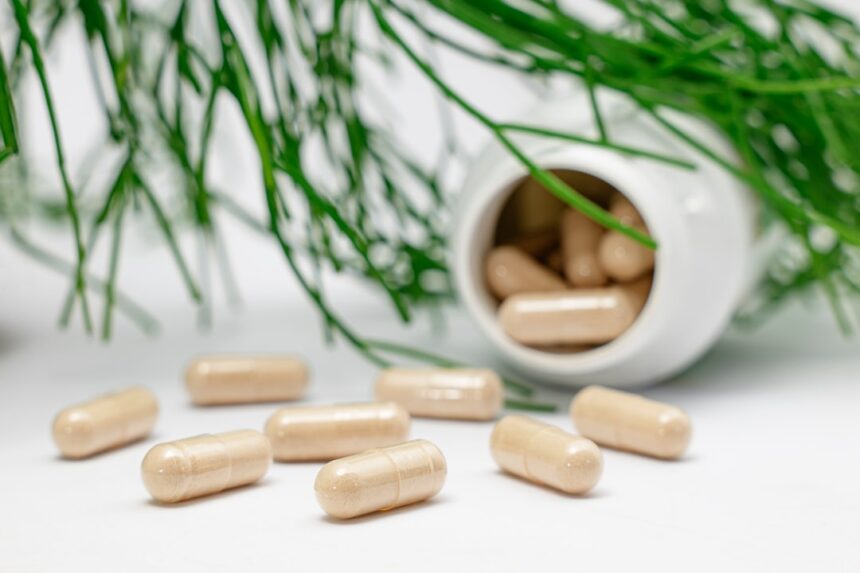
Most zinc supplements are marketed in doses of 15mg, 25mg, 30mg, or 50mg with the implicit assumption that higher doses deliver proportionally more absorbable zinc. They do not. Research published in the American Journal of Clinical Nutrition reveals that zinc absorption is governed by a saturable cellular transporter, and absorption efficiency declines sharply as dose increases, reaching a functional ceiling around 11mg of net absorbed zinc per dose regardless of how much is ingested.
Key takeaways
- Zinc absorption declines from 73% at 2mg to just 37% at 30mg, according to dual-isotope tracer measurements in Tran et al. (Am J Clin Nutr, 2004)
- The ZIP4 transporter on intestinal cells (enterocytes) becomes saturated; increasing dose from 20mg to 30mg adds only 0.2mg of additional absorbed zinc
- This same saturation principle applies to other micronutrient transporters, limiting the efficacy of megadose supplementation strategies
Study at a Glance
| Source | American Journal of Clinical Nutrition |
| Study type | Controlled human absorption study (dual-isotope tracer method) |
| Sample size | N = 8 healthy adults |
| Intervention | Six escalating doses of aqueous zinc sulfate (2mg, 5mg, 10mg, 15mg, 20mg, 30mg) labeled with stable zinc isotopes |
| Primary outcome | Fractional absorption (%) and absolute zinc absorbed (mg) by dose |
Zinc absorption efficiency declines sharply with increasing dose
Fractional absorption (%) of aqueous zinc sulfate by dose, in healthy adults (n=8); Tran et al., 2004
Source: Tran et al., Am J Clin Nutr, 2004 | Georgian Medical Journal News

The saturable transporter limits net absorption
The primary zinc transporter on the apical membrane of intestinal enterocytes is ZIP4 (encoded by SLC39A4). This is a carrier-mediated, saturable transporter—meaning it has a finite capacity to move zinc from the intestinal lumen into the cell. At low luminal concentrations, ZIP4 operates at high efficiency and captures most available zinc. As the concentration rises past the transporter’s capacity, additional zinc is left unabsorbed and excreted.
According to Tran et al.’s measurements using dual-isotope tracer methodology, the absolute amount of zinc absorbed plateaued around 11mg per dose in this cohort. A secondary passive diffusion component exists but contributes minimally at supplemental dose ranges. This is identical saturation kinetics observed with vitamin C absorption through the SVCT1 transporter: the biology imposes a ceiling that no further dose increase can overcome in a single administration.
The mathematics of dose escalation reveal diminishing returns
The efficiency loss is mathematically dramatic. Going from 20mg to 30mg—a 50% increase in ingested dose—added only 0.2mg of additional absorbed zinc (from ~10.8mg to ~11mg absorbed). This represents a 98% reduction in marginal benefit relative to the marginal dose increase. In practical terms, a consumer taking a 50mg zinc supplement is absorbing roughly the same absolute quantity as someone taking 15mg, despite ingesting more than three times as much.
One methodological note: the 10mg dose showed slightly higher absorption (71%) than the 5mg dose (67%), which may appear to contradict the general downward trend. According to Tran et al., this reflects genuine biological variability in a small sample (n=8) rather than measurement error, and it is an honest reminder that dose-response curves in vivo are not perfectly smooth. The overall trend is robust, but individual data points carry noise inherent to human physiology.
Implications for supplementation strategy and micronutrient bioavailability
These findings challenge the common marketing narrative that “more is better” in micronutrient supplementation. From a clinical pharmacology standpoint, the data suggest that splitting a 30mg dose into two 15mg administrations hours apart might theoretically improve net absorption by allowing the transporter time to recover between doses, though this strategy has not been formally tested. The findings also apply broadly to other micronutrient transporters with similar saturable kinetics, suggesting that megadose supplementation strategies may offer little additional benefit beyond certain physiological thresholds.
At 2mg zinc sulfate, 73% fractional absorption was achieved. At 30mg, absorption dropped to 37%. The absolute amount absorbed plateaued around 11mg, with increases in dose above 20mg yielding minimal additional zinc bioavailability.
— Tran et al., Am J Clin Nutr, 2004
What this means
Frequently asked questions
Does taking zinc with food affect absorption differently at higher doses?
Food can influence zinc absorption by modifying pH and interaction with dietary ligands, but the fundamental saturation of ZIP4 persists regardless of food state. Studies on absorption kinetics show that while the absolute amount absorbed may shift slightly with meals, the ceiling effect remains; higher doses still do not yield proportionally more bioavailable zinc. Individual bioavailability studies in your population of interest would be needed to refine this guidance.
Can I improve zinc absorption by spacing doses throughout the day?
The saturation model suggests this could work: administering two 15mg doses 8 hours apart might allow ZIP4 time to recover and operate at higher efficiency on the second dose. However, controlled studies directly comparing split versus single doses in humans are sparse. Theoretically sound, but unproven in published literature. Any dosing change should be discussed with a healthcare provider.
Does this same saturation principle apply to other supplements like vitamin C or iron?
Yes. Iron absorption is governed by the DMT1 transporter, which saturates similarly. Vitamin C absorption is limited by SVCT1 saturation. This is a general principle in micronutrient bioavailability: once a transporter reaches capacity, additional dose increases yield diminishing or negligible returns in net absorption. This reinforces the evidence-based recommendation to prioritize food-based sources and appropriate-dose supplementation over megadose strategies.
The zinc absorption data from Tran et al. exemplify a fundamental principle in pharmacokinetics: ingested dose is not the same as bioavailable dose. As personalized medicine and micronutrient optimization gain prominence in preventive health, understanding transporter saturation becomes essential for clinicians counseling patients on supplementation, and for policymakers designing evidence-based dietary guidance. Future research should explore whether timed, multi-dose strategies or novel delivery formulations can overcome these physiological ceilings, and whether populations with ZIP4 polymorphisms or intestinal dysfunction show altered absorption profiles warranting individualized dosing.
Source: Tran et al., American Journal of Clinical Nutrition, 2004
Was this article helpful?
Disclaimer. This article is health journalism intended for general information and education. It is not medical advice and is not a substitute for professional diagnosis or treatment. Always consult a qualified healthcare provider about your individual circumstances. Full disclaimer →
Related Coverage




Medically reviewed by Prof. Giorgi Pkhakadze, MD, MPH, PhD. Spotted an error? Contact the editorial team.