Updated 13/09/2026
🟡 Preliminary Evidence
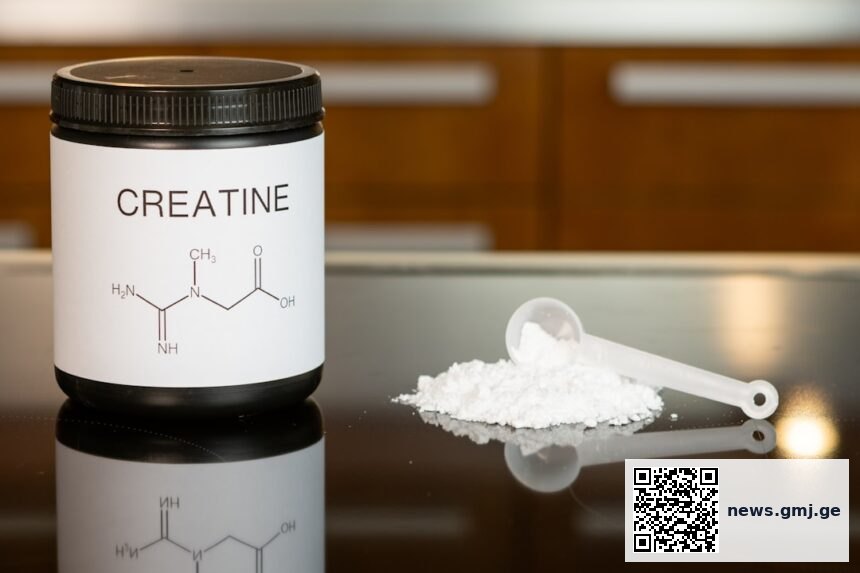
Creatine supplementation is widely misunderstood. Most athletes and fitness enthusiasts believe it works by increasing water retention in muscle cells or by providing energy directly, similar to caffeine. Neither explanation is correct. Research published in Clinical Science (1992) shows that creatine functions as a phosphate shuttle system that regenerates ATP—the primary energy currency of muscle cells—at speeds no other metabolic pathway can match during explosive, high-intensity efforts.
Key takeaways
- Creatine kinase uses phosphocreatine to regenerate ATP in milliseconds during the first 3 seconds of maximal muscle contraction, with roughly 70% of ATP regeneration coming from this system during peak effort
- Creatine functions as a phosphate shuttle between mitochondria and contractile sites, transporting energy faster than free ATP can diffuse through the cytoplasm
- Phosphocreatine stores deplete by 50–70% within 10 seconds of all-out effort; glycolysis and oxidative metabolism take over after 30 seconds, but cannot match the ATP supply rate of the phosphocreatine system
ATP Regeneration by Energy System During Maximal Muscle Contraction
Relative contribution of phosphocreatine, glycolysis, and oxidative phosphorylation to ATP supply at 3, 10, and 30 seconds of all-out effort

Source: Harris et al., Clinical Science, 1992; Hultman et al., 1996 | Georgian Medical Journal News
The ATP Crisis: Why Muscles Need a Fast Energy System
Muscle contraction is extraordinarily energy-intensive. During a heavy squat, a sprint start, or a vertical jump, muscle cells burn through their stored ATP in approximately 2 to 3 seconds of maximal contraction. Once that ATP is depleted, muscle force production would halt immediately unless a rapid regeneration system kicks in. The phosphocreatine system is that system.
The body has two primary pathways for regenerating ATP: glycolysis (the breakdown of glucose without oxygen) and oxidative phosphorylation (ATP production through aerobic metabolism). Neither can match the regeneration rate of the creatine kinase system during the initial explosive phase of movement. Research by Hultman et al. (1996) demonstrated that glycolysis and oxidative metabolism require multiple enzymatic steps and cannot produce ATP fast enough to sustain maximal power output beyond the first few seconds.
The Creatine Shuttle: How Phosphocreatine Transports Energy Within Muscle Cells
What distinguishes the creatine system from a simple energy buffer is its function as an active transport shuttle. Creatine kinase exists in two distinct isoforms within muscle tissue: CK-M, anchored directly on the myofibril where ATP is being consumed during contraction, and CK-mit, located in the mitochondria where ATP is being produced. This dual-location architecture solves a critical biophysical problem: the cytoplasm of muscle cells is crowded with proteins and organelles, making free ATP diffusion slow.
Phosphocreatine carries high-energy phosphate groups from the mitochondria to the contractile site faster than free ATP itself can diffuse through the crowded cytoplasm. Once it donates its phosphate to regenerate ATP at the myofibril, free creatine returns to the mitochondria to be recharged. This is not merely a passive buffer system—it is an active energy transport mechanism that solves both the speed and logistics problems of sustaining explosive muscle contractions. Rae et al. (2003) provided additional evidence that this shuttle mechanism is essential to maintaining power output during repeated high-intensity efforts.
The Timeline of Energy System Depletion During Maximal Effort
The phosphocreatine system has a predictable depletion curve. During the first 3 seconds of maximal contraction—roughly 70% of ATP regeneration comes from phosphocreatine breakdown. By 10 seconds of all-out effort, phosphocreatine stores are depleted by 50 to 70%, and glycolysis begins to contribute more significantly to ATP supply. By 30 seconds of continuous maximal effort, phosphocreatine stores are nearly empty.
Once the phosphocreatine system is depleted, glycolysis and oxidative metabolism become the primary sources of ATP. However, neither can match the ATP supply rate that phosphocreatine provided during the explosive phase. This transition is when athletes experience a dramatic drop in power output—the moment after an all-out sprint when the muscles cannot sustain the same force. Understanding this timeline explains why creatine supplementation has measurable effects on repeated high-intensity efforts and why recovery time between maximal efforts matters: it allows time to resynthesise phosphocreatine stores.
What Creatine Supplementation Actually Does
Harris et al. (1992) demonstrated that oral creatine monohydrate supplementation increases the total creatine pool available within muscle cells. By increasing muscle creatine content, supplementation increases the total amount of phosphocreatine that can be stored and regenerated. This translates to a larger pool of high-energy phosphate available during the critical first 3–10 seconds of maximal effort.
The practical effect is modest but measurable: athletes can perform more repetitions at maximal intensity, recover slightly faster between efforts, and sustain power output across repeated sets. The effect is most pronounced in activities that demand repeated maximal contractions—sprinting, jumping, heavy resistance training—and negligible in endurance activities where oxidative metabolism dominates. See New Studies and Clinical Updates for additional evidence on sports performance interventions.
Phosphocreatine provides approximately 70% of ATP regeneration during the first 3 seconds of maximal muscle contraction, and depletes by 50–70% within 10 seconds of all-out effort. Once depleted, muscle power output drops sharply because slower energy systems cannot match the ATP supply rate of the phosphocreatine system.
— Harris et al., Clinical Science (1992)
What this means
Frequently asked questions
Does creatine supplementation increase muscle size?
Not directly. Creatine allows athletes to perform more total work during training by supporting repeated high-intensity efforts. Greater training volume may eventually stimulate muscle protein synthesis, but the mechanism is training, not creatine itself. Initial weight gain (1–2 kg) is intramuscular water, not protein.
How long does it take for creatine supplementation to work?
Phosphocreatine synthesis occurs gradually. Most research protocols use a 5-7 day loading phase (15–20g daily in divided doses) followed by maintenance (3–5g daily), though continuous low-dose supplementation (3–5g daily without loading) reaches similar muscle creatine levels within 3–4 weeks. Effects on performance appear within days of reaching saturated muscle creatine levels.
Is creatine supplementation safe?
Yes, for healthy individuals at recommended doses. Extensive clinical research shows no adverse effects on kidney function, liver function, or cardiovascular health at standard doses. Individuals with pre-existing kidney disease or on medications affecting renal function should consult their physician before supplementing.
The creatine phosphate system is one of the most elegant solutions in human muscle physiology: a two-enzyme shuttle that transports energy from where it is produced to where it is consumed faster than diffusion alone can achieve. The misconceptions surrounding creatine supplementation—that it merely hydrates muscle or provides energy like caffeine—obscure this elegant mechanism. As sports nutrition science advances, understanding the actual biochemistry of performance-enhancing supplements becomes essential for athletes, clinicians, and public health professionals alike. Further research into individual genetic variation in creatine transporter expression and phosphocreatine kinetics may refine personalized supplementation strategies in the future.
Source: Harris et al., Clinical Science (1992); Hultman et al., 1996; Rae et al., 2003
🗺️ Find certified Georgian healthcare providers: sheniekimi.ge — Georgia Health Map · 998 clinics · 6,600+ doctors · 2,296 pharmacies
Was this article helpful?
Disclaimer. This article is health journalism intended for general information and education. It is not medical advice and is not a substitute for professional diagnosis or treatment. Always consult a qualified healthcare provider about your individual circumstances. Full disclaimer →
Related Coverage




Editorial standards. This article was produced under the GMJ News editorial process, with oversight by the GMJ Editorial Board. Our editorial process. Spotted an error? Contact the editorial team.