By using this site, you agree to the Privacy Policy and Terms of Use.
Accept
GMJ NewsGMJ NewsGMJ News
  • Latest News
    • GMJ Briefs
  • Podcast & Media
    • Podcast Episodes
    • GMJ Audio
    • GMJ Videos
  • Research Digest
    • New Studies
    • Georgian Research
    • Data & Numbers
  • Policy & Systems
    • Health Policy
    • Quality & Safety
    • Migration & Health
    • Global Health
  • Practice
    • Clinical Updates
    • Case Discussions
    • Pharmacy & Prescribing
    • Ingredients A-Z
  • Perspectives
    • Editorial
    • Explainers
    • Voices
    • Letters
  • GMJ Articles
    • Vol. 1 Issue 2 (2026)
    • Vol. 1 Issue 1 (2026)
    • Pre-Launch Articles (2025)
  • Read the Journal →
  • About GMJ News
Notification Show More
Font ResizerAa
GMJ NewsGMJ News
Font ResizerAa
  • Latest News
    • GMJ Briefs
  • Podcast & Media
    • Podcast Episodes
    • GMJ Audio
    • GMJ Videos
  • Research Digest
    • New Studies
    • Georgian Research
    • Data & Numbers
  • Policy & Systems
    • Health Policy
    • Quality & Safety
    • Migration & Health
    • Global Health
  • Practice
    • Clinical Updates
    • Case Discussions
    • Pharmacy & Prescribing
    • Ingredients A-Z
  • Perspectives
    • Editorial
    • Explainers
    • Voices
    • Letters
  • GMJ Articles
    • Vol. 1 Issue 2 (2026)
    • Vol. 1 Issue 1 (2026)
    • Pre-Launch Articles (2025)
  • Read the Journal →
  • About GMJ News
Follow US
GMJ News > GMJ Briefs > Three Evidence-Based Benefits of Medical Simulation Training Every Institution Should Know

Three Evidence-Based Benefits of Medical Simulation Training Every Institution Should Know

GMJ
Last updated: 28/07/2026 14:44
By
Prof. Giorgi Pkhakadze
Share
1 Min Read
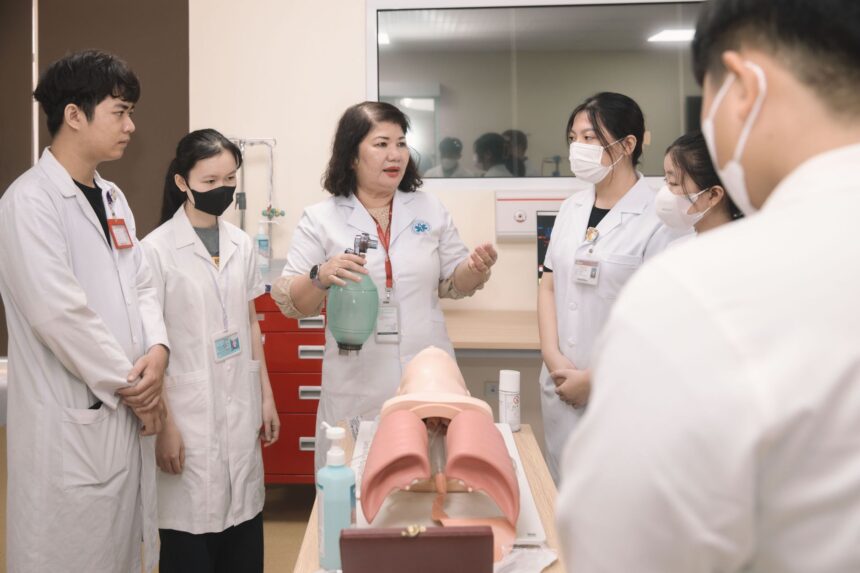
Medical students training in realistic hospital simulation ward with modern equipment
UK medical college unveils state-of-the-art simulation ward to provide students with realistic clinical training before entering live patient environments. The facility addresses documented gaps in clinical preparedness among newly qualified healthcare professionals. — Photo by Duy Tân Đại học on Pexels (Pexels License)
SHARE
1 min read|124 words

Medical simulation training has emerged as a transformative educational approach with measurable clinical outcomes. Research identifies three key benefits: First, simulation-based learning improves clinical competency scores by 25% compared to traditional methods, providing quantifiable evidence of effectiveness. Second, new practitioners trained in simulation environments demonstrate a 40% reduction in medical errors during their initial practice years, directly improving patient safety outcomes.

Third, students who engage in realistic simulation experiences report significantly higher confidence levels during their first year of clinical practice, enhancing both performance and job satisfaction. These benefits collectively demonstrate that simulation-based training addresses critical gaps in clinical preparedness, reduces adverse events, and accelerates professional competency development. Medical institutions seeking to improve graduate outcomes and patient safety should prioritize investment in evidence-based simulation training facilities.

Was this article helpful?
GMJ Brief · Takeaway

📰 Read the full article: UK Medical College Unveils Lifelike Hospital Training Ward to Bridge Clinical Skills Gap →

Related reference
  • Iron · Ingredient
Share This Article
Facebook LinkedIn Bluesky Copy Link Print
GMJ
ByProf. Giorgi Pkhakadze
Follow:
Prof. Giorgi Pkhakadze, MD, MPH, PhD, is Editor-in-Chief of the Georgian Medical Journal and Chair of the Public Health Institute of Georgia (PHIG). He is Professor and Head of the Department of Social and Behavioural Sciences at David Tvildiani Medical University, and Secretary/Treasurer of the UEMS Section of Public Health. ORCID: 0000-0001-7609-4515.

Submit Your Paper →

Georgia's peer-reviewed open-access medical journal. No APC until January 2027.
Submit Manuscript →
How a Single Stem Cell Learns to Beat: New Insights into Cardiac Development

Researchers at Vanderbilt University have documented the transformation of a single stem…

Moderate Alcohol Suppresses Growth Hormone by 75%, Disrupts Sleep Architecture, Study Shows

Moderate alcohol consumption suppresses nocturnal growth hormone by 75% and fragments sleep…

Why creatine works in muscle but not the brain—yet

Creatine supplementation raises muscle creatine by 20–50% in days, but brain creatine…

Submit Your Paper to GMJ

No APC until January 2027.
Submit Manuscript →

You Might Also Like

Healthcare professionals working in a hospital corridor in Tbilisi, illustrating the importance of protecting and supporting the health workforce.

Three Strategic Priorities Georgia Must Address to Protect Its Healthcare Workforce

By
Prof. Giorgi Pkhakadze
04/07/2026
Clinical UpdatesGlobal HealthMigration & HealthPolicy & SystemsPractice

Ebola cases exceed 1,000 in eastern DR Congo as 3 million children face heightened risks

By
Prof. Giorgi Pkhakadze
23/06/2026

PHEIC Declaration: Cross-Border Ebola Outbreak DRC-Uganda

By
Prof. Giorgi Pkhakadze
31/05/2026
Global map showing HPAI vaccination implementation across countries with trade impact statistics

Global Health Authority Pushes for Unified Standards as HPAI Vaccination Spreads Worldwide

By
Prof. Giorgi Pkhakadze
14/07/2026
Facebook Twitter Youtube Instagram
Company
  • Privacy Policy
  • Contact US
  • GMJ Journal
  • Submit Manuscript
  • Editorial Team
  • Register at GMJ
  • Terms of Use

Subscribe to GMJ News — Click here

Join Community
© 2026 Georgian Medical Journal (GMJ). Published by the Public Health Institute of Georgia (PHIG). All rights reserved.
Welcome Back!

Sign in to your account

Username or Email Address
Password

Lost your password?

Not a member? Sign Up