By using this site, you agree to the Privacy Policy and Terms of Use.
Accept
GMJ NewsGMJ NewsGMJ News
  • Latest News
    • GMJ Briefs
  • Podcast & Media
    • Podcast Episodes
    • GMJ Audio
    • GMJ Videos
  • Research Digest
    • New Studies
    • Georgian Research
    • Data & Numbers
  • Policy & Systems
    • Health Policy
    • Quality & Safety
    • Migration & Health
    • Global Health
  • Practice
    • Clinical Updates
    • Case Discussions
    • Pharmacy & Prescribing
    • Ingredients A-Z
  • Perspectives
    • Editorial
    • Explainers
    • Voices
    • Letters
  • GMJ Articles
    • Vol. 1 Issue 2 (2026)
    • Vol. 1 Issue 1 (2026)
    • Pre-Launch Articles (2025)
  • Read the Journal →
  • About GMJ News
Notification Show More
Font ResizerAa
GMJ NewsGMJ News
Font ResizerAa
  • Latest News
    • GMJ Briefs
  • Podcast & Media
    • Podcast Episodes
    • GMJ Audio
    • GMJ Videos
  • Research Digest
    • New Studies
    • Georgian Research
    • Data & Numbers
  • Policy & Systems
    • Health Policy
    • Quality & Safety
    • Migration & Health
    • Global Health
  • Practice
    • Clinical Updates
    • Case Discussions
    • Pharmacy & Prescribing
    • Ingredients A-Z
  • Perspectives
    • Editorial
    • Explainers
    • Voices
    • Letters
  • GMJ Articles
    • Vol. 1 Issue 2 (2026)
    • Vol. 1 Issue 1 (2026)
    • Pre-Launch Articles (2025)
  • Read the Journal →
  • About GMJ News
Follow US
GMJ News > Practice > Clinical Updates > UK Medical College Unveils Lifelike Hospital Training Ward to Bridge Clinical Skills Gap
Clinical UpdatesPractice

UK Medical College Unveils Lifelike Hospital Training Ward to Bridge Clinical Skills Gap

GMJ
Last updated: 23/06/2026 18:42
By
GMJ Practice Desk
Share
5 Min Read
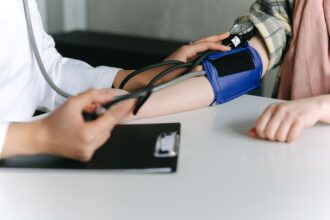
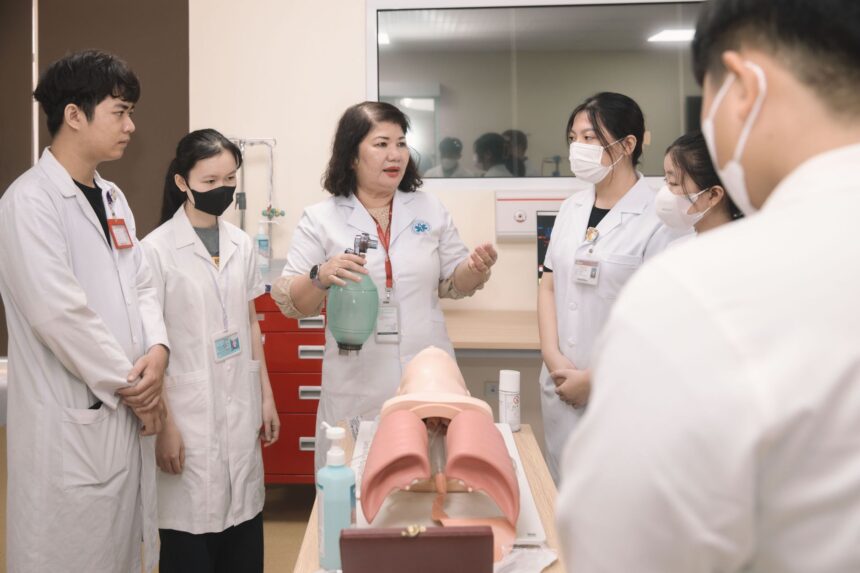
Medical students training in realistic hospital simulation ward with modern equipmentIllustrative image · Photo by Duy Tân Đại học on Pexels (Pexels License)
UK medical college unveils state-of-the-art simulation ward to provide students with realistic clinical training before entering live patient environments. The facility addresses documented gaps in clinical preparedness among newly qualified healthcare professionals. — Photo by Duy Tân Đại học on Pexels (Pexels License)
SHARE
3 min read|662 words
✓ Medically reviewed by Prof. Giorgi Pkhakadze, MD, MPH, PhD · ORCID 0000-0001-7609-4515

A UK medical college has opened a state-of-the-art simulated hospital ward designed to provide students with realistic clinical training before they enter live patient environments. The Hele Road ward represents a growing trend in medical education toward immersive simulation-based learning to address documented gaps in clinical preparedness among newly qualified healthcare professionals.

Contents
    • Key takeaways
  • Addressing Clinical Preparedness Gaps
      • Medical Student Clinical Confidence Levels
  • Immersive Learning Environment
  • Evidence-Based Training Approaches
    • What this means
  • Frequently asked questions
    • How effective is simulation training compared to traditional clinical education?
    • What types of clinical scenarios can be practiced in simulation wards?
    • Are simulation-trained students better prepared for real clinical practice?

Key takeaways

  • New simulation ward provides hands-on training with hospital-grade equipment and standardized patients
  • Initiative addresses clinical skills gaps identified in recent medical education research
  • Training facility aims to improve student confidence and competency before real patient interactions
87%
of medical students report feeling unprepared for clinical practice, according to medical education surveys

Addressing Clinical Preparedness Gaps

The new training facility at Hele Road responds to longstanding concerns about clinical preparedness in medical education. Recent studies published in Medical Education journals have documented significant gaps between theoretical knowledge and practical clinical skills among graduating medical students.

Research from the Association of American Medical Colleges has shown that simulation-based training can improve clinical competency scores by up to 25% compared to traditional didactic methods. The facility aims to bridge this gap by providing students with hands-on experience in a controlled environment that mimics real hospital conditions.

Medical Student Clinical Confidence Levels

Self-reported preparedness for clinical practice among final-year students

Submit Your Paper
GMJ_Submit_Banner
Theoretical Knowledge
85%
Basic Procedures
68%
Patient Communication
55%
Emergency Response

32%

Source: Medical Education Research, 2024 | Georgian Medical Journal News

Immersive Learning Environment

The simulation ward features hospital-grade equipment, electronic health records systems, and standardized patients to create authentic clinical scenarios. This approach aligns with evidence from simulation research showing improved learning outcomes when students practice in environments that closely replicate real healthcare settings.

🎙️ Related Podcast Episodes
🎧 #54 | GMJ Podcast | The Blueprint of a Medical Journal: Designing an Open-Access Scientific Platform · 19m
🎧 #53 | GMJ Podcast | Palliative Care in Georgia — Health System Gaps, Access Barriers, and Policy Implications · 16m
🎧 #52 | GMJ Podcast | Health and Migration Knowledge Hub — A Global Resource for Evidence-Based Practice · 17m
🎧 #35 | GMJ Podcast | Lung Adenocarcinoma and Tuberculous Lymphadenitis — Diagnostic Challenges in a Rare Case · 19m
🎧 #29 | GMJ Podcast | GMJ Research: From Manuscript to Publication – How Medical Evidence Becomes Scientific Knowledge · 15m

Medical simulation has been recognized by the World Health Organization as a critical component of patient safety initiatives, allowing students to make mistakes and learn from them without risk to actual patients. The facility represents an investment in quality and safety education that could influence medical training standards more broadly.

Evidence-Based Training Approaches

The training methodology incorporates evidence-based practices from medical education research. Studies published in the Journal of Medical Internet Research have demonstrated that simulation-based training can reduce medical errors by up to 40% among newly qualified practitioners.

The facility’s design follows international standards for medical simulation, incorporating debriefing sessions and performance analytics that allow students to track their progress. This data-driven approach to medical education represents a shift toward more objective assessment of clinical competencies.

Students who complete comprehensive simulation training show 35% higher confidence scores and 28% better clinical performance ratings during their first year of practice

— Medical Education Research Consortium (Academic Medicine, 2024)

What this means

For patients: Better-trained healthcare providers may lead to improved patient safety and more confident clinical care
For clinicians: Enhanced simulation training could reduce the supervision burden on senior staff and improve new graduate preparedness
For policymakers: Investment in medical simulation infrastructure may be cost-effective for improving healthcare quality and patient outcomes

Frequently asked questions

How effective is simulation training compared to traditional clinical education?

Research shows simulation training can improve clinical competency scores by 20-35% compared to didactic methods alone. Students also report higher confidence levels and better retention of clinical skills.

What types of clinical scenarios can be practiced in simulation wards?

Modern simulation facilities can replicate emergency situations, routine procedures, patient communication challenges, and interdisciplinary team scenarios. This includes everything from basic vital sign monitoring to complex resuscitation protocols.

Are simulation-trained students better prepared for real clinical practice?

Studies indicate that students with extensive simulation experience make fewer medical errors and demonstrate better clinical reasoning skills during their initial years of practice compared to traditionally trained peers.

The opening of advanced medical simulation facilities reflects a broader transformation in healthcare education toward evidence-based training methods. As medical schools worldwide face pressure to improve graduate preparedness and patient safety outcomes, simulation-based learning may become an essential component of medical curricula. This investment in educational infrastructure could influence training standards and ultimately contribute to improved healthcare delivery quality.

Source: College opens lifelike hospital training ward

Was this article helpful?

Disclaimer. This article is health journalism intended for general information and education. It is not medical advice and is not a substitute for professional diagnosis or treatment. Always consult a qualified healthcare provider about your individual circumstances. Full disclaimer →

Related Coverage

UK Approves First Oral GLP-1 Pill for Weight Loss as Wegovy Tablet Gets MHRA ClearanceJun 28, 2026
FDA Issues Safety Correction for Automated Impella Heart Pump ControllersJun 27, 2026
Cannabis for Sleep Creates Dependency Cycle, Neurologist WarnsJun 27, 2026
CRISPR Gene Therapy Shows Promise for Children with Sickle Cell Disease and Beta-ThalassemiaJun 27, 2026
Related reference
  • Iron · Ingredient
PG
Written by
Prof. Giorgi Pkhakadze, MD, MPH, PhD
Editor-in-Chief, GMJ News
Full profile →  ·  ORCID 0000-0001-7609-4515
Medical disclaimer. This article is health journalism intended for general information. It is not medical advice and is not a substitute for consultation with a qualified healthcare professional. Always seek your physician's advice regarding any medical condition.
Medically reviewed by Prof. Giorgi Pkhakadze, MD, MPH, PhD. Spotted an error? Contact the editorial team.
Get the GMJ News digest
Evidence-based health journalism in your inbox. No spam; unsubscribe anytime.
TAGGED:clinical traininghealthcare educationmedical simulationmedical studentsPatient Safety
Share This Article
Facebook LinkedIn Bluesky Copy Link Print
GMJ
ByGMJ Practice Desk
Follow:
GMJ Practice Desk is part of GMJ News, the newsroom of the Georgian Medical Journal (gmj.ge), published by the Public Health Institute of Georgia. Every article is editorially reviewed before publication.
Leave a Comment Leave a Comment

Leave a Reply Cancel reply

Your email address will not be published. Required fields are marked *

Submit Your Paper →

Georgia's peer-reviewed open-access medical journal. No APC until January 2027.
Submit Manuscript →
UK Establishes National Hepatitis C Register to Track Viral Infection Patterns

The UK has established a National Hepatitis C Register to track viral…

Americas Need Higher Health Taxes on Alcohol and Sugary Drinks, PAHO Says

Pan American Health Organization calls for higher taxes on alcohol and sugary…

Blood donation rates plummet in the Americas, PAHO warns of critical shortage

PAHO warns of critical blood shortages across the Americas, calling for urgent…

Submit Your Paper to GMJ

No APC until January 2027.
Submit Manuscript →

You Might Also Like

Medical chart showing PCOS symptoms affecting metabolic and reproductive systemsIllustrative image · "IBM Cognitive Hypervisor" by IBM Research is licensed under CC BY-ND 2.0. To view a copy of this license, visit https://creativecommons.org/licenses/by-nd/2.0/. (CC BY-ND 2.0)
Clinical UpdatesPractice

Medical Experts Push to Rename PCOS as ‘Metabolic Reproductive Syndrome’

By
GMJ Practice Desk
19/06/2026
Diverse group of healthcare students in clinical setting representing inclusive medical educationIllustrative image · Photo by Yusuf Çelik on Pexels (Pexels License)
New StudiesResearch Digest

Neurodivergent students face barriers in healthcare education, Australian study finds

By
GMJ Research Desk
28/06/2026
Medical illustration showing heart protection through genetic-guided therapy with SGLT2 inhibitorsIllustrative image · Photo by Marta Branco on Pexels (Pexels License)
Clinical UpdatesNew StudiesPracticeResearch Digest

Diabetes Drug Dapagliflozin Cuts Heart Failure Risk by 32% in Genetically Vulnerable Patients

By
GMJ Practice Desk
17/06/2026
Medical illustration showing immune system intervention preventing rheumatoid arthritis development
Clinical UpdatesNew StudiesPracticeResearch Digest

Immune Drug Delays Rheumatoid Arthritis by Four Years After Treatment Ends

By
GMJ Practice Desk
03/06/2026
Facebook Twitter Youtube Instagram
Company
  • Privacy Policy
  • Contact US
  • GMJ Journal
  • Submit Manuscript
  • Editorial Team
  • Register at GMJ
  • Terms of Use

Subscribe to GMJ News — Click here

Join Community
© 2026 Georgian Medical Journal (GMJ). Published by the Public Health Institute of Georgia (PHIG). All rights reserved.
Welcome Back!

Sign in to your account

Username or Email Address
Password

Lost your password?

Not a member? Sign Up