By using this site, you agree to the Privacy Policy and Terms of Use.
Accept
GMJ NewsGMJ NewsGMJ News
  • Latest News
    • GMJ Briefs
  • Podcast & Media
    • Podcast Episodes
    • GMJ Audio
    • GMJ Videos
  • Research Digest
    • New Studies
    • Georgian Research
    • Data & Numbers
  • Policy & Systems
    • Health Policy
    • Quality & Safety
    • Migration & Health
    • Global Health
  • Practice
    • Clinical Updates
    • Case Discussions
    • Pharmacy & Prescribing
    • Ingredients A-Z
  • Perspectives
    • Editorial
    • Explainers
    • Voices
    • Letters
  • GMJ Articles
    • Vol. 1 Issue 2 (2026)
    • Vol. 1 Issue 1 (2026)
    • Pre-Launch Articles (2025)
  • Read the Journal →
  • About GMJ News
Notification Show More
Font ResizerAa
GMJ NewsGMJ News
Font ResizerAa
  • Latest News
    • GMJ Briefs
  • Podcast & Media
    • Podcast Episodes
    • GMJ Audio
    • GMJ Videos
  • Research Digest
    • New Studies
    • Georgian Research
    • Data & Numbers
  • Policy & Systems
    • Health Policy
    • Quality & Safety
    • Migration & Health
    • Global Health
  • Practice
    • Clinical Updates
    • Case Discussions
    • Pharmacy & Prescribing
    • Ingredients A-Z
  • Perspectives
    • Editorial
    • Explainers
    • Voices
    • Letters
  • GMJ Articles
    • Vol. 1 Issue 2 (2026)
    • Vol. 1 Issue 1 (2026)
    • Pre-Launch Articles (2025)
  • Read the Journal →
  • About GMJ News
Follow US
GMJ News > GMJ Briefs > Swiss Team Advances Noninvasive Brain Stimulation Without Surgery

Swiss Team Advances Noninvasive Brain Stimulation Without Surgery

GMJ
Last updated: 06/07/2026 02:43
By
Prof. Giorgi Pkhakadze
Share
1 Min Read
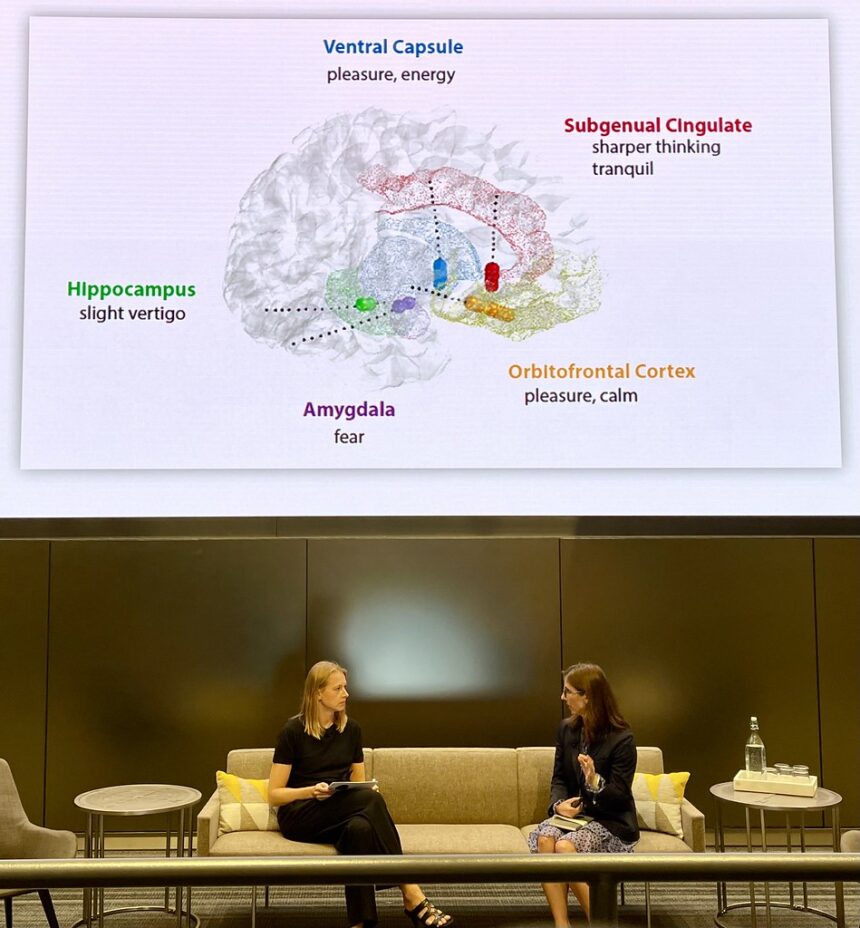
Medical illustration of enhanced deep brain stimulation electrode configuration
University of Geneva researchers demonstrate that adding a third electrode pair significantly improves precision of noninvasive deep brain stimulation in mouse studies. The advancement could expand treatment options for neurological and psychiatric disorders without requiring surgical electrode implantation. — "Precision Modulation of Brain-Circuits for Mood" by jurvetson is licensed under CC BY 2.0. To view a copy of this license, visit https://creativecommons.org/licenses/by/2.0/. (CC BY 2.0)
SHARE
1 min read|134 words

Researchers at the University of Geneva and ETH Zurich have achieved a significant breakthrough in noninvasive deep brain stimulation by introducing a third electrode pair to enhance precision. The innovation addresses a longstanding challenge in treating neurological and psychiatric disorders: delivering targeted brain stimulation without surgical implantation risks.

Using mouse models, the research team demonstrated that the enhanced three-electrode configuration substantially improves spatial accuracy compared to conventional two-electrode approaches. By better focusing stimulation on specific neural circuits while minimizing unintended activation of adjacent brain regions, this technique could expand treatment accessibility for conditions including Parkinson’s disease, depression, and other neurological conditions.

The findings represent a meaningful step toward bridging the gap between invasive surgical procedures and noninvasive therapeutic alternatives, potentially offering patients safer, more effective treatment options.

Read the full article on GMJ Newsroom.

Submit Your Paper
GMJ_Submit_Banner

Was this article helpful?

GMJ Brief · Announcement

📰 Read the full article: Third Electrode Pair Improves Deep Brain Stimulation Precision in Mouse Study →

Share This Article
Facebook LinkedIn Bluesky Copy Link Print
GMJ
ByProf. Giorgi Pkhakadze
Follow:
Prof. Giorgi Pkhakadze, MD, MPH, PhD, is Editor-in-Chief of the Georgian Medical Journal and Chair of the Public Health Institute of Georgia (PHIG). He is Professor and Head of the Department of Social and Behavioural Sciences at David Tvildiani Medical University, and Secretary/Treasurer of the UEMS Section of Public Health. ORCID: 0000-0001-7609-4515.

Submit Your Paper →

Georgia's peer-reviewed open-access medical journal. No APC until January 2027.
Submit Manuscript →
Plasma protein signatures reveal how individual cell types age and predict disease risk

Plasma proteomics can measure biological aging independently in 40+ cell types, with…

Bidi Smoking Linked to Elevated Cancer Risk in Large Indian Study

A multicentre case-control study in India links bidi smoking—hand-rolled cigarettes common in…

District-Level Tobacco Control Cuts Youth Smoking in Indonesia Despite Weak National Enforcement

District-level tobacco control measures in Indonesia have reduced adolescent smoking rates despite…

Submit Your Paper to GMJ

No APC until January 2027.
Submit Manuscript →

You Might Also Like

NHS healthcare workers in hospital corridor discussing new uniform policy restrictions

NHS Proposes Political Badge Restrictions for Doctors Following Antisemitism Review

By
Prof. Giorgi Pkhakadze
23/06/2026
Medical chart showing STI prevalence rates among HIV-positive patients in China

China’s Largest HIV Study Uncovers Critical Care Gaps: 40% Face Recurrent STI Infections

By
Prof. Giorgi Pkhakadze
31/05/2026
Medical researcher in laboratory representing scientific independence under threat from new federal grantmaking rules

Federal Grantmaking Rule Threatens American Medical Research Independence, AAMC Warns

By
Prof. Giorgi Pkhakadze
04/07/2026
Scientific illustration showing age-related cancer spread patterns across different life stages

The Metastasis Curve: Unexpected Data on Cancer Spread Across Life Stages

By
Prof. Giorgi Pkhakadze
24/06/2026
Facebook Twitter Youtube Instagram
Company
  • Privacy Policy
  • Contact US
  • GMJ Journal
  • Submit Manuscript
  • Editorial Team
  • Register at GMJ
  • Terms of Use

Subscribe to GMJ News — Click here

Join Community
© 2026 Georgian Medical Journal (GMJ). Published by the Public Health Institute of Georgia (PHIG). All rights reserved.
Welcome Back!

Sign in to your account

Username or Email Address
Password

Lost your password?

Not a member? Sign Up