By using this site, you agree to the Privacy Policy and Terms of Use.
Accept
GMJ NewsGMJ NewsGMJ News
  • Latest News
    • GMJ Briefs
  • Podcast & Media
    • Podcast Episodes
    • GMJ Audio
    • GMJ Videos
  • Research Digest
    • New Studies
    • Georgian Research
    • Data & Numbers
  • Policy & Systems
    • Health Policy
    • Quality & Safety
    • Migration & Health
    • Global Health
  • Practice
    • Clinical Updates
    • Case Discussions
    • Pharmacy & Prescribing
    • Ingredients A-Z
  • Perspectives
    • Editorial
    • Explainers
    • Voices
    • Letters
  • Health Topics
  • GMJ Articles
    • Vol. 1 Issue 2 (2026)
    • Vol. 1 Issue 1 (2026)
    • Pre-Launch Articles (2025)
  • Read the Journal →
  • About GMJ News
Notification Show More
Font ResizerAa
GMJ NewsGMJ News
Font ResizerAa
  • Latest News
    • GMJ Briefs
  • Podcast & Media
    • Podcast Episodes
    • GMJ Audio
    • GMJ Videos
  • Research Digest
    • New Studies
    • Georgian Research
    • Data & Numbers
  • Policy & Systems
    • Health Policy
    • Quality & Safety
    • Migration & Health
    • Global Health
  • Practice
    • Clinical Updates
    • Case Discussions
    • Pharmacy & Prescribing
    • Ingredients A-Z
  • Perspectives
    • Editorial
    • Explainers
    • Voices
    • Letters
  • Health Topics
  • GMJ Articles
    • Vol. 1 Issue 2 (2026)
    • Vol. 1 Issue 1 (2026)
    • Pre-Launch Articles (2025)
  • Read the Journal →
  • About GMJ News
Follow US
GMJ News > Research Digest > New Studies > Third Electrode Pair Improves Deep Brain Stimulation Precision in Mouse Study
New StudiesResearch Digest

Third Electrode Pair Improves Deep Brain Stimulation Precision in Mouse Study

GMJ
Last updated: 23/06/2026 18:42
By
GMJ Research Desk
Share
5 Min Read
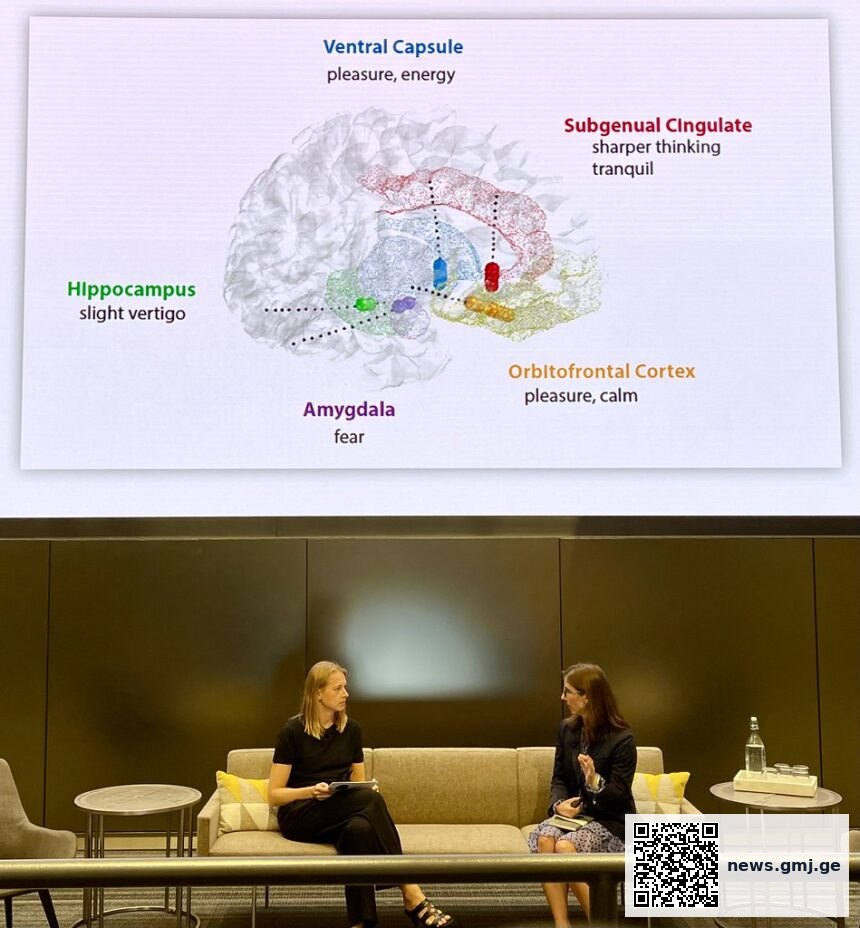
Medical illustration of enhanced deep brain stimulation electrode configurationIllustrative image · "Precision Modulation of Brain-Circuits for Mood" by jurvetson is licensed under CC BY 2.0. To view a copy of this license, visit https://creativecommons.org/licenses/by/2.0/. (CC BY 2.0)
University of Geneva researchers demonstrate that adding a third electrode pair significantly improves precision of noninvasive deep brain stimulation in mouse studies. The advancement could expand treatment options for neurological and psychiatric disorders without requiring surgical electrode implantation. — "Precision Modulation of Brain-Circuits for Mood" by jurvetson is licensed under CC BY 2.0. To view a copy of this license, visit https://creativecommons.org/licenses/by/2.0/. (CC BY 2.0)
SHARE
🎧 Listen to this article4:36 min · 652 words · GMJ Audio
3 min read|652 words
✓ Reviewed by GMJ News Editorial Team

🟡 Preliminary Evidence

Contents
    • Key takeaways
      • Study at a Glance
      • Deep Brain Stimulation Approach Comparison
  • Enhanced Precision Through Additional Electrodes
  • Implications for Neurological Disorders
  • Technical Advancement and Clinical Translation
    • What this means
  • Frequently asked questions
    • How does this differ from current deep brain stimulation?
    • When might this be available for patients?
    • What conditions could this potentially treat?

Researchers from the University of Geneva (UNIGE), in collaboration with ETH Zurich, have demonstrated that adding a third pair of electrodes can significantly improve the spatial precision of noninvasive deep brain stimulation in laboratory experiments. The findings, published in a recent study, suggest potential advances for treating neurological and psychiatric disorders without requiring surgical implantation of electrodes.

Key takeaways

  • Addition of third electrode pair improves targeting precision in noninvasive deep brain stimulation
  • Technique could advance treatment options for neurological and psychiatric conditions
  • Research conducted in mouse models shows enhanced spatial accuracy compared to conventional methods
  • Findings may help bridge gap between invasive and noninvasive brain stimulation approaches

Study at a Glance

Source UNIGE/ETH Zurich Research
Study type Experimental animal study
Sample Mouse models
Population Laboratory mice
Country Switzerland
3rd
electrode pair significantly improves stimulation precision

Deep Brain Stimulation Approach Comparison

Conventional vs. enhanced electrode configuration effectiveness

Standard
2-electrode approach
Enhanced
3-electrode configuration
Improved
targeting precision

Source: UNIGE/ETH Zurich, 2026 | Georgian Medical Journal News

Submit Your Paper
GMJ_Submit_Banner

Enhanced Precision Through Additional Electrodes

The research team at UNIGE’s Faculty of Medicine demonstrated that incorporating a third electrode pair into noninvasive deep brain stimulation protocols substantially improved the technique’s spatial accuracy. Traditional noninvasive approaches have faced challenges in precisely targeting deep brain structures without affecting surrounding tissue.

The enhanced configuration allows researchers to better focus stimulation on specific neural circuits while minimizing unintended activation of adjacent brain regions. This represents a significant technical advancement in the field of therapeutic neurostimulation.

Implications for Neurological Disorders

Deep brain stimulation has established efficacy for treating conditions including Parkinson’s disease, essential tremor, and certain psychiatric disorders. However, current clinical applications typically require surgical implantation of electrodes, which carries inherent risks and limits patient accessibility.

The UNIGE-ETH Zurich collaboration’s findings suggest that enhanced noninvasive approaches could potentially offer similar therapeutic benefits without surgical intervention. According to the research team, this advancement could expand treatment options for patients who are not candidates for invasive procedures or prefer less invasive alternatives.

The third electrode pair configuration demonstrated significantly improved spatial targeting precision compared to conventional two-electrode noninvasive stimulation methods in mouse brain tissue.

— Research Team, University of Geneva (Medical Xpress, 2026)

Technical Advancement and Clinical Translation

The researchers utilized sophisticated electrode positioning to achieve more precise current delivery to target brain regions. This technical innovation addresses a longstanding limitation of noninvasive brain stimulation techniques, which have historically struggled with spatial specificity compared to their invasive counterparts.

The ETH Zurich collaboration contributed advanced modeling capabilities that helped optimize electrode placement and current parameters. The research represents progress toward bridging the efficacy gap between invasive and noninvasive brain stimulation approaches.

What this means

For patients: Potential future access to effective deep brain stimulation without surgical risks, expanding treatment options for neurological conditions
For clinicians: Enhanced noninvasive tools may provide new therapeutic approaches for patients unsuitable for invasive procedures
For policymakers: Reduced healthcare costs and improved accessibility if noninvasive alternatives prove clinically equivalent to surgical approaches

Frequently asked questions

How does this differ from current deep brain stimulation?

Current clinical deep brain stimulation requires surgically implanted electrodes. This research explores noninvasive approaches using external electrodes that could achieve similar precision without surgery.

When might this be available for patients?

The research is currently in preclinical stages using mouse models. Human clinical trials and regulatory approval would be required before clinical availability, likely requiring several years of additional development.

What conditions could this potentially treat?

The technique could potentially address the same conditions currently treated with invasive deep brain stimulation, including Parkinson’s disease, essential tremor, depression, and obsessive-compulsive disorder.

The research represents an important step toward developing clinically viable noninvasive alternatives to surgical deep brain stimulation. While translation to human applications requires extensive additional research and clinical validation, the improved precision demonstrated in these experiments suggests promising potential for expanding therapeutic access. Future studies will likely focus on optimizing the technique for human brain anatomy and conducting safety evaluations in preparation for eventual clinical trials.

Source: Third electrode pair can sharpen deep brain stimulation technique, mouse experiments suggest

Was this article helpful?

Disclaimer. This article is health journalism intended for general information and education. It is not medical advice and is not a substitute for professional diagnosis or treatment. Always consult a qualified healthcare provider about your individual circumstances. Full disclaimer →

Related Coverage

How Vitamin D Becomes an Antimicrobial Weapon Inside Your Immune CellsAug 15, 2026
Resistance Training Protects Brain Health Through Vascular and Cognitive Pathways, New Evidence ShowsAug 15, 2026
Krill Oil vs Fish Oil: What the Evidence Shows About Bioavailability ClaimsAug 15, 2026
Alcohol Suppresses Heart Rate Variability During Sleep Across All Fitness LevelsAug 15, 2026
Explore more on this topic:🧭 Sexually Transmitted Infections hub🧭 Parkinson's Disease hub🧭 Rheumatoid Arthritis hub
🔥 Most read this week
1Medicare’s AI Prior Authorization System Creates Patient Care Delays, Doctors Report
2Creatine Kidney Damage Myth Debunked by Major Safety Review of 26,000 Participants
3Why High-Dose Vitamin B12 Supplements Work Despite Poor Absorption
4Magnesium Form May Not Matter for Cognitive Benefits, New Meta-Analysis Suggests
Related reference
  • SAMe · Ingredient
PG
Editorial oversight
Prof. Giorgi Pkhakadze, MD, MPH, PhD
Editor-in-Chief, GMJ News
Full profile →  ·  ORCID 0000-0001-7609-4515
Medical disclaimer. This article is health journalism intended for general information. It is not medical advice and is not a substitute for consultation with a qualified healthcare professional. Always seek your physician's advice regarding any medical condition.
Editorial standards. This article was produced under the GMJ News editorial process, with oversight by the GMJ Editorial Board. Our editorial process. Spotted an error? Contact the editorial team.

📬 GMJ Health Digest
Evidence-based medical news, once a week. Free, no spam, unsubscribe anytime.
TAGGED:brain researchdeep brain stimulationneurological disordersneurostimulationnoninvasive treatment
Share This Article
Facebook LinkedIn Bluesky Copy Link Print
GMJ
ByGMJ Research Desk
Follow:
GMJ Research Desk is part of GMJ News, the newsroom of the Georgian Medical Journal (gmj.ge), published by the Public Health Institute of Georgia. Every article is editorially reviewed before publication.
Leave a Comment Leave a Comment

Leave a Reply Cancel reply

Your email address will not be published. Required fields are marked *

Submit Your Paper →

Georgia's peer-reviewed open-access medical journal. No APC until January 2027.
Submit Manuscript →
How Vitamin D Becomes an Antimicrobial Weapon Inside Your Immune Cells

Macrophages actively convert vitamin D into cathelicidin, a potent antimicrobial peptide, when…

Brain’s Energy Demands: Why B Vitamins and Micronutrients Matter for Cognitive Function

The human brain consumes 20% of body energy in adults—rising to 50%…

Actin: The Molecular Engine Powering Cell Movement, Division, and Immune Defense

Actin, comprising ~6% of cellular protein, is a multifunctional molecule enabling muscle…

Submit Your Paper to GMJ

No APC until January 2027.
Submit Manuscript →

You Might Also Like

Brain scan showing alcohol's neurotoxic effects on cognitive function and dementia risk
New StudiesResearch Digest

Largest Genetic Study Reveals Any Level of Alcohol Consumption Increases Dementia Risk

By
GMJ Research Desk
24/05/2026
Bar chart comparing acute and cumulative protein synthesis responses between animal and plant protein sourcesIllustrative image · "VEGETARIAN Bodybuilder Luiz Freitas IFBB Mr Olympia Massive Muscle on Plant Based Diet without Meat" by vegetarians-dominate-meat-eaters-01 is licensed under CC BY-SA 2.0. To view a copy of this license, visit https://creativecommons.org/licenses/by-sa/2.0/. (CC BY-SA 2.0)
ExplainersNew StudiesPerspectivesResearch Digest

Animal Protein Produces 47% Larger Muscle Protein Synthesis Spike Than Plant Sources, New Research Shows

By
GMJ Perspectives Desk
01/08/2026
MRI brain scan showing relationship between body composition and brain aging patterns
New StudiesResearch Digest

Muscle Mass Linked to Younger Brain Age in New MRI Study of 1,164 Adults

By
GMJ Research Desk
23/05/2026
Comparison of flavanol content in blackberries, apples, cherries, plums, and other produce—illustrated bar chart showing nutritional density differencesIllustrative image · Photo by Vanessa Loring on Pexels (Pexels License)
Clinical UpdatesExplainersNew StudiesPerspectivesPracticeResearch Digest

Flavanols in fruits and vegetables offer measurable cardiovascular protection, research shows

By
GMJ Practice Desk
13/07/2026
Facebook Twitter Youtube Instagram
Company
  • Privacy Policy
  • Contact US
  • GMJ Journal
  • Submit Manuscript
  • Editorial Team
  • Register at GMJ
  • Terms of Use

Subscribe to GMJ News — Click here

Join Community
© 2026 Georgian Medical Journal (GMJ). Published by the Public Health Institute of Georgia (PHIG). All rights reserved.
Welcome Back!

Sign in to your account

Username or Email Address
Password

Lost your password?

Not a member? Sign Up