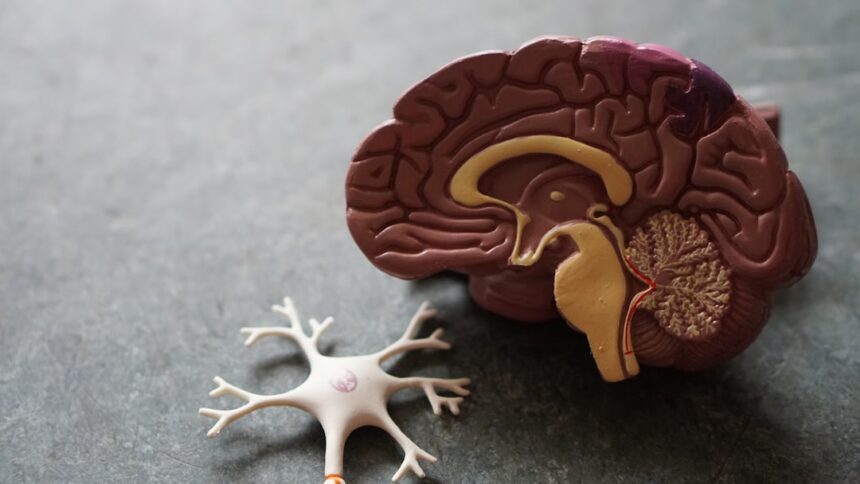
A striking discovery from Ruhr University Bochum reveals that glutamate receptors—the brain’s primary excitatory signaling mechanism—operate at unprecedented efficiency: only 2 of 4 subunits need to activate, representing a 50-percent activation threshold rather than the 100-percent requirement previously assumed.
This finding, published in Nature Communications, fundamentally reframes our understanding of neural communication. The research team’s analysis of receptor complexes demonstrates that this partial activation mechanism provides remarkable flexibility in signal strength modulation. The discovery explains previously unexplained variability in neuronal response patterns and neural circuit behavior across different brain regions and individual organisms.
Prof. Andreas Reiner’s team from Cellular Neurobiology, working with collaborators from Weill Cornell Medicine, suggests this efficiency mechanism represents an evolutionary optimization. The 50-percent threshold allows neurons to fine-tune signaling strength with greater precision, potentially explaining diverse neurological phenotypes and individual treatment responses. Read the full article on GMJ Newsroom.
Was this article helpful?