By using this site, you agree to the Privacy Policy and Terms of Use.
Accept
GMJ NewsGMJ NewsGMJ News
  • Latest News
    • GMJ Briefs
  • Podcast & Media
    • Podcast Episodes
    • GMJ Audio
    • GMJ Videos
  • Research Digest
    • New Studies
    • Georgian Research
    • Data & Numbers
  • Policy & Systems
    • Health Policy
    • Quality & Safety
    • Migration & Health
    • Global Health
  • Practice
    • Clinical Updates
    • Case Discussions
    • Pharmacy & Prescribing
    • Ingredients A-Z
  • Perspectives
    • Editorial
    • Explainers
    • Voices
    • Letters
  • GMJ Articles
    • Vol. 1 Issue 2 (2026)
    • Vol. 1 Issue 1 (2026)
    • Pre-Launch Articles (2025)
  • Read the Journal →
  • About GMJ News
Notification Show More
Font ResizerAa
GMJ NewsGMJ News
Font ResizerAa
  • Latest News
    • GMJ Briefs
  • Podcast & Media
    • Podcast Episodes
    • GMJ Audio
    • GMJ Videos
  • Research Digest
    • New Studies
    • Georgian Research
    • Data & Numbers
  • Policy & Systems
    • Health Policy
    • Quality & Safety
    • Migration & Health
    • Global Health
  • Practice
    • Clinical Updates
    • Case Discussions
    • Pharmacy & Prescribing
    • Ingredients A-Z
  • Perspectives
    • Editorial
    • Explainers
    • Voices
    • Letters
  • GMJ Articles
    • Vol. 1 Issue 2 (2026)
    • Vol. 1 Issue 1 (2026)
    • Pre-Launch Articles (2025)
  • Read the Journal →
  • About GMJ News
Follow US
GMJ News > GMJ Briefs > 850 Million Affected: The Stark Reality Behind WHO’s Kidney Health Resolution

850 Million Affected: The Stark Reality Behind WHO’s Kidney Health Resolution

GMJ
Last updated: 14/07/2026 12:43
By
Prof. Giorgi Pkhakadze
Share
1 Min Read
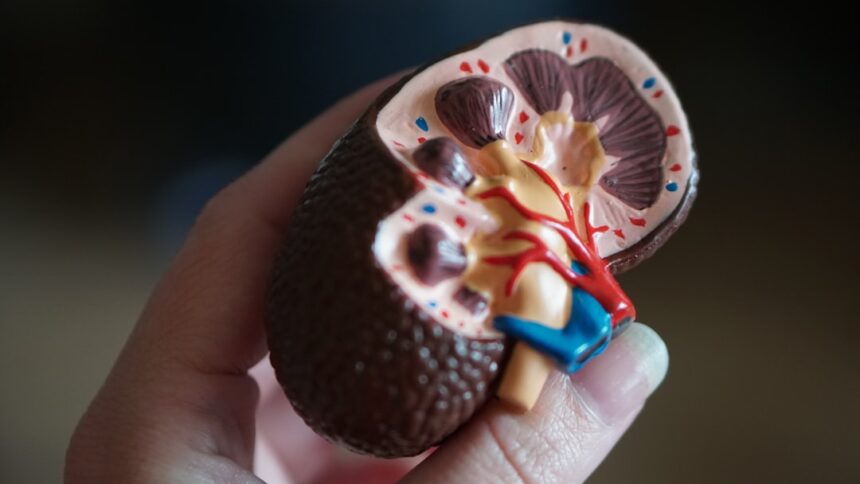
Medical professionals reviewing kidney health policy documents and implementation guidelines
WHO's November 2025 kidney health resolution faces implementation challenges that could undermine efforts to address the global CKD crisis. A new Lancet editorial and Health Policy paper provide frameworks for translating policy into action. — Photo by Robina Weermeijer on Unsplash (Unsplash License)
SHARE
1 min read|138 words

Chronic kidney disease represents a silent pandemic affecting 850 million people globally, yet remains dramatically underfunded and under-addressed compared to other non-communicable diseases. The burden falls disproportionately on vulnerable populations: 90 percent of CKD-related deaths occur in low- and middle-income countries, underscoring profound health inequities.

These sobering statistics from the WHO Global Health Observatory underscore why the organization’s November 2025 kidney health resolution matters. However, numbers alone do not save lives—implementation does. The Lancet editorial emphasizes that translating the resolution into operational frameworks is essential to reach those 850 million patients.

Without practical integration strategies and sustained political commitment, the resolution risks remaining a symbolic gesture. Experts argue that linking kidney health initiatives to proven diabetes control models offers the most viable pathway to convert global recognition into regional action and individual patient benefit.

Read the full article on GMJ Newsroom.

Submit Your Paper
GMJ_Submit_Banner

Was this article helpful?

GMJ Brief · Key Finding

📰 Read the full article: WHO Kidney Health Resolution Needs Urgent Implementation Framework, Lancet Editorial Warns →

Related reference
  • Chronic Kidney Disease · Condition
Share This Article
Facebook LinkedIn Bluesky Copy Link Print
GMJ
ByProf. Giorgi Pkhakadze
Follow:
Prof. Giorgi Pkhakadze, MD, MPH, PhD, is Editor-in-Chief of the Georgian Medical Journal and Chair of the Public Health Institute of Georgia (PHIG). He is Professor and Head of the Department of Social and Behavioural Sciences at David Tvildiani Medical University, and Secretary/Treasurer of the UEMS Section of Public Health. ORCID: 0000-0001-7609-4515.

Submit Your Paper →

Georgia's peer-reviewed open-access medical journal. No APC until January 2027.
Submit Manuscript →
The profound human connection at the heart of oncology practice

Oncologists describe cancer care as uniquely privileged not for curative power alone,…

Eye-tracking study reveals depression shifts children’s attention to sad faces

Eye-tracking research reveals that depression alters how children visually attend to emotional…

Why Nearly Half of U.S. Counties Lack Maternity Care Despite Falling Birth Rates

Nearly 50% of U.S. counties lack an obstetrician-gynecologist despite falling birth rates.…

Submit Your Paper to GMJ

No APC until January 2027.
Submit Manuscript →

You Might Also Like

Chart showing divergent STI trends in England with herpes cases rising

What England’s Rising Herpes Cases Mean for Your Sexual Health

By
Prof. Giorgi Pkhakadze
02/07/2026
Medical professional using infant resuscitation system in hospital setting

Takeaway: FDA Issues Early Alert for GE HealthCare Infant Resuscitation System Safety Issue

By
Prof. Giorgi Pkhakadze
13/07/2026
Medical illustration showing pituitary gland location and surgical approach for adenoma removal

Pituitary Disorders Account for 10-15% of Infertility Cases, Many Surgically Treatable

By
Prof. Giorgi Pkhakadze
14/07/2026
Diagram showing genomic instability pathway leading to cancer treatment resistance

Cancer’s Hidden Strategy: How DNA Damage Creates Treatment-Resistant Tumors

By
Prof. Giorgi Pkhakadze
04/06/2026
Facebook Twitter Youtube Instagram
Company
  • Privacy Policy
  • Contact US
  • GMJ Journal
  • Submit Manuscript
  • Editorial Team
  • Register at GMJ
  • Terms of Use

Subscribe to GMJ News — Click here

Join Community
© 2026 Georgian Medical Journal (GMJ). Published by the Public Health Institute of Georgia (PHIG). All rights reserved.
Welcome Back!

Sign in to your account

Username or Email Address
Password

Lost your password?

Not a member? Sign Up