By using this site, you agree to the Privacy Policy and Terms of Use.
Accept
GMJ NewsGMJ NewsGMJ News
  • Latest News
    • GMJ Briefs
  • Podcast & Media
    • Podcast Episodes
    • GMJ Audio
    • GMJ Videos
  • Research Digest
    • New Studies
    • Georgian Research
    • Data & Numbers
  • Policy & Systems
    • Health Policy
    • Quality & Safety
    • Migration & Health
    • Global Health
  • Practice
    • Clinical Updates
    • Case Discussions
    • Pharmacy & Prescribing
    • Ingredients A-Z
  • Perspectives
    • Editorial
    • Explainers
    • Voices
    • Letters
  • Health Topics
  • GMJ Articles
    • Vol. 1 Issue 2 (2026)
    • Vol. 1 Issue 1 (2026)
    • Pre-Launch Articles (2025)
  • Read the Journal →
  • About GMJ News
Notification Show More
Font ResizerAa
GMJ NewsGMJ News
Font ResizerAa
  • Latest News
    • GMJ Briefs
  • Podcast & Media
    • Podcast Episodes
    • GMJ Audio
    • GMJ Videos
  • Research Digest
    • New Studies
    • Georgian Research
    • Data & Numbers
  • Policy & Systems
    • Health Policy
    • Quality & Safety
    • Migration & Health
    • Global Health
  • Practice
    • Clinical Updates
    • Case Discussions
    • Pharmacy & Prescribing
    • Ingredients A-Z
  • Perspectives
    • Editorial
    • Explainers
    • Voices
    • Letters
  • Health Topics
  • GMJ Articles
    • Vol. 1 Issue 2 (2026)
    • Vol. 1 Issue 1 (2026)
    • Pre-Launch Articles (2025)
  • Read the Journal →
  • About GMJ News
Follow US
GMJ News > GMJ Briefs > What ION224 Means for MASH Treatment: Three Key Clinical Implications

What ION224 Means for MASH Treatment: Three Key Clinical Implications

GMJ
Last updated: 08/08/2026 11:06
By
Prof. Giorgi Pkhakadze
Share
1 Min Read
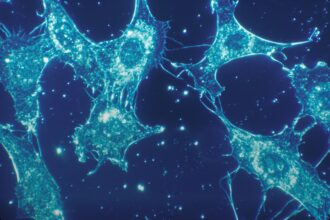
Medical illustration showing healthy liver cells versus fatty liver cells with ION224 treatment mechanism
UC San Diego researchers have developed ION224, an experimental drug that targets liver enzymes to treat MASH, a severe fatty liver disease affecting 115 million people worldwide. Clinical trials showed 78% of patients experienced significant liver improvement without weight loss. — "110120-A-1566H-001" by ResoluteSupportMedia is licensed under CC BY 2.0. To view a copy of this license, visit https://creativecommons.org/licenses/by/2.0/. (CC BY 2.0)
SHARE
1 min read|140 words

ION224 represents a paradigm shift in fatty liver disease management by directly targeting acetyl-CoA carboxylase, the enzyme driving hepatic fat synthesis and inflammation. This mechanism-based approach offers physicians a novel therapeutic tool independent of patient weight loss compliance, a significant clinical advantage given the difficulty of sustained lifestyle modification in chronic disease management.

The trial results reveal three critical takeaways for practitioners: first, 78 percent of patients achieved reduced liver fat content without mandatory weight loss interventions; second, the drug demonstrated efficacy in decreasing inflammation markers in 65 percent of participants, addressing both steatosis and fibrosis progression; and third, Phase 3 trials are scheduled to begin in 2027, potentially expediting regulatory approval. For the 115 million MASH patients worldwide with limited therapeutic options, ION224 may fundamentally expand treatment possibilities and improve outcomes in a previously intractable disease population.

Read the full article on GMJ Newsroom.

Was this article helpful?

GMJ Brief · Takeaway

📰 Read the full article: Experimental drug ION224 shows promise against severe fatty liver disease in UC San Diego trials →

Share This Article
Facebook LinkedIn Bluesky Copy Link Print
GMJ
ByProf. Giorgi Pkhakadze
Follow:
Prof. Giorgi Pkhakadze, MD, MPH, PhD, is Editor-in-Chief of the Georgian Medical Journal and Chair of the Public Health Institute of Georgia (PHIG). He is Professor and Head of the Department of Social and Behavioural Sciences at David Tvildiani Medical University, and Secretary/Treasurer of the UEMS Section of Public Health. ORCID: 0000-0001-7609-4515.

Submit Your Paper →

Georgia's peer-reviewed open-access medical journal. No APC until January 2027.
Submit Manuscript →
Cat Scratch Disease Returns: What Clinicians and Patients Need to Know

Cat scratch disease, caused by Bartonella henselae, presents with varied clinical manifestations…

Mechanism of chemotherapy resistance in ovarian cancer identified—and reversible

Michigan State University researchers have identified a protein mechanism that confers chemotherapy…

Mobile HPV screening aboard river ships reaches cervical cancer care to remote Amazon communities

A mobile point-of-care HPV screening and treatment strategy delivered by river vessels…

Submit Your Paper to GMJ

No APC until January 2027.
Submit Manuscript →

You Might Also Like

PHEIC Declaration: Ebola Cross-Border Transmission DRC-Uganda

By
Prof. Giorgi Pkhakadze
31/05/2026
Hospital exterior with regulatory policy graphic overlay

Announcement: Indiana Enacts Hospital Price Caps as States Challenge Healthcare Cost Growth

By
Prof. Giorgi Pkhakadze
12/08/2026
Comparative diagram showing serological survey (antibody measurement) and mathematical epidemiological model producing aligned COVID-19 burden estimates

Dual Validation: How Serological Testing and Mathematical Models Confirm COVID-19 Reality

By
Prof. Giorgi Pkhakadze
18/07/2026
Medical chart showing fracture risk reduction across weight-loss medications; semaglutide demonstrates lowest fracture incidence despite greatest weight loss

Three Critical Insights: Why Semaglutide Changes Bone Health Strategy in Diabetes Care

By
Prof. Giorgi Pkhakadze
09/08/2026
Facebook Twitter Youtube Instagram
Company
  • Privacy Policy
  • Contact US
  • GMJ Journal
  • Submit Manuscript
  • Editorial Team
  • Register at GMJ
  • Terms of Use

Subscribe to GMJ News — Click here

Join Community
© 2026 Georgian Medical Journal (GMJ). Published by the Public Health Institute of Georgia (PHIG). All rights reserved.
Welcome Back!

Sign in to your account

Username or Email Address
Password

Lost your password?

Not a member? Sign Up