By using this site, you agree to the Privacy Policy and Terms of Use.
Accept
GMJ NewsGMJ NewsGMJ News
  • Latest News
    • GMJ Briefs
  • Podcast & Media
    • Podcast Episodes
    • GMJ Audio
    • GMJ Videos
  • Research Digest
    • New Studies
    • Georgian Research
    • Data & Numbers
  • Policy & Systems
    • Health Policy
    • Quality & Safety
    • Migration & Health
    • Global Health
  • Practice
    • Clinical Updates
    • Case Discussions
    • Pharmacy & Prescribing
    • Ingredients A-Z
  • Perspectives
    • Editorial
    • Explainers
    • Voices
    • Letters
  • GMJ Articles
    • Vol. 1 Issue 2 (2026)
    • Vol. 1 Issue 1 (2026)
    • Pre-Launch Articles (2025)
  • Read the Journal →
  • About GMJ News
Notification Show More
Font ResizerAa
GMJ NewsGMJ News
Font ResizerAa
  • Latest News
    • GMJ Briefs
  • Podcast & Media
    • Podcast Episodes
    • GMJ Audio
    • GMJ Videos
  • Research Digest
    • New Studies
    • Georgian Research
    • Data & Numbers
  • Policy & Systems
    • Health Policy
    • Quality & Safety
    • Migration & Health
    • Global Health
  • Practice
    • Clinical Updates
    • Case Discussions
    • Pharmacy & Prescribing
    • Ingredients A-Z
  • Perspectives
    • Editorial
    • Explainers
    • Voices
    • Letters
  • GMJ Articles
    • Vol. 1 Issue 2 (2026)
    • Vol. 1 Issue 1 (2026)
    • Pre-Launch Articles (2025)
  • Read the Journal →
  • About GMJ News
Follow US
GMJ News > GMJ Briefs > Georgia Tech Breakthrough: AI Transforms Focused Ultrasound into Precision Brain Delivery Tool

Georgia Tech Breakthrough: AI Transforms Focused Ultrasound into Precision Brain Delivery Tool

GMJ
Last updated: 16/07/2026 07:36
By
Prof. Giorgi Pkhakadze
Share
1 Min Read
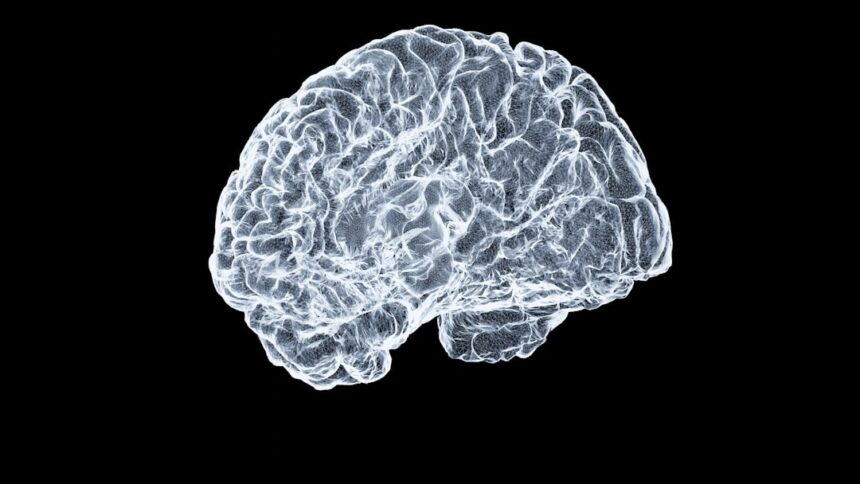
Diagram of AI-guided focused ultrasound opening blood-brain barrier with microbubble prediction
Researchers at Georgia Institute of Technology have developed an AI system that predicts microbubble collapse during focused ultrasound procedures, potentially enabling safer delivery of therapeutics across the blood–brain barrier. This advance could accelerate clinical translation for brain tumours and neurodegenerative diseases. — Photo by Shawn Day on Unsplash (Unsplash License)
SHARE
1 min read|159 words

Researchers at Georgia Institute of Technology have developed an artificial intelligence system that predicts microbubble collapse during focused ultrasound procedures, marking a significant advance in non-invasive brain drug delivery. The technology, published in Advanced Science, addresses a critical challenge in blood–brain barrier opening—a procedure that temporarily permits therapeutic molecules to reach brain tissue while maintaining protective mechanisms.

The AI model achieves 92% prediction accuracy, enabling clinicians to maintain precise control over microbubble dynamics in real time. This breakthrough has immediate implications for treating brain tumours, neurodegenerative diseases, and enhancing diagnostic imaging capabilities. By forecasting bubble behaviour at the millisecond timescale, the innovation reduces procedural risks while improving therapeutic efficacy.

Costas Arvanitis and his team demonstrate that machine learning can transform ultrasound-mediated barrier opening from an unpredictable procedure into a controllable, reproducible clinical intervention. This advance accelerates the pathway toward safer, more effective brain-targeted therapies for patients with previously difficult-to-treat neurological conditions.

Read the full article on GMJ Newsroom.

Submit Your Paper
GMJ_Submit_Banner

Was this article helpful?

GMJ Brief · Announcement

📰 Read the full article: AI-Guided Ultrasound Predicts Bubble Collapse to Improve Brain Barrier Opening →

Share This Article
Facebook LinkedIn Bluesky Copy Link Print
GMJ
ByProf. Giorgi Pkhakadze
Follow:
Prof. Giorgi Pkhakadze, MD, MPH, PhD, is Editor-in-Chief of the Georgian Medical Journal and Chair of the Public Health Institute of Georgia (PHIG). He is Professor and Head of the Department of Social and Behavioural Sciences at David Tvildiani Medical University, and Secretary/Treasurer of the UEMS Section of Public Health. ORCID: 0000-0001-7609-4515.

Submit Your Paper →

Georgia's peer-reviewed open-access medical journal. No APC until January 2027.
Submit Manuscript →
Melatonin’s antioxidant role in muscle health: what the evidence shows

Melatonin, known for antioxidant effects in the brain and gut, may also…

How Creatine Supplements Reshape Your Body’s Methylation Cycle

Your body produces 2 grams of creatine daily, consuming 40% of your…

Why vitamin D prescriptions favour weekly boluses over daily doses — and what the evidence says

Vitamin D prescriptions typically specify 50,000 IU weekly, a pattern driven by…

Submit Your Paper to GMJ

No APC until January 2027.
Submit Manuscript →

You Might Also Like

Global HealthPolicy & Systems

WHO Declares International Emergency as Ebola Outbreak Spreads from DRC to Uganda

By
Prof. Giorgi Pkhakadze
31/05/2026

PHEIC Declaration: Ebola Cross-Border Transmission DRC-Uganda

By
Prof. Giorgi Pkhakadze
31/05/2026
Scientific illustration of gut microbiome bacteria and brain connection for Parkinson's disease research

What Patients Should Know About Microbiome Screening and Parkinson’s Prevention

By
Prof. Giorgi Pkhakadze
14/07/2026
Clinical UpdatesData & NumbersPracticeResearch Digest

Obesity rates surge fastest among young adults in England, widening health inequality gap

By
Prof. Giorgi Pkhakadze
09/07/2026
Facebook Twitter Youtube Instagram
Company
  • Privacy Policy
  • Contact US
  • GMJ Journal
  • Submit Manuscript
  • Editorial Team
  • Register at GMJ
  • Terms of Use

Subscribe to GMJ News — Click here

Join Community
© 2026 Georgian Medical Journal (GMJ). Published by the Public Health Institute of Georgia (PHIG). All rights reserved.
Welcome Back!

Sign in to your account

Username or Email Address
Password

Lost your password?

Not a member? Sign Up