By using this site, you agree to the Privacy Policy and Terms of Use.
Accept
GMJ NewsGMJ NewsGMJ News
  • Latest News
    • GMJ Briefs
  • Podcast & Media
    • Podcast Episodes
    • GMJ Audio
    • GMJ Videos
  • Research Digest
    • New Studies
    • Georgian Research
    • Data & Numbers
  • Policy & Systems
    • Health Policy
    • Quality & Safety
    • Migration & Health
    • Global Health
  • Practice
    • Clinical Updates
    • Case Discussions
    • Pharmacy & Prescribing
    • Ingredients A-Z
  • Perspectives
    • Editorial
    • Explainers
    • Voices
    • Letters
  • GMJ Articles
    • Vol. 1 Issue 2 (2026)
    • Vol. 1 Issue 1 (2026)
    • Pre-Launch Articles (2025)
  • Read the Journal →
  • About GMJ News
Notification Show More
Font ResizerAa
GMJ NewsGMJ News
Font ResizerAa
  • Latest News
    • GMJ Briefs
  • Podcast & Media
    • Podcast Episodes
    • GMJ Audio
    • GMJ Videos
  • Research Digest
    • New Studies
    • Georgian Research
    • Data & Numbers
  • Policy & Systems
    • Health Policy
    • Quality & Safety
    • Migration & Health
    • Global Health
  • Practice
    • Clinical Updates
    • Case Discussions
    • Pharmacy & Prescribing
    • Ingredients A-Z
  • Perspectives
    • Editorial
    • Explainers
    • Voices
    • Letters
  • GMJ Articles
    • Vol. 1 Issue 2 (2026)
    • Vol. 1 Issue 1 (2026)
    • Pre-Launch Articles (2025)
  • Read the Journal →
  • About GMJ News
Follow US
GMJ News > GMJ Briefs > Time Is Tissue: How Early Surgical Intervention Transforms Necrotising Fasciitis Outcomes

Time Is Tissue: How Early Surgical Intervention Transforms Necrotising Fasciitis Outcomes

GMJ
Last updated: 18/07/2026 20:52
By
Prof. Giorgi Pkhakadze
Share
1 Min Read
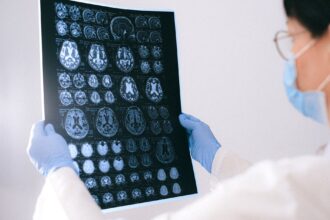
Clinical diagram showing necrotising fasciitis progression timeline and mortality risk by intervention speed
Necrotising fasciitis, a rapidly progressive soft tissue infection, kills approximately 25% of patients despite aggressive treatment. Early surgical debridement combined with broad-spectrum antibiotics within 24 hours is the critical intervention that improves survival rates. — Photo by Toralf Thomassen on Unsplash (Unsplash License)
SHARE
1 min read|127 words

Necrotising fasciitis remains one of clinical medicine’s most lethal emergencies, claiming approximately 25% of patients despite aggressive treatment. However, emerging evidence demonstrates that timing is everything—early surgical intervention combined with broad-spectrum antibiotics can reduce mortality from 40% in delayed cases to just 15% when diagnosis and surgery occur within 24 hours.

This rapidly progressive soft tissue infection can advance from minor skin trauma to life-threatening sepsis within hours, making rapid clinical recognition essential. Clinicians should maintain high suspicion when patients present with severe pain disproportionate to visible skin changes, progressing from erythema to blistering and tissue necrosis within 72 hours.

The evidence is clear: immediate emergency referral for surgical evaluation combined with empiric polymicrobial antibiotic coverage represents the gold standard for patient survival. Delaying definitive surgical debridement significantly increases mortality risk.

Was this article helpful?

GMJ Brief · Announcement

📰 Read the full article: Life-threatening skin infection: what clinicians need to know about necrotising fasciitis →

Share This Article
Facebook LinkedIn Bluesky Copy Link Print
GMJ
ByProf. Giorgi Pkhakadze
Follow:
Prof. Giorgi Pkhakadze, MD, MPH, PhD, is Editor-in-Chief of the Georgian Medical Journal and Chair of the Public Health Institute of Georgia (PHIG). He is Professor and Head of the Department of Social and Behavioural Sciences at David Tvildiani Medical University, and Secretary/Treasurer of the UEMS Section of Public Health. ORCID: 0000-0001-7609-4515.

Submit Your Paper →

Georgia's peer-reviewed open-access medical journal. No APC until January 2027.
Submit Manuscript →
Why Nutrients Work Better Together: How Coordinated Inputs Reshape Brain Synapses

New neuroscience research reveals that synapses respond more robustly to coordinated nutrient…

L-Theanine Improves Task Accuracy Without Expected Brain Wave Changes, Research Shows

L-theanine marketing claims about alpha brain wave enhancement lack experimental support in…

Astrocytes Reshape Understanding of Brain Control: Beyond Neurons to Cellular Regulation

Astrocytes, comprising roughly 50% of brain cells, are now recognised as active…

Submit Your Paper to GMJ

No APC until January 2027.
Submit Manuscript →

You Might Also Like

SITUATION BRIEF: Cross-Border Ebola Outbreak – DRC/Uganda

By
Prof. Giorgi Pkhakadze
31/05/2026
Community health workers in discussion during mental health training session

Mental Health Crisis in Low-Income Countries: Kenya Study Reveals Protective Organizational Factors

By
Prof. Giorgi Pkhakadze
21/07/2026
Clinical UpdatesHealth PolicyPolicy & SystemsPractice

UK launches meningitis B vaccine programme for students after deadly outbreaks

By
Prof. Giorgi Pkhakadze
01/07/2026
Global HealthPolicy & Systems

WHO Declares Public Health Emergency as Ebola Outbreak Spreads from DRC to Uganda

By
Prof. Giorgi Pkhakadze
31/05/2026
Facebook Twitter Youtube Instagram
Company
  • Privacy Policy
  • Contact US
  • GMJ Journal
  • Submit Manuscript
  • Editorial Team
  • Register at GMJ
  • Terms of Use

Subscribe to GMJ News — Click here

Join Community
© 2026 Georgian Medical Journal (GMJ). Published by the Public Health Institute of Georgia (PHIG). All rights reserved.
Welcome Back!

Sign in to your account

Username or Email Address
Password

Lost your password?

Not a member? Sign Up