By using this site, you agree to the Privacy Policy and Terms of Use.
Accept
GMJ NewsGMJ NewsGMJ News
  • Latest News
    • GMJ Briefs
  • Podcast & Media
    • Podcast Episodes
    • GMJ Audio
    • GMJ Videos
  • Research Digest
    • New Studies
    • Georgian Research
    • Data & Numbers
  • Policy & Systems
    • Health Policy
    • Quality & Safety
    • Migration & Health
    • Global Health
  • Practice
    • Clinical Updates
    • Case Discussions
    • Pharmacy & Prescribing
    • Ingredients A-Z
  • Perspectives
    • Editorial
    • Explainers
    • Voices
    • Letters
  • GMJ Articles
    • Vol. 1 Issue 2 (2026)
    • Vol. 1 Issue 1 (2026)
    • Pre-Launch Articles (2025)
  • Read the Journal →
  • About GMJ News
Notification Show More
Font ResizerAa
GMJ NewsGMJ News
Font ResizerAa
  • Latest News
    • GMJ Briefs
  • Podcast & Media
    • Podcast Episodes
    • GMJ Audio
    • GMJ Videos
  • Research Digest
    • New Studies
    • Georgian Research
    • Data & Numbers
  • Policy & Systems
    • Health Policy
    • Quality & Safety
    • Migration & Health
    • Global Health
  • Practice
    • Clinical Updates
    • Case Discussions
    • Pharmacy & Prescribing
    • Ingredients A-Z
  • Perspectives
    • Editorial
    • Explainers
    • Voices
    • Letters
  • GMJ Articles
    • Vol. 1 Issue 2 (2026)
    • Vol. 1 Issue 1 (2026)
    • Pre-Launch Articles (2025)
  • Read the Journal →
  • About GMJ News
Follow US
GMJ News > GMJ Briefs > Federal Dietary Guidelines Pivot to Whole Foods and Protein-First Nutrition

Federal Dietary Guidelines Pivot to Whole Foods and Protein-First Nutrition

GMJ
Last updated: 27/07/2026 13:29
By
Prof. Giorgi Pkhakadze
Share
1 Min Read
Infographic showing 7 core changes in 2025–2030 White House Dietary Guidelines including whole food focus, protein targets, and ultra-processed food reduction
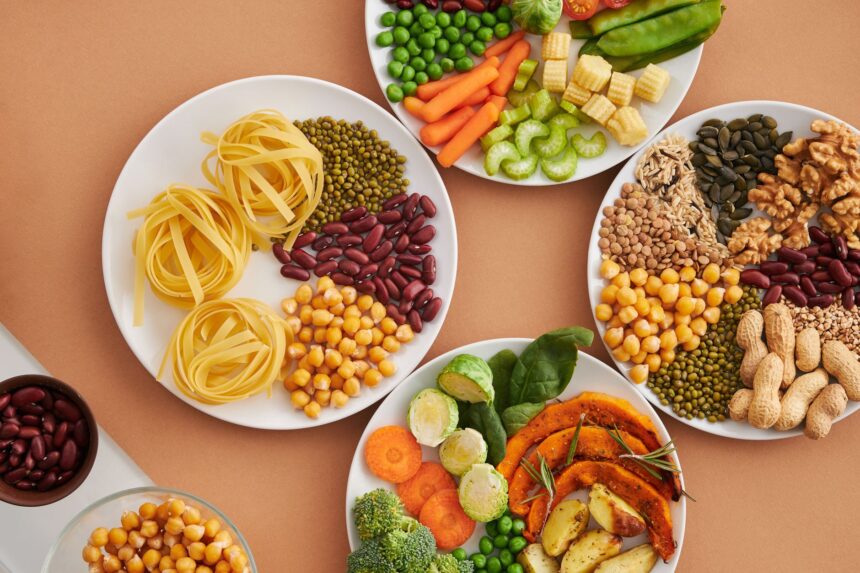
The White House has released its 2025–2030 Dietary Guidelines, prioritizing minimally processed, nutrient-dense foods and introducing explicit protein intake targets of 1.2–1.6 g/kg/day. The updated guidance reaffirms animal-sourced proteins, endorses full-fat dairy, and identifies ultra-processed foods as a primary driver of chronic metabolic disease. — Photo by Vanessa Loring on Pexels (Pexels License)
SHARE
1 min read|135 words

The White House has unveiled its 2025–2030 Dietary Guidelines, signaling a fundamental realignment in federal nutritional policy away from processed food frameworks toward whole-food primacy. The updated guidance establishes minimally processed, nutrient-dense foods as the reference standard for all dietary recommendations, representing a departure from previous approaches that attempted nutrient substitution within highly processed dietary patterns.

A notable shift includes elevated protein intake targets of 1.2–1.6 g/kg/day distributed across meals, with explicit reaffirmation of animal-sourced proteins—meat, poultry, eggs, seafood, and dairy—as nutrient-dense foundation foods. The guidelines also identify ultra-processed foods as a primary driver of chronic metabolic disease, with specific guidance against refined carbohydrates, added sugars, and non-nutritive sweeteners. Additionally, the evidence threshold for policy recommendations has been raised, prioritizing randomized controlled trials over observational associations.

Read the full article on GMJ Newsroom.

Was this article helpful?

GMJ Brief · Announcement

📰 Read the full article: White House Updates Dietary Guidelines: Emphasis on Whole Foods and Protein Over Processing →

Share This Article
Facebook LinkedIn Bluesky Copy Link Print
GMJ
ByProf. Giorgi Pkhakadze
Follow:
Prof. Giorgi Pkhakadze, MD, MPH, PhD, is Editor-in-Chief of the Georgian Medical Journal and Chair of the Public Health Institute of Georgia (PHIG). He is Professor and Head of the Department of Social and Behavioural Sciences at David Tvildiani Medical University, and Secretary/Treasurer of the UEMS Section of Public Health. ORCID: 0000-0001-7609-4515.

Submit Your Paper →

Georgia's peer-reviewed open-access medical journal. No APC until January 2027.
Submit Manuscript →
Why Adolescent Obesity Is Rising in the Digital Age—and How Digital Tools Can Help

Global adolescent obesity is rising due to digital food marketing and structural…

Frozen and Canned Produce Offer Similar Nutritional Value to Fresh, Research Shows

Frozen and canned fruits and vegetables retain nutritional quality comparable to fresh…

Even Light Smoking Raises Heart Disease Risk by 50–60%, Study Shows—and Quitting Doesn’t Fully Reverse It

A pooled analysis of 302,522 adults in PLOS Medicine found that smoking…

Submit Your Paper to GMJ

No APC until January 2027.
Submit Manuscript →

You Might Also Like

Infographic showing congenital syphilis prevention through prenatal screening and maternal penicillin treatment

The Prevention Paradox: Why 100% Preventable Congenital Syphilis Is Still Rising

By
Prof. Giorgi Pkhakadze
23/07/2026
Medical chart comparing hemoglobin levels with and without vitamin C supplementation

Clinical Evidence Undermines Routine Vitamin C and Iron Supplement Pairing

By
Prof. Giorgi Pkhakadze
29/07/2026
Scientific illustration showing genetic diversity mapping across Indigenous American populations

Decade-Long Genetic Study Reveals How Indigenous Americans Adapted to Extreme Environments

By
Prof. Giorgi Pkhakadze
06/06/2026
Global HealthPolicy & Systems

WHO Declares International Emergency as Ebola Outbreak Spreads from Congo to Uganda

By
Prof. Giorgi Pkhakadze
31/05/2026
Facebook Twitter Youtube Instagram
Company
  • Privacy Policy
  • Contact US
  • GMJ Journal
  • Submit Manuscript
  • Editorial Team
  • Register at GMJ
  • Terms of Use

Subscribe to GMJ News — Click here

Join Community
© 2026 Georgian Medical Journal (GMJ). Published by the Public Health Institute of Georgia (PHIG). All rights reserved.
Welcome Back!

Sign in to your account

Username or Email Address
Password

Lost your password?

Not a member? Sign Up