By using this site, you agree to the Privacy Policy and Terms of Use.
Accept
GMJ NewsGMJ NewsGMJ News
  • Latest News
    • GMJ Briefs
  • Podcast & Media
    • Podcast Episodes
    • GMJ Audio
    • GMJ Videos
  • Research Digest
    • New Studies
    • Georgian Research
    • Data & Numbers
  • Policy & Systems
    • Health Policy
    • Quality & Safety
    • Migration & Health
    • Global Health
  • Practice
    • Clinical Updates
    • Case Discussions
    • Pharmacy & Prescribing
    • Ingredients A-Z
  • Perspectives
    • Editorial
    • Explainers
    • Voices
    • Letters
  • GMJ Articles
    • Vol. 1 Issue 2 (2026)
    • Vol. 1 Issue 1 (2026)
    • Pre-Launch Articles (2025)
  • Read the Journal →
  • About GMJ News
Notification Show More
Font ResizerAa
GMJ NewsGMJ News
Font ResizerAa
  • Latest News
    • GMJ Briefs
  • Podcast & Media
    • Podcast Episodes
    • GMJ Audio
    • GMJ Videos
  • Research Digest
    • New Studies
    • Georgian Research
    • Data & Numbers
  • Policy & Systems
    • Health Policy
    • Quality & Safety
    • Migration & Health
    • Global Health
  • Practice
    • Clinical Updates
    • Case Discussions
    • Pharmacy & Prescribing
    • Ingredients A-Z
  • Perspectives
    • Editorial
    • Explainers
    • Voices
    • Letters
  • GMJ Articles
    • Vol. 1 Issue 2 (2026)
    • Vol. 1 Issue 1 (2026)
    • Pre-Launch Articles (2025)
  • Read the Journal →
  • About GMJ News
Follow US
GMJ News > GMJ Briefs > UK HPV Vaccination Programme Achieves Near-Complete Cervical Cancer Prevention in Young Women

UK HPV Vaccination Programme Achieves Near-Complete Cervical Cancer Prevention in Young Women

GMJ
Last updated: 19/07/2026 12:52
By
Prof. Giorgi Pkhakadze
Share
1 Min Read
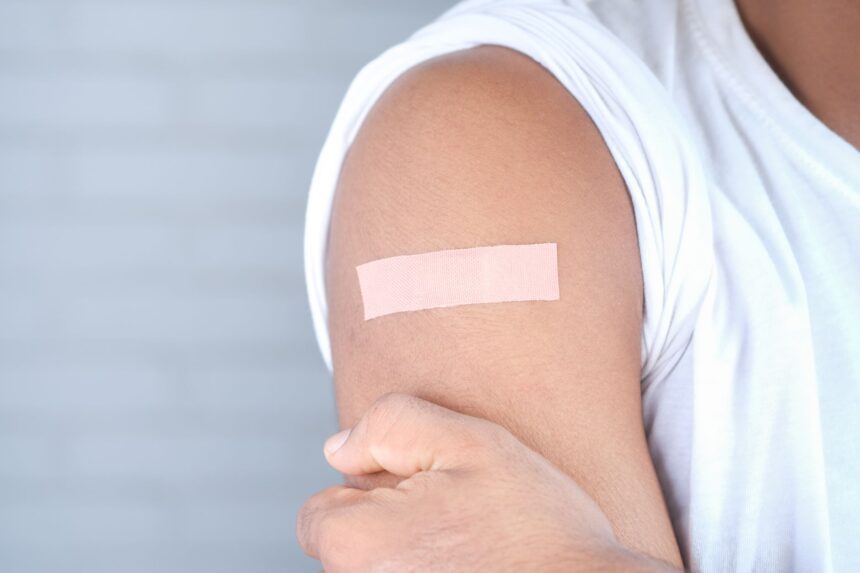
Infographic showing HPV vaccination impact on cervical cancer mortality reduction timeline
HPV vaccination of school-age girls beginning in 2008 has reduced cervical cancer mortality to near-zero in vaccinated cohorts, preventing hundreds of deaths. The achievement underscores the transformative impact of sustained immunisation coverage on cancer prevention. — Photo by Towfiqu barbhuiya on Pexels (Pexels License)
SHARE
1 min read|129 words

A landmark 2024 study demonstrates the transformative impact of sustained, population-level HPV vaccination, with young women vaccinated as school-age girls now facing close to zero risk of cervical cancer death. Since the United Kingdom introduced HPV vaccination in 2008, the immunisation programme has prevented hundreds of deaths and established durable protection across vaccinated cohorts. The research underscores the World Health Organization’s endorsement of HPV vaccination as one of the most effective cancer prevention interventions available. By targeting high-risk HPV types—particularly HPV-16 and HPV-18—before sexual debut, the vaccine provides long-term protective immunity that persists into adulthood. These findings highlight the critical importance of early immunisation and sustained vaccine coverage in achieving population-level cancer control. Continued investment in screening programmes and equitable vaccine access remains essential for extending these benefits globally.

Was this article helpful?

GMJ Brief · Announcement

📰 Read the full article: HPV Vaccination Linked to Near-Elimination of Cervical Cancer Deaths in Young Women →

Share This Article
Facebook LinkedIn Bluesky Copy Link Print
GMJ
ByProf. Giorgi Pkhakadze
Follow:
Prof. Giorgi Pkhakadze, MD, MPH, PhD, is Editor-in-Chief of the Georgian Medical Journal and Chair of the Public Health Institute of Georgia (PHIG). He is Professor and Head of the Department of Social and Behavioural Sciences at David Tvildiani Medical University, and Secretary/Treasurer of the UEMS Section of Public Health. ORCID: 0000-0001-7609-4515.

Submit Your Paper →

Georgia's peer-reviewed open-access medical journal. No APC until January 2027.
Submit Manuscript →
Exercise intensity, not volume alone, drives mitochondrial remodeling—meta-analysis of 425 studies reveals cellular architecture matters more than training time

A systematic review of 425 studies shows that high-intensity training produces 2–4…

The 20 amino acids: life’s molecular alphabet explained

The human body uses 20 standard amino acids as the building blocks…

The copper-iron connection: Why anemia diagnosis may be missing a critical mineral

Copper-dependent enzymes control every checkpoint of iron transport in the body. When…

Submit Your Paper to GMJ

No APC until January 2027.
Submit Manuscript →

You Might Also Like

Graph comparing US infant mortality trends to OECD peer nations over time

Data Reveal Paradox: US Infant Mortality at Historic Low, Yet Trails Global Peers

By
Prof. Giorgi Pkhakadze
23/07/2026
Scientific illustration of amygdala brain circuits involved in anxiety processing

What This Anxiety Breakthrough Means for Future Treatment Development

By
Prof. Giorgi Pkhakadze
08/07/2026
Medical illustration showing lymphatic system and urinary tract connection

Chyluria Prevalence: Understanding a 1-in-1-Million Rarity

By
Prof. Giorgi Pkhakadze
22/07/2026
Microscopic view of malaria parasites in blood cells with antimalarial drug molecular structure

24-Hour Parasite Clearance: What MMV367’s Speed Means for Malaria Control

By
Prof. Giorgi Pkhakadze
20/07/2026
Facebook Twitter Youtube Instagram
Company
  • Privacy Policy
  • Contact US
  • GMJ Journal
  • Submit Manuscript
  • Editorial Team
  • Register at GMJ
  • Terms of Use

Subscribe to GMJ News — Click here

Join Community
© 2026 Georgian Medical Journal (GMJ). Published by the Public Health Institute of Georgia (PHIG). All rights reserved.
Welcome Back!

Sign in to your account

Username or Email Address
Password

Lost your password?

Not a member? Sign Up