By using this site, you agree to the Privacy Policy and Terms of Use.
Accept
GMJ NewsGMJ NewsGMJ News
  • Latest News
    • GMJ Briefs
  • Podcast & Media
    • Podcast Episodes
    • GMJ Audio
    • GMJ Videos
  • Research Digest
    • New Studies
    • Georgian Research
    • Data & Numbers
  • Policy & Systems
    • Health Policy
    • Quality & Safety
    • Migration & Health
    • Global Health
  • Practice
    • Clinical Updates
    • Case Discussions
    • Pharmacy & Prescribing
    • Ingredients A-Z
  • Perspectives
    • Editorial
    • Explainers
    • Voices
    • Letters
  • GMJ Articles
    • Vol. 1 Issue 2 (2026)
    • Vol. 1 Issue 1 (2026)
    • Pre-Launch Articles (2025)
  • Read the Journal →
  • About GMJ News
Notification Show More
Font ResizerAa
GMJ NewsGMJ News
Font ResizerAa
  • Latest News
    • GMJ Briefs
  • Podcast & Media
    • Podcast Episodes
    • GMJ Audio
    • GMJ Videos
  • Research Digest
    • New Studies
    • Georgian Research
    • Data & Numbers
  • Policy & Systems
    • Health Policy
    • Quality & Safety
    • Migration & Health
    • Global Health
  • Practice
    • Clinical Updates
    • Case Discussions
    • Pharmacy & Prescribing
    • Ingredients A-Z
  • Perspectives
    • Editorial
    • Explainers
    • Voices
    • Letters
  • GMJ Articles
    • Vol. 1 Issue 2 (2026)
    • Vol. 1 Issue 1 (2026)
    • Pre-Launch Articles (2025)
  • Read the Journal →
  • About GMJ News
Follow US
GMJ News > GMJ Briefs > Beyond Five-a-Day: Why Food Selection Matters More Than Quantity for Heart Health

Beyond Five-a-Day: Why Food Selection Matters More Than Quantity for Heart Health

GMJ
Last updated: 20/07/2026 23:30
By
Prof. Giorgi Pkhakadze
Share
1 Min Read
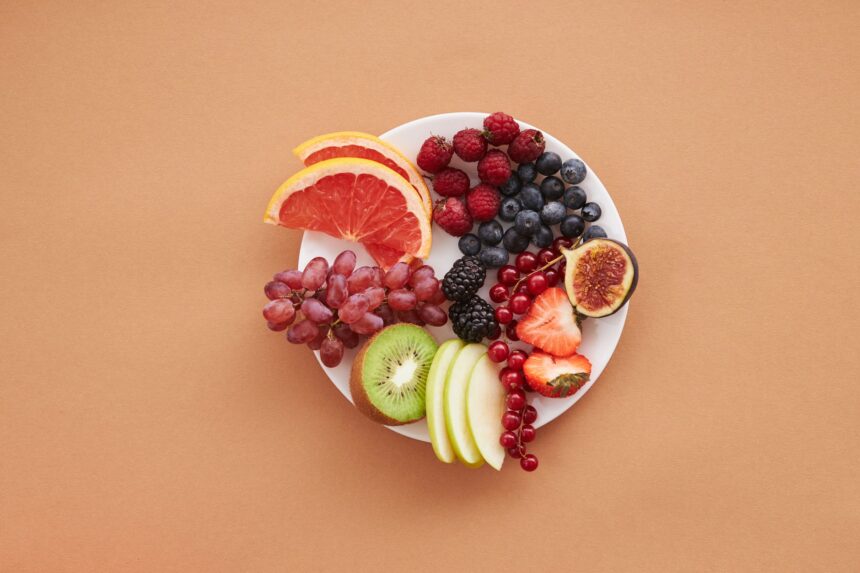
Comparison of flavanol content in blackberries, apples, cherries, plums, and other produce—illustrated bar chart showing nutritional density differences
Consuming five daily servings of fruits and vegetables may not provide optimal cardiovascular protection unless those foods contain sufficient flavanols. Research shows blackberries, apples, plums, cherries, and green tea offer dramatically higher flavanol concentrations than generic produce, suggesting food selection—not quantity alone—drives heart health benefits. — Photo by Vanessa Loring on Pexels (Pexels License)
SHARE
1 min read|142 words

Eating five daily servings of fruits and vegetables remains a cornerstone of dietary guidance, but emerging research reveals a critical limitation: not all produce delivers equal cardiovascular benefits. Recent evidence demonstrates that flavanols—plant-derived compounds with measurable protective effects on heart function—are concentrated in specific foods rather than distributed across all fruits and vegetables.

Blackberries, apples, plums, cherries, broad beans, and green tea contain substantially higher flavanol concentrations than generic produce recommendations suggest. This finding explains why populations with similar overall fruit and vegetable intake may experience different cardiovascular outcomes. Current dietary guidelines, while well-intentioned, fail to distinguish between flavanol-rich and flavanol-poor options, potentially limiting the health gains individuals can achieve through diet alone.

The implication is clear: strategic food selection—prioritizing nutrient-dense varieties—may prove more effective than simply meeting numeric intake targets. Read the full article on GMJ Newsroom.

Was this article helpful?

GMJ Brief · Announcement

📰 Read the full article: Flavanols in fruits and vegetables offer measurable cardiovascular protection, research shows →

Share This Article
Facebook LinkedIn Bluesky Copy Link Print
GMJ
ByProf. Giorgi Pkhakadze
Follow:
Prof. Giorgi Pkhakadze, MD, MPH, PhD, is Editor-in-Chief of the Georgian Medical Journal and Chair of the Public Health Institute of Georgia (PHIG). He is Professor and Head of the Department of Social and Behavioural Sciences at David Tvildiani Medical University, and Secretary/Treasurer of the UEMS Section of Public Health. ORCID: 0000-0001-7609-4515.

Submit Your Paper →

Georgia's peer-reviewed open-access medical journal. No APC until January 2027.
Submit Manuscript →
Australian Hospital Deploys World-First Robotic Surgery Technology for Complex Procedures

Footscray Hospital in Victoria, Australia, has deployed the world's first instance of…

Celebrity Disclosure Renews Focus on Prostate Cancer Screening and Early Detection

Television presenter Jeremy Clarkson's recent disclosure of aggressive prostate cancer and remission…

Magnesium Supplement Claims vs. Evidence: What the Science Actually Shows

Animal studies show tissue-specific magnesium uptake, but human trials have not replicated…

Submit Your Paper to GMJ

No APC until January 2027.
Submit Manuscript →

You Might Also Like

Infographic showing scrub typhus diagnostic accuracy and geographic distribution in India

1 Million Annual Cases Underscore Urgency of Accurate Scrub Typhus Diagnosis

By
Prof. Giorgi Pkhakadze
25/07/2026
Global HealthPolicy & Systems

US Ebola Travel Restrictions May Undermine Outbreak Response in Central Africa

By
Prof. Giorgi Pkhakadze
30/05/2026
Medical laboratory testing for measles virus confirmation showing positive results

England’s Measles Crisis: Nearly 2,500 Cases Signal Collapse of Elimination Gains

By
Prof. Giorgi Pkhakadze
08/06/2026
Healthcare worker examining infant in African clinic setting

Paradox in Peril: Why Critically Ill Infants Receive Less Healthcare in Sub-Saharan Africa

By
Prof. Giorgi Pkhakadze
31/05/2026
Facebook Twitter Youtube Instagram
Company
  • Privacy Policy
  • Contact US
  • GMJ Journal
  • Submit Manuscript
  • Editorial Team
  • Register at GMJ
  • Terms of Use

Subscribe to GMJ News — Click here

Join Community
© 2026 Georgian Medical Journal (GMJ). Published by the Public Health Institute of Georgia (PHIG). All rights reserved.
Welcome Back!

Sign in to your account

Username or Email Address
Password

Lost your password?

Not a member? Sign Up