By using this site, you agree to the Privacy Policy and Terms of Use.
Accept
GMJ NewsGMJ NewsGMJ News
  • Latest News
    • GMJ Briefs
  • The Wire
  • Health Topics
  • Podcast & Media
    • GMJ Audio
    • GMJ Videos
    • Podcast & Media
    • Podcast Episodes
  • GMJ Articles
    • Vol. 1 Issue 3 (2026)
    • Public Health Dictionary — Supplement Edition
    • IAP Legacy Series
    • Read Full Journal (gmj.ge) →
    • Pre-Launch Articles (2025)
    • Vol. 1 Issue 1 (2026)
    • Vol. 1 Issue 2 (2026)
  • Perspectives
    • Editorial
    • Explainers
    • Letters
    • Voices
  • Policy & Systems
    • Global Health
    • Health Policy
    • Migration & Health
    • Quality & Safety
    • Work & Health
  • Dictionary
    • Our Story: 20 Years in the Making
    • Browse A–Z
    • About the Project
    • Contribute a Term
  • Practice
    • Case Discussions
    • Clinical Updates
    • Pharmacy & Prescribing
  • Research Digest
    • Data & Numbers
    • Georgian Research
    • New Studies
  • Read the Journal →
Notification Show More
Font ResizerAa
GMJ NewsGMJ News
Font ResizerAa
  • Latest News
  • The Wire
  • Health Topics
  • Podcast & Media
  • GMJ Articles
  • Perspectives
  • Policy & Systems
  • Dictionary
  • Practice
  • Research Digest
  • Read the Journal →
  • Latest News
    • GMJ Briefs
  • The Wire
  • Health Topics
  • Podcast & Media
    • GMJ Audio
    • GMJ Videos
    • Podcast & Media
    • Podcast Episodes
  • GMJ Articles
    • Vol. 1 Issue 3 (2026)
    • Public Health Dictionary — Supplement Edition
    • IAP Legacy Series
    • Read Full Journal (gmj.ge) →
    • Pre-Launch Articles (2025)
    • Vol. 1 Issue 1 (2026)
    • Vol. 1 Issue 2 (2026)
  • Perspectives
    • Editorial
    • Explainers
    • Letters
    • Voices
  • Policy & Systems
    • Global Health
    • Health Policy
    • Migration & Health
    • Quality & Safety
    • Work & Health
  • Dictionary
    • Our Story: 20 Years in the Making
    • Browse A–Z
    • About the Project
    • Contribute a Term
  • Practice
    • Case Discussions
    • Clinical Updates
    • Pharmacy & Prescribing
  • Research Digest
    • Data & Numbers
    • Georgian Research
    • New Studies
  • Read the Journal →
Follow US
GMJ News > GMJ Briefs > Meta-Analysis: Every 100 mg of Dietary Magnesium Cuts Type 2 Diabetes Risk by 14–19 Percent

Meta-Analysis: Every 100 mg of Dietary Magnesium Cuts Type 2 Diabetes Risk by 14–19 Percent

GMJ
Last updated: 31/07/2026 11:30
By
Prof. Giorgi Pkhakadze, MD, MPH, PhD
Share
1 Min Read
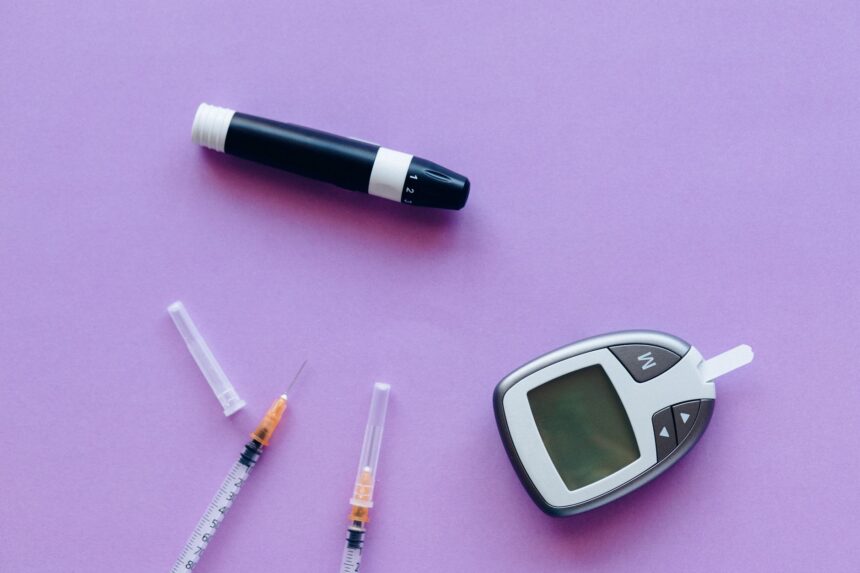
Illustration of insulin receptor with magnesium cofactor enabling glucose transporter activation
Magnesium acts as a critical molecular switch in insulin signalling. New analysis of over 1.5 million people shows each additional 100 mg of dietary magnesium reduces type 2 diabetes risk by 14–19%. — Photo by Nataliya Vaitkevich on Pexels (Pexels License)
SHARE
1 min read|107 words

Large-scale evidence now quantifies magnesium’s protective effect against type 2 diabetes. Two landmark meta-analyses encompassing more than 1.5 million prospective cohort participants found that each 100 mg per day increase in dietary magnesium intake correlates with a 14 to 19 percent reduction in diabetes risk. The Fang et al. analysis, which included over 1 million participants, demonstrated a 19 percent risk reduction, while Dong et al.’s study of 536,000 individuals showed a 14 percent reduction. These consistent findings across diverse populations underscore magnesium’s role in glucose homeostasis. Yet the potential remains largely untapped: approximately 50 percent of American adults consume less than the recommended daily allowance, suggesting widespread opportunity for diabetes prevention through improved mineral intake.

Was this article helpful?

GMJ Brief · Key Finding

📰 Read the full article: Magnesium’s hidden role in insulin signalling: why the mineral matters for glucose control →

Related reference
  • Type 2 Diabetes · Condition
  • Magnesium · Ingredient
  • Insulin · Drug
Share This Article
Facebook Whatsapp Whatsapp LinkedIn Telegram Bluesky Copy Link Print
GMJ
ByProf. Giorgi Pkhakadze, MD, MPH, PhD
Follow:
MD, MPH, PhD. Editor-in-Chief, Georgian Medical Journal (GMJ). Professor and Head, School of Public Health, David Tvildiani Medical University (DTMU), Tbilisi, Georgia. Chair, Public Health Institute of Georgia (PHIG). President, Accréditation Sans Frontières (ASF), Paris. Secretary/Treasurer, UEMS Section of Public Health. WHO Consultant, Health and Migration, Geneva. Former Member, UN Secretary-General's Independent Accountability Panel for Every Woman, Every Child, Every Adolescent (IAP-EWEC, 2016–2021). ORCID: 0000-0001-7609-4515.

Submit Your Paper →

Georgia's peer-reviewed open-access medical journal. No APC until January 2027.
Submit Manuscript →
Lemierre’s Syndrome: A Rare but Life-Threatening Complication of Throat Infection

Lemierre's syndrome is a rare but potentially fatal thrombophlebitis of the internal…

Why fructose fails to satisfy hunger like glucose: new neurobiology reveals brain’s sugar selectivity

A 2026 study reveals that glucose and fructose activate different hunger-control pathways…

655 Million Without Electricity Face Growing Health Crisis, WHO Warns

The WHO reports that 655 million people lack electricity access and two…

Submit Your Paper to GMJ

No APC until January 2027.
Submit Manuscript →

You Might Also Like

Physiological comparison of heat stress response between women and men during high-temperature exposure

The 35% Difference: Why Women’s Heat Tolerance Lags Behind Men’s

By
Prof. Giorgi Pkhakadze, MD, MPH, PhD
23/08/2026
Diagram showing T-cell immune response to Mycobacterium tuberculosis in latent versus active tuberculosis infection

Key Finding: Early immune markers could identify which TB-infected people will develop active disease

By
Prof. Giorgi Pkhakadze, MD, MPH, PhD
31/08/2026
Medical professionals handling blood donation equipment in modern healthcare facility

Americas Face Blood Supply Crisis as PAHO Urges Urgent Reform

By
Prof. Giorgi Pkhakadze, MD, MPH, PhD
05/07/2026
Diagram of synaptic transmission showing neurotransmitters crossing synaptic cleft to bind receptors on adjacent neuron

Key Finding: How Neurotransmitters Shape Behaviour: The Science Behind Brain Chemistry

By
Prof. Giorgi Pkhakadze, MD, MPH, PhD
17/08/2026
Facebook Twitter Youtube Instagram
Company
  • Privacy Policy
  • Accreditation Canada in Georgia
  • GMJ Journal
  • Submit Manuscript
  • Editorial Team
  • Register at GMJ

Subscribe to GMJ News — Click here

Join Community
© 2026 Georgian Medical Journal (GMJ). Published by the Public Health Institute of Georgia (PHIG). All rights reserved.
Welcome Back!

Sign in to your account

Username or Email Address
Password

Lost your password?