By using this site, you agree to the Privacy Policy and Terms of Use.
Accept
GMJ NewsGMJ NewsGMJ News
  • Latest News
    • GMJ Briefs
  • Podcast & Media
    • Podcast Episodes
    • GMJ Audio
    • GMJ Videos
  • Research Digest
    • New Studies
    • Georgian Research
    • Data & Numbers
  • Policy & Systems
    • Health Policy
    • Quality & Safety
    • Migration & Health
    • Global Health
  • Practice
    • Clinical Updates
    • Case Discussions
    • Pharmacy & Prescribing
    • Ingredients A-Z
  • Perspectives
    • Editorial
    • Explainers
    • Voices
    • Letters
  • Health Topics
  • GMJ Articles
    • Vol. 1 Issue 2 (2026)
    • Vol. 1 Issue 1 (2026)
    • Pre-Launch Articles (2025)
  • Read the Journal →
  • About GMJ News
Notification Show More
Font ResizerAa
GMJ NewsGMJ News
Font ResizerAa
  • Latest News
    • GMJ Briefs
  • Podcast & Media
    • Podcast Episodes
    • GMJ Audio
    • GMJ Videos
  • Research Digest
    • New Studies
    • Georgian Research
    • Data & Numbers
  • Policy & Systems
    • Health Policy
    • Quality & Safety
    • Migration & Health
    • Global Health
  • Practice
    • Clinical Updates
    • Case Discussions
    • Pharmacy & Prescribing
    • Ingredients A-Z
  • Perspectives
    • Editorial
    • Explainers
    • Voices
    • Letters
  • Health Topics
  • GMJ Articles
    • Vol. 1 Issue 2 (2026)
    • Vol. 1 Issue 1 (2026)
    • Pre-Launch Articles (2025)
  • Read the Journal →
  • About GMJ News
Follow US
GMJ News > GMJ Briefs > Where Your Daily Water Really Comes From: New Data on Hydration Sources

Where Your Daily Water Really Comes From: New Data on Hydration Sources

GMJ
Last updated: 02/08/2026 07:30
By
Prof. Giorgi Pkhakadze
Share
1 Min Read
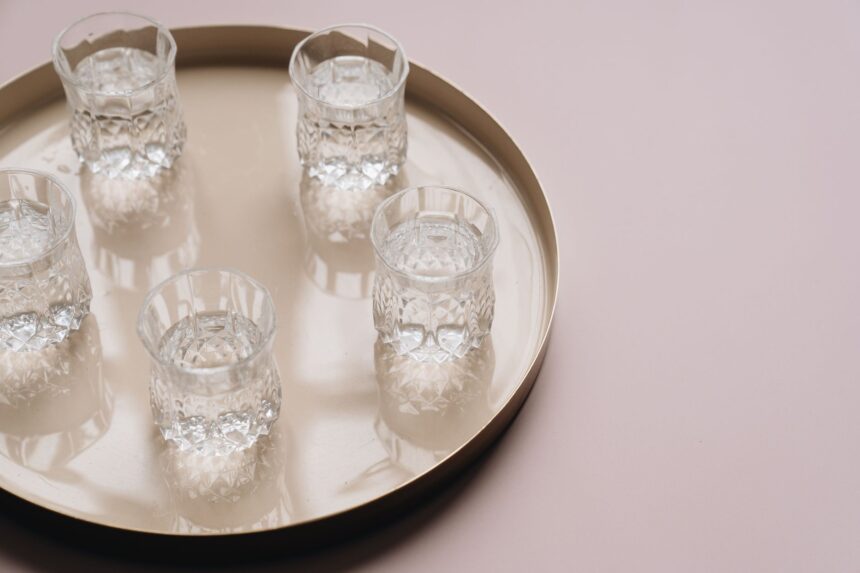
Infographic showing 67% of daily water intake from beverages, 33% from food moisture, based on O'Connor et al. study data
The ubiquitous recommendation to drink eight 8-ounce glasses of water daily has no traceable scientific source. A Dartmouth kidney physiologist's exhaustive 2002 search found no primary study supporting the rule, while real-world intake data shows people naturally consume adequate fluids through thirst and food moisture. — Photo by alleksana on Pexels (Pexels License)
SHARE
1 min read|110 words

Research from the Journal of Human Nutrition and Dietetics reveals how adults actually obtain their daily fluid intake. In a study of 1,500 Irish adults using food diaries, the mean total daily water intake measured 2.31 liters—with 67 percent originating from beverages of all types and 33 percent from moisture naturally present in food.

This breakdown challenges the one-size-fits-all approach of the 8×8 rule. The data demonstrates that fluid intake comes from diverse sources including water, tea, coffee, milk, and juice, alongside solid foods. Notably, caffeine-containing beverages do not cause net dehydration—habitual coffee drinkers show no difference in total body water compared to plain water consumption, according to research published in PLOS ONE.

Was this article helpful?
GMJ Brief · Key Finding

📰 Read the full article: The ‘8×8 Water Rule’ Has No Scientific Source—Here’s What the Evidence Actually Shows →

Share This Article
Facebook LinkedIn Bluesky Copy Link Print
GMJ
ByProf. Giorgi Pkhakadze
Follow:
Prof. Giorgi Pkhakadze, MD, MPH, PhD, is Editor-in-Chief of the Georgian Medical Journal and Chair of the Public Health Institute of Georgia (PHIG). He is Professor and Head of the Department of Social and Behavioural Sciences at David Tvildiani Medical University, and Secretary/Treasurer of the UEMS Section of Public Health. ORCID: 0000-0001-7609-4515.

Submit Your Paper →

Georgia's peer-reviewed open-access medical journal. No APC until January 2027.
Submit Manuscript →
Brain Energy Demands: Why Your Hardest Thinking Uses Only 5% More Fuel

The brain uses only 5% more energy during intensive thinking than at…

How Your Gut Absorbs Nutrients: A Section-by-Section Guide to Digestive Checkpoints

Nutrient absorption is not a single process but a carefully choreographed sequence…

How Vitamin D Becomes an Antimicrobial Weapon Inside Your Immune Cells

Macrophages actively convert vitamin D into cathelicidin, a potent antimicrobial peptide, when…

Submit Your Paper to GMJ

No APC until January 2027.
Submit Manuscript →

You Might Also Like

Biotech AI model development from clinical trial data visualization

Data Reuse Revolution: Clinical Trial Datasets Find New Life in AI Development

By
Prof. Giorgi Pkhakadze
23/07/2026
Children affected by immigration enforcement and family separation policies

Announcement: Mass Immigration Raids Leave Thousands of Children Without Parents: Legal Guardianship Crisis Emerges

By
Prof. Giorgi Pkhakadze
02/06/2026
Medical illustration of pancreatic cancer treatment research and targeted therapy development

Announcement: New Pancreatic Cancer Drug Daraxonrasib Shows Promise in Phase 2 Trial

By
Prof. Giorgi Pkhakadze
09/06/2026
Global HealthPolicy & Systems

US Funding Cuts Hamper International Ebola Response as Congo Outbreak Spreads

By
Prof. Giorgi Pkhakadze
26/05/2026
Facebook Twitter Youtube Instagram
Company
  • Privacy Policy
  • Contact US
  • GMJ Journal
  • Submit Manuscript
  • Editorial Team
  • Register at GMJ
  • Terms of Use

Subscribe to GMJ News — Click here

Join Community
© 2026 Georgian Medical Journal (GMJ). Published by the Public Health Institute of Georgia (PHIG). All rights reserved.
Welcome Back!

Sign in to your account

Username or Email Address
Password

Lost your password?

Not a member? Sign Up