By using this site, you agree to the Privacy Policy and Terms of Use.
Accept
GMJ NewsGMJ NewsGMJ News
  • Latest News
    • GMJ Briefs
  • Podcast & Media
    • Podcast Episodes
    • GMJ Audio
    • GMJ Videos
  • Research Digest
    • New Studies
    • Georgian Research
    • Data & Numbers
  • Policy & Systems
    • Health Policy
    • Quality & Safety
    • Migration & Health
    • Global Health
  • Practice
    • Clinical Updates
    • Case Discussions
    • Pharmacy & Prescribing
    • Ingredients A-Z
  • Perspectives
    • Editorial
    • Explainers
    • Voices
    • Letters
  • GMJ Articles
    • Vol. 1 Issue 2 (2026)
    • Vol. 1 Issue 1 (2026)
    • Pre-Launch Articles (2025)
  • Read the Journal →
  • About GMJ News
Notification Show More
Font ResizerAa
GMJ NewsGMJ News
Font ResizerAa
  • Latest News
    • GMJ Briefs
  • Podcast & Media
    • Podcast Episodes
    • GMJ Audio
    • GMJ Videos
  • Research Digest
    • New Studies
    • Georgian Research
    • Data & Numbers
  • Policy & Systems
    • Health Policy
    • Quality & Safety
    • Migration & Health
    • Global Health
  • Practice
    • Clinical Updates
    • Case Discussions
    • Pharmacy & Prescribing
    • Ingredients A-Z
  • Perspectives
    • Editorial
    • Explainers
    • Voices
    • Letters
  • GMJ Articles
    • Vol. 1 Issue 2 (2026)
    • Vol. 1 Issue 1 (2026)
    • Pre-Launch Articles (2025)
  • Read the Journal →
  • About GMJ News
Follow US
GMJ News > GMJ Briefs > Berry Selection Matters: Polyphenol Content Varies Fivefold Across Common Fruits

Berry Selection Matters: Polyphenol Content Varies Fivefold Across Common Fruits

GMJ
Last updated: 29/07/2026 05:30
By
Prof. Giorgi Pkhakadze
Share
1 Min Read
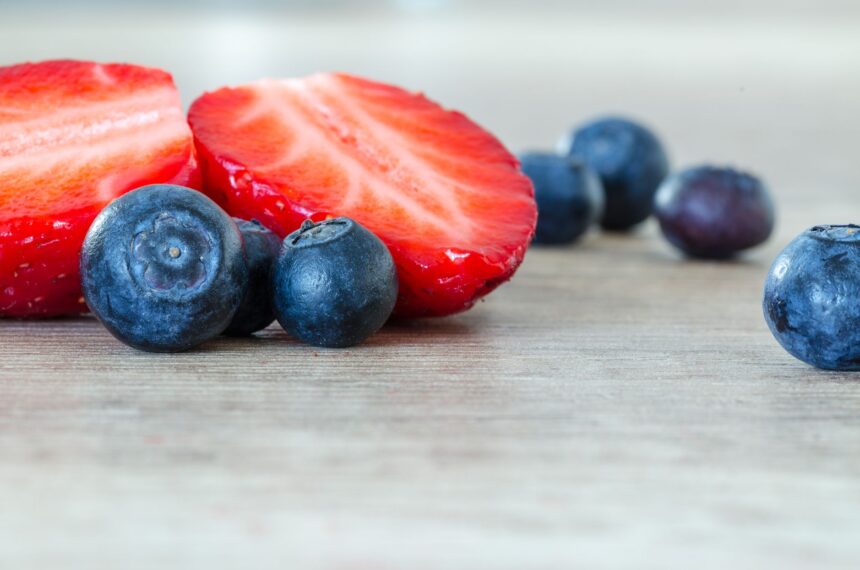
Bar chart showing polyphenol content across berries and plant foods, from chokeberry at 1,500+ mg to strawberry at 270 mg per 100g fresh weight
Polyphenol content in berries varies more than fivefold, with chokeberry and cocoa powder delivering over 1,500 mg per 100g fresh weight compared to strawberry's 270 mg. Selecting high-polyphenol sources meaningfully increases dietary bioactive intake without supplementation. — Photo by Lukas Blazek on Pexels (Pexels License)
SHARE
1 min read|123 words

Not all berries deliver equivalent nutritional benefits. According to dietary analysis published in the Journal of Nutrition, polyphenol concentrations in common fruits and plant-based foods span more than tenfold variation, from strawberries at 270 mg per 100 grams to chokeberries exceeding 1,500 mg per 100 grams of fresh weight.

This substantial difference means that fruit selection—not merely fruit consumption—meaningfully influences total dietary intake of bioactive compounds including anthocyanidins, proanthocyanidins, phenolic acids, and flavonols. High-performing sources such as bilberry (900 mg/100g) and black currant (825 mg/100g) offer substantially higher polyphenol intake than lower-concentration alternatives.

The research indicates that a single 100-gram serving of nutrient-dense berries can deliver bioactive compound levels comparable to commercial supplement doses, making strategic food selection a practical approach to optimizing dietary nutrition.

Was this article helpful?
GMJ Brief · Announcement

📰 Read the full article: Polyphenol Content Varies Tenfold Across Berries and Foods — What the Science Shows →

Related reference
  • Bilberry · Ingredient
Share This Article
Facebook LinkedIn Bluesky Copy Link Print
GMJ
ByProf. Giorgi Pkhakadze
Follow:
Prof. Giorgi Pkhakadze, MD, MPH, PhD, is Editor-in-Chief of the Georgian Medical Journal and Chair of the Public Health Institute of Georgia (PHIG). He is Professor and Head of the Department of Social and Behavioural Sciences at David Tvildiani Medical University, and Secretary/Treasurer of the UEMS Section of Public Health. ORCID: 0000-0001-7609-4515.

Submit Your Paper →

Georgia's peer-reviewed open-access medical journal. No APC until January 2027.
Submit Manuscript →
How Polycystic Ovary Syndrome Shaped a Food Broadcaster’s Career Path

Television presenter Briony May Williams used stress-baking as a coping mechanism after…

Forty-eight years of WHO essential medicines: core drugs unchanged since 1977

A 48-year analysis of WHO's Essential Medicines List reveals a stable "core…

Skin Biopsy PCR Test Accelerates Diagnosis of Tattoo-Associated Toxic Shock Syndrome

A new PCR-based diagnostic test on skin biopsies enables rapid confirmation of…

Submit Your Paper to GMJ

No APC until January 2027.
Submit Manuscript →

You Might Also Like

Medical chart showing tuberculosis screening effectiveness in prison settings across Latin America

Prison TB Screening Delivers Dual Benefits: 87% Facility Reduction, 28% Community-Wide Impact

By
Prof. Giorgi Pkhakadze
20/06/2026
Pharmacy & PrescribingPolicy & SystemsPracticeQuality & Safety

Abiomed Issues Field Action for 14Fr Catheter Introducer Kits Over Thrombosis Risk

By
Prof. Giorgi Pkhakadze
19/07/2026
Microscopic view of inflamed skin tissue showing eczema-like changes characteristic of atopic dermatitis

One in Ten: Atopic Dermatitis Prevalence Reflects Growing Global Disease Burden

By
Prof. Giorgi Pkhakadze
25/07/2026
Endoscopic view showing black esophageal mucosa characteristic of acute esophageal necrosis

Mortality in Acute Esophageal Necrosis Ranges 5-35% Based on Recognition Speed

By
Prof. Giorgi Pkhakadze
02/07/2026
Facebook Twitter Youtube Instagram
Company
  • Privacy Policy
  • Contact US
  • GMJ Journal
  • Submit Manuscript
  • Editorial Team
  • Register at GMJ
  • Terms of Use

Subscribe to GMJ News — Click here

Join Community
© 2026 Georgian Medical Journal (GMJ). Published by the Public Health Institute of Georgia (PHIG). All rights reserved.
Welcome Back!

Sign in to your account

Username or Email Address
Password

Lost your password?

Not a member? Sign Up