By using this site, you agree to the Privacy Policy and Terms of Use.
Accept
GMJ NewsGMJ NewsGMJ News
  • Latest News
    • GMJ Briefs
  • Podcast & Media
    • Podcast Episodes
    • GMJ Audio
    • GMJ Videos
  • Research Digest
    • New Studies
    • Georgian Research
    • Data & Numbers
  • Policy & Systems
    • Health Policy
    • Quality & Safety
    • Migration & Health
    • Global Health
  • Practice
    • Clinical Updates
    • Case Discussions
    • Pharmacy & Prescribing
    • Ingredients A-Z
  • Perspectives
    • Editorial
    • Explainers
    • Voices
    • Letters
  • Health Topics
  • GMJ Articles
    • Vol. 1 Issue 2 (2026)
    • Vol. 1 Issue 1 (2026)
    • Pre-Launch Articles (2025)
  • Read the Journal →
  • About GMJ News
Notification Show More
Font ResizerAa
GMJ NewsGMJ News
Font ResizerAa
  • Latest News
    • GMJ Briefs
  • Podcast & Media
    • Podcast Episodes
    • GMJ Audio
    • GMJ Videos
  • Research Digest
    • New Studies
    • Georgian Research
    • Data & Numbers
  • Policy & Systems
    • Health Policy
    • Quality & Safety
    • Migration & Health
    • Global Health
  • Practice
    • Clinical Updates
    • Case Discussions
    • Pharmacy & Prescribing
    • Ingredients A-Z
  • Perspectives
    • Editorial
    • Explainers
    • Voices
    • Letters
  • Health Topics
  • GMJ Articles
    • Vol. 1 Issue 2 (2026)
    • Vol. 1 Issue 1 (2026)
    • Pre-Launch Articles (2025)
  • Read the Journal →
  • About GMJ News
Follow US
GMJ News > GMJ Briefs > New Data: Combat Trauma in SOF Creates Cumulative, Multi-Domain Health Burden

New Data: Combat Trauma in SOF Creates Cumulative, Multi-Domain Health Burden

GMJ
Last updated: 13/08/2026 11:29
By
Prof. Giorgi Pkhakadze
Share
1 Min Read
Medical illustration of interconnected health systems affected by combat trauma in military personnel
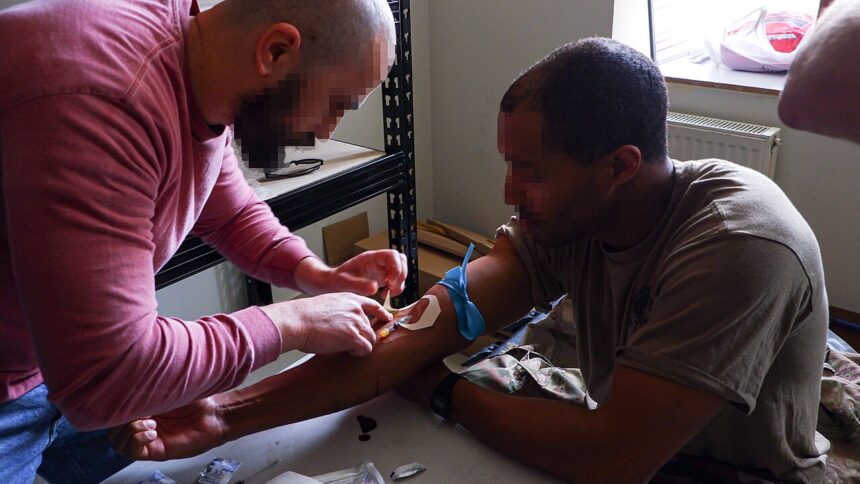
Active-duty U.S. special operations forces personnel show persistent health problems across behavioral, biological, and physiological systems linked to cumulative combat exposure, a new cross-sectional study in The Lancet Regional Americas reveals. — Georgian Special Operations Forces operators perform Tactical Combat Casualty Care alongside U S Army Special Forces Soldiers (7777117).jpg by Spc. Jordan Worthy / Public domain via Wikimedia Commons (Public domain)
SHARE
1 min read|113 words

A cross-sectional study in The Lancet Regional Americas provides new evidence that active-duty special operations forces personnel experience cumulative health consequences from combat exposure that extend far beyond conventional PTSD diagnosis. Rather than isolated symptoms, the research documents persistent sequelae affecting behavioral, biological, and physiological domains simultaneously.

The study’s key finding challenges existing diagnostic frameworks: treatment-seeking SOF demonstrate interconnected dysfunction across multiple systems rather than single-category presentations. This suggests that current assessment tools may not capture the full spectrum of trauma-related health burden affecting this high-risk population.

These findings have direct clinical relevance, indicating that comprehensive, multi-system evaluation protocols may be necessary for accurate diagnosis and effective treatment planning in military trauma medicine.

Was this article helpful?

GMJ Brief · Key Finding

📰 Read the full article: Special Operations Forces Show Persistent Health Burden From Combat Trauma, New Study Reveals →

Share This Article
Facebook LinkedIn Bluesky Copy Link Print
GMJ
ByProf. Giorgi Pkhakadze
Follow:
Prof. Giorgi Pkhakadze, MD, MPH, PhD, is Editor-in-Chief of the Georgian Medical Journal and Chair of the Public Health Institute of Georgia (PHIG). He is Professor and Head of the Department of Social and Behavioural Sciences at David Tvildiani Medical University, and Secretary/Treasurer of the UEMS Section of Public Health. ORCID: 0000-0001-7609-4515.

Submit Your Paper →

Georgia's peer-reviewed open-access medical journal. No APC until January 2027.
Submit Manuscript →
Creatine and Kidney Damage: What the Evidence Actually Shows

A 2025 systematic review of 21 studies and analysis of 685 clinical…

How neurotransmitters orchestrate mood, sleep, and cognition: a biochemical primer

Brain function depends on chemical communication between neurons through neurotransmitters. Twelve major…

Vitamin D’s Role in Alzheimer’s Tau Accumulation: New Evidence from Framingham Heart Study

A 16-year analysis from the Framingham Heart Study finds that higher vitamin…

Submit Your Paper to GMJ

No APC until January 2027.
Submit Manuscript →

You Might Also Like

Infographic showing global displacement statistics and health outcomes for displaced populations

IOM Launches Health-Centered Framework to Address Global Displacement Crisis

By
Prof. Giorgi Pkhakadze
14/07/2026
Chart showing increasing malnutrition burden in Indian children from birth to age 9

Critical Window for Intervention: Double Malnutrition Burden Emerges in Mid-Childhood

By
Prof. Giorgi Pkhakadze
15/07/2026
Infographic showing child mortality reduction statistics with country comparisons and global trends

The Numbers Don’t Lie: Child Mortality Reduction Faces Critical Slowdown

By
Prof. Giorgi Pkhakadze
26/06/2026
Chart showing A&E attendance drop during England Euro 2024 matches compared to expected baseline

NHS Records 17,000 Fewer A&E Visits During England Euro 2024 Matches: A Wake-Up Call for Health System Planning

By
Prof. Giorgi Pkhakadze
20/07/2026
Facebook Twitter Youtube Instagram
Company
  • Privacy Policy
  • Contact US
  • GMJ Journal
  • Submit Manuscript
  • Editorial Team
  • Register at GMJ
  • Terms of Use

Subscribe to GMJ News — Click here

Join Community
© 2026 Georgian Medical Journal (GMJ). Published by the Public Health Institute of Georgia (PHIG). All rights reserved.
Welcome Back!

Sign in to your account

Username or Email Address
Password

Lost your password?

Not a member? Sign Up