By using this site, you agree to the Privacy Policy and Terms of Use.
Accept
GMJ NewsGMJ NewsGMJ News
  • Latest News
    • GMJ Briefs
  • Podcast & Media
    • Podcast Episodes
    • GMJ Audio
    • GMJ Videos
  • Research Digest
    • New Studies
    • Georgian Research
    • Data & Numbers
  • Policy & Systems
    • Health Policy
    • Quality & Safety
    • Migration & Health
    • Global Health
  • Practice
    • Clinical Updates
    • Case Discussions
    • Pharmacy & Prescribing
    • Ingredients A-Z
  • Perspectives
    • Editorial
    • Explainers
    • Voices
    • Letters
  • GMJ Articles
    • Vol. 1 Issue 2 (2026)
    • Vol. 1 Issue 1 (2026)
    • Pre-Launch Articles (2025)
  • Read the Journal →
  • About GMJ News
Notification Show More
Font ResizerAa
GMJ NewsGMJ News
Font ResizerAa
  • Latest News
    • GMJ Briefs
  • Podcast & Media
    • Podcast Episodes
    • GMJ Audio
    • GMJ Videos
  • Research Digest
    • New Studies
    • Georgian Research
    • Data & Numbers
  • Policy & Systems
    • Health Policy
    • Quality & Safety
    • Migration & Health
    • Global Health
  • Practice
    • Clinical Updates
    • Case Discussions
    • Pharmacy & Prescribing
    • Ingredients A-Z
  • Perspectives
    • Editorial
    • Explainers
    • Voices
    • Letters
  • GMJ Articles
    • Vol. 1 Issue 2 (2026)
    • Vol. 1 Issue 1 (2026)
    • Pre-Launch Articles (2025)
  • Read the Journal →
  • About GMJ News
Follow US
GMJ News > Practice > Clinical Updates > Special Operations Forces Show Persistent Health Burden From Combat Trauma, New Study Reveals
Clinical UpdatesNew StudiesPracticeResearch Digest

Special Operations Forces Show Persistent Health Burden From Combat Trauma, New Study Reveals

GMJ
Last updated: 12/07/2026 13:29
By
GMJ Practice Desk
Share
9 Min Read
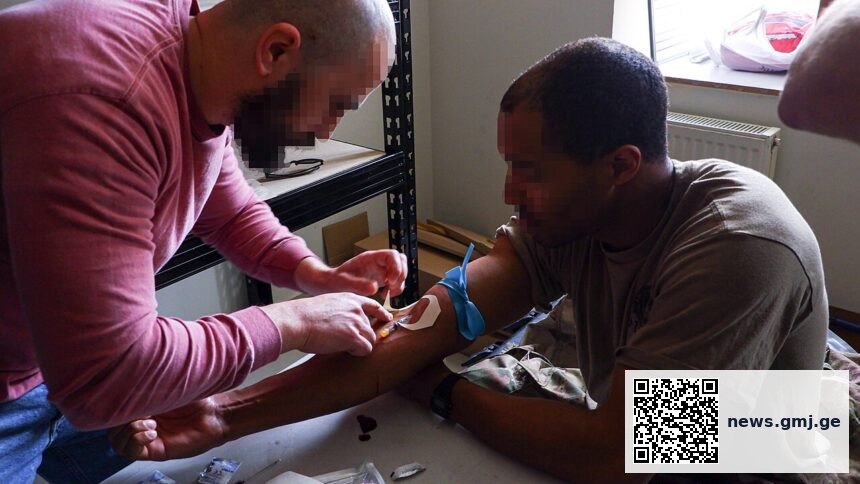
Medical illustration of interconnected health systems affected by combat trauma in military personnelIllustrative image · Georgian Special Operations Forces operators perform Tactical Combat Casualty Care alongside U S Army Special Forces Soldiers (7777117).jpg by Spc. Jordan Worthy / Public domain via Wikimedia Commons (Public domain)
Active-duty U.S. special operations forces personnel show persistent health problems across behavioral, biological, and physiological systems linked to cumulative combat exposure, a new cross-sectional study in The Lancet Regional Americas reveals. — Georgian Special Operations Forces operators perform Tactical Combat Casualty Care alongside U S Army Special Forces Soldiers (7777117).jpg by Spc. Jordan Worthy / Public domain via Wikimedia Commons (Public domain)
SHARE
6 min read|1,109 words
✓ Medically reviewed by Prof. Giorgi Pkhakadze, MD, MPH, PhD · ORCID 0000-0001-7609-4515

🟠 Moderate Evidence

Contents
    • Key takeaways
      • Study at a Glance
      • Domains of Persistent Health Sequelae in Treatment-Seeking SOF Personnel
  • A Generalized Health Burden Beyond PTSD
  • Cumulative Exposure and Differential Health Impacts
  • Clinical and Public Health Implications
  • What This Means
    • What this means
  • Frequently asked questions
    • What are behavioral, biological, and physiological sequelae, and why do they matter together?
    • Does this study prove that combat causes all these health problems?
    • Are all special operations forces personnel affected equally?

Active-duty U.S. special operations forces (SOF) personnel seeking treatment demonstrate a broad constellation of persistent behavioral, biological, and physiological health sequelae linked to cumulative combat trauma exposure, according to a cross-sectional study published in The Lancet Regional Americas. The research identifies not isolated symptoms but a systemic pattern of interconnected health consequences that extend far beyond conventional post-traumatic stress disorder (PTSD) diagnosis.

Key takeaways

  • Active-duty SOF personnel treated for trauma-related conditions exhibit persistent patterns across behavioral, biological, and physiological systems
  • The health burden appears cumulative and generalized rather than confined to single diagnostic categories
  • Treatment-seeking SOF show differential experiences of these sequelae, suggesting personalized intervention approaches may be necessary
  • Findings highlight gaps in current clinical frameworks for assessing multi-system trauma consequences in high-risk military populations

Study at a Glance

Source The Lancet Regional Americas
Study type Cross-sectional observational study
Population Active-duty U.S. special operations forces personnel seeking treatment
Focus areas Behavioral, biological, and physiological sequelae of combat trauma
Country United States
Multi-system dysfunction
Rather than isolated symptoms, the study documented persistent sequelae across behavioral, biological, and physiological domains in treatment-seeking SOF personnel, indicating a cumulative health burden from combat exposure

Domains of Persistent Health Sequelae in Treatment-Seeking SOF Personnel

Conceptual framework showing the interconnected burden across three major health dimensions identified in active-duty special operations forces

Behavioral sequelae
Documented
Physiological sequelae
Documented
Biological sequelae
Documented
Cumulative burden
Evident

Source: The Lancet Regional Americas, 2026 | Georgian Medical Journal News

Submit Your Paper
GMJ_Submit_Banner

A Generalized Health Burden Beyond PTSD

Traditional clinical assessment of combat-related psychological injury has focused heavily on post-traumatic stress disorder and associated diagnoses. However, the study published in The Lancet Regional Americas reveals a far broader pathological landscape. The research identifies persistent sequelae that extend into behavioral domains (including disrupted social functioning and emotional regulation), biological systems (measurable biochemical and immune-related changes), and physiological systems (cardiovascular, neuroendocrine, and autonomic nervous system alterations).

This multi-system presentation challenges the conventional siloed approach to trauma assessment. Rather than treating behavioral symptoms separately from physiological manifestations, the evidence suggests these domains are interconnected manifestations of cumulative combat exposure. The finding aligns with emerging trauma neuroscience research emphasizing the whole-body consequences of chronic stress and threat exposure.

Cumulative Exposure and Differential Health Impacts

A key insight from the investigation is that the health burden appears cumulative rather than threshold-based. Personnel with greater cumulative combat exposure tend to show more pronounced sequelae across multiple domains, according to the Lancet Regional Americas analysis. This dose-response pattern supports a model of progressive physiological dysregulation rather than discrete trauma-response syndromes.

Equally important, the study documents differential experiences—meaning SOF personnel do not present uniformly. Some individuals show predominant behavioral manifestations, while others display marked biological or physiological changes. This heterogeneity has immediate clinical relevance: a one-size-fits-all treatment approach is likely suboptimal. Clinical updates in trauma care increasingly emphasize phenotyping patients to match interventions to individual presentation patterns.

Active-duty SOF personnel seeking treatment demonstrate a broad constellation of persistent behavioral, biological, and physiological health sequelae linked to cumulative combat trauma exposure, indicating systemic health consequences beyond conventional diagnostic categories.

— The Lancet Regional Americas (2026)

Clinical and Public Health Implications

The cross-sectional design of this study (as published in The Lancet Regional Americas) establishes associations rather than causation, yet the evidence provides actionable direction for military medicine and veteran healthcare systems. Current screening protocols often prioritize psychiatric symptoms, potentially missing significant biological and physiological pathology. Integrated assessment spanning all three domains—behavioral, biological, and physiological—is warranted in SOF populations and likely beneficial in other high-stress occupational groups.

The research also highlights a critical gap: treatment frameworks. If SOF personnel present with interconnected multi-system sequelae, siloed interventions (psychiatric treatment alone, or physical rehabilitation alone) are unlikely to be fully effective. Health policy frameworks governing military medical care should evolve to support integrated, team-based approaches that address behavioral, biological, and physiological needs concurrently.

What This Means

What this means

For patients: SOF service members and veterans experiencing persistent symptoms across multiple health domains (mood, sleep, concentration, physical energy, immune function) should seek comprehensive multi-specialty assessment rather than treating symptoms in isolation. Cumulative exposure warrants proactive monitoring even in the absence of severe acute symptoms.
For clinicians: Behavioral and physiological manifestations of combat trauma are interconnected and require integrated assessment. Screening for trauma-exposed SOF should include standardized measures of behavioral, biological (inflammatory markers, immune function, metabolic parameters), and physiological (autonomic, cardiovascular, neuroendocrine) health. Treatment planning should coordinate across mental health, primary care, and specialty services.
For policymakers: Current military medical systems and veterans’ health networks may lack integrated protocols for multi-system trauma sequelae. Policy should incentivize development of cohesive, team-based trauma care models, enhanced screening infrastructure in occupational health settings, and longitudinal health surveillance for personnel with cumulative high-risk exposure.

Frequently asked questions

What are behavioral, biological, and physiological sequelae, and why do they matter together?

Behavioral sequelae refer to changes in mood, attention, impulse control, and social function. Biological sequelae include measurable changes in immune markers, inflammation, and hormone levels. Physiological sequelae encompass alterations in heart rate regulation, sleep, and stress response. The study suggests these three domains are interconnected consequences of trauma—not separate problems. Treating only behavioral symptoms while ignoring physiological dysfunction may leave underlying biological and physical health compromised.

Does this study prove that combat causes all these health problems?

The study is cross-sectional, meaning it captures a snapshot of active-duty SOF seeking treatment and identifies associations with combat exposure history. It does not establish causation definitively (which would require randomized experiments, which are ethically impossible in this context). However, the cumulative pattern—greater exposure linked to greater burden across domains—is consistent with causal mechanisms documented in trauma neuroscience and stress physiology research.

Are all special operations forces personnel affected equally?

No. The study explicitly documents differential experiences, meaning some SOF show predominant behavioral manifestations while others display marked biological or physiological changes. This heterogeneity suggests individual factors—genetics, resilience, prior trauma history, social support—modify health outcomes. It also implies one-size-fits-all interventions are unlikely optimal; personalized medicine approaches may improve treatment efficacy.

The study published in The Lancet Regional Americas marks an important step toward comprehensive understanding of trauma’s health consequences in high-risk military populations. Future longitudinal research should track SOF personnel prospectively to clarify which early sequelae predict long-term health outcomes, which interventions effectively address multi-system dysfunction, and how policy and clinical practice should evolve to meet the complex health needs of these personnel. Until such evidence emerges, integrated assessment and team-based care represent the most evidence-informed approach available.

Source: Persistent behavioral, biological, and physiological sequelae in active-duty treatment-seeking U.S. special operations forces personnel: a cross-sectional study

Was this article helpful?

Disclaimer. This article is health journalism intended for general information and education. It is not medical advice and is not a substitute for professional diagnosis or treatment. Always consult a qualified healthcare provider about your individual circumstances. Full disclaimer →

Related Coverage

Why Adolescent Obesity Is Rising in the Digital Age—and How Digital Tools Can HelpJul 30, 2026
Frozen and Canned Produce Offer Similar Nutritional Value to Fresh, Research ShowsJul 30, 2026
Even Light Smoking Raises Heart Disease Risk by 50–60%, Study Shows—and Quitting Doesn't Fully Reverse ItJul 30, 2026
Daily Peanut Consumption Reverses a Decade of Age-Related Brain Blood Flow DeclineJul 30, 2026
PG
Written by
Prof. Giorgi Pkhakadze, MD, MPH, PhD
Editor-in-Chief, GMJ News
Full profile →  ·  ORCID 0000-0001-7609-4515
Medical disclaimer. This article is health journalism intended for general information. It is not medical advice and is not a substitute for consultation with a qualified healthcare professional. Always seek your physician's advice regarding any medical condition.
Medically reviewed by Prof. Giorgi Pkhakadze, MD, MPH, PhD. Spotted an error? Contact the editorial team.

Get the GMJ News digest
Evidence-based health journalism in your inbox. No spam; unsubscribe anytime.
TAGGED:behavioral healthcombat traumamilitary healthPTSDspecial operations forces
Share This Article
Facebook LinkedIn Bluesky Copy Link Print
GMJ
ByGMJ Practice Desk
Follow:
GMJ Practice Desk is part of GMJ News, the newsroom of the Georgian Medical Journal (gmj.ge), published by the Public Health Institute of Georgia. Every article is editorially reviewed before publication.
Leave a Comment Leave a Comment

Leave a Reply Cancel reply

Your email address will not be published. Required fields are marked *

Submit Your Paper →

Georgia's peer-reviewed open-access medical journal. No APC until January 2027.
Submit Manuscript →
Why Adolescent Obesity Is Rising in the Digital Age—and How Digital Tools Can Help

Global adolescent obesity is rising due to digital food marketing and structural…

Frozen and Canned Produce Offer Similar Nutritional Value to Fresh, Research Shows

Frozen and canned fruits and vegetables retain nutritional quality comparable to fresh…

Even Light Smoking Raises Heart Disease Risk by 50–60%, Study Shows—and Quitting Doesn’t Fully Reverse It

A pooled analysis of 302,522 adults in PLOS Medicine found that smoking…

Submit Your Paper to GMJ

No APC until January 2027.
Submit Manuscript →

You Might Also Like

Medical illustration of inhaled treprostinil nebulizer device for pulmonary fibrosis treatment
New Studies

Inhaled Treprostinil Shows Promise in Advanced Pulmonary Fibrosis: Phase 3 Trial Results

By
GMJ Research Desk
19/05/2026
Diagram showing zinc and copper mineral absorption competition in intestinal cells
Clinical UpdatesPractice

High-Dose Zinc Supplements May Create Copper Deficiency, Warn Nutrition Experts

By
GMJ Practice Desk
27/05/2026
Medical illustration showing heart protection through genetic-guided therapy with SGLT2 inhibitorsIllustrative image · Photo by Marta Branco on Pexels (Pexels License)
Clinical UpdatesNew StudiesPracticeResearch Digest

Diabetes Drug Dapagliflozin Cuts Heart Failure Risk by 32% in Genetically Vulnerable Patients

By
GMJ Practice Desk
17/06/2026
Illustration of deer prion disease transmission pathways showing asymptomatic carriersIllustrative image · Manual of chemical analysis as applied to the examination of medicinal chemicals - a guide for the determination of their identity and quality, and for the determination of their identity and quality, (14590655269).jpg by Internet Archive Book Images / No restrictions via Wikimedia Commons (No restrictions)
Global HealthNew StudiesPolicy & SystemsResearch Digest

Silent spread of chronic wasting disease raises cross-species transmission concerns

By
GMJ Policy Desk
09/07/2026
Facebook Twitter Youtube Instagram
Company
  • Privacy Policy
  • Contact US
  • GMJ Journal
  • Submit Manuscript
  • Editorial Team
  • Register at GMJ
  • Terms of Use

Subscribe to GMJ News — Click here

Join Community
© 2026 Georgian Medical Journal (GMJ). Published by the Public Health Institute of Georgia (PHIG). All rights reserved.
Welcome Back!

Sign in to your account

Username or Email Address
Password

Lost your password?

Not a member? Sign Up