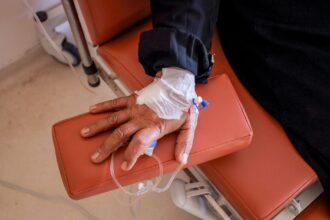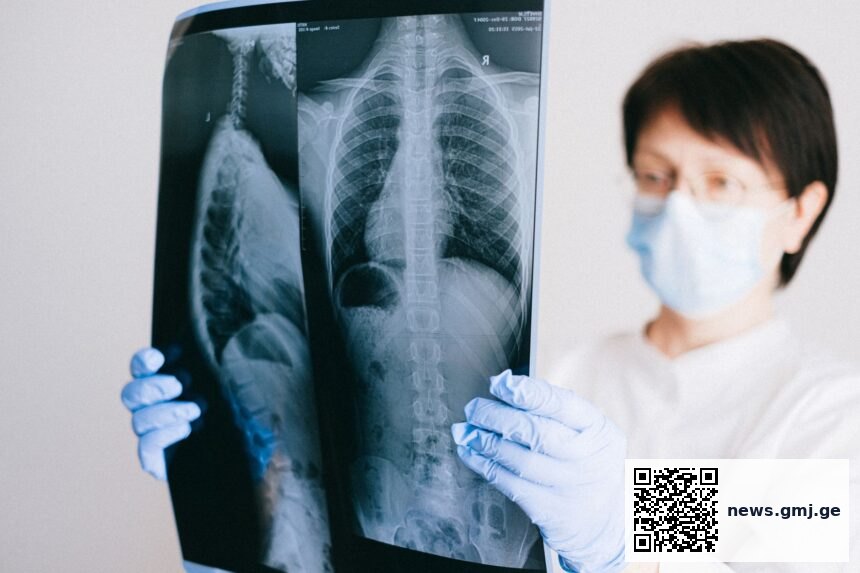
A mobile computed tomography (CT) screening initiative in the United Kingdom has identified early-stage lung cancer in asymptomatic individuals, raising questions about the potential role of opportunistic screening in community settings. The case of Sandra Champkins, who presented without respiratory symptoms but was found to have lung cancer following a low-dose CT scan conducted at a Tesco car park in Banbury, illustrates both the diagnostic capability and the practical feasibility of bringing screening technology into accessible public locations.
Key takeaways
- Mobile CT screening units operating in community locations (car parks, supermarkets) can detect early-stage lung cancer in asymptomatic individuals
- Early detection through low-dose CT in asymptomatic populations may improve treatment options and survival outcomes
- Community-based screening raises questions about equity, cost-effectiveness, and optimal screening protocols in the UK health system
🟡 Preliminary Evidence
Mobile lung cancer screening: screening setting and detection context
United Kingdom community-based low-dose CT initiative, 2024–2025
Source: BBC News | Georgian Medical Journal News

Asymptomatic detection shifts screening paradigm
The identification of lung cancer in an asymptomatic patient underscores a critical distinction in oncology: the absence of symptoms does not guarantee the absence of disease. According to the BBC News report, Sandra Champkins presented without respiratory complaints, yet imaging revealed malignancy. This finding aligns with established evidence from the National Lung Screening Trial (NLST), published in The New England Journal of Medicine in 2011, which demonstrated that low-dose CT screening reduced lung cancer mortality by 20% compared to chest radiography in high-risk populations—many of whom were also asymptomatic at baseline.
Early-stage lung cancers detected incidentally or via screening typically have better surgical outcomes than symptomatic presentations. When disease is caught at stage I, five-year survival rates range substantially higher than stages III or IV, where metastatic disease and advanced pulmonary involvement complicate treatment.
Community-based screening infrastructure: accessibility versus logistics
The deployment of mobile CT units in supermarket car parks represents a pragmatic approach to reducing barriers to screening access. Transportation, appointment scheduling, and geographic distance are known obstacles to cancer screening participation. By bringing imaging services directly into high-footfall community locations, mobile screening programs can potentially reach populations who might otherwise defer or avoid traditional healthcare facility visits.
However, the evidence base for car park-based screening remains limited. The UK’s National Institute for Health and Care Excellence (NICE) guidance on lung cancer screening has not formally endorsed opportunistic community-based CT screening outside structured trial protocols. Questions remain about patient selection criteria, follow-up protocols, and integration with primary care pathways.
An asymptomatic patient presented without respiratory symptoms but was found to have early-stage lung cancer following low-dose CT screening at a mobile unit in a community setting, demonstrating the diagnostic capability of accessible imaging infrastructure.
— BBC News report, 2024–2025
Cost-effectiveness and equity implications in the NHS
The sustainability of mobile CT screening depends on demonstrating value within the NHS cancer screening framework. While early detection improves individual patient outcomes, population-level benefit requires evidence of reduction in advanced-stage presentations and overall mortality. The International Agency for Research on Cancer (IARC) has noted that screening programs must balance sensitivity against false-positive rates, given the anxiety and downstream investigation burden associated with incidental findings.
Equity considerations are paramount: mobile screening units may preferentially serve affluent communities with better access to car parks at major retailers, potentially widening rather than narrowing the screening gap between socioeconomic groups. Targeted outreach to high-risk populations—including former and current smokers in deprived areas—requires intentional planning beyond mobile infrastructure.
What this means
Frequently asked questions
Who should be screened with low-dose CT lung imaging?
Current US National Cancer Institute guidance recommends annual low-dose CT screening for adults aged 55–80 years with a 30+ pack-year smoking history or who quit within the past 15 years. The UK’s approach is still evolving; your GP can assess whether you meet criteria for screening based on age, smoking history, and occupational exposures.
What is the false-positive rate for low-dose CT lung screening?
In the NLST cohort, approximately 20–24% of participants had at least one positive screening result, but the vast majority of these represented benign nodules (false positives). Experienced radiologists can reduce false positives through standardized interpretation protocols and follow-up algorithms, but some over-diagnosis is inevitable.
Can mobile screening units be as accurate as hospital-based CT?
CT scanners in mobile units use the same technology as fixed facilities, but accuracy depends on radiologist expertise, image quality protocols, and timely communication of results. Mobile units offer convenience but must maintain rigorous quality assurance and integration with the broader healthcare system to ensure findings are appropriately acted upon.
As mobile screening units expand across the NHS, their integration into a coherent, evidence-based lung cancer screening strategy will be critical. The case of Sandra Champkins demonstrates both the promise of accessible imaging and the need for systematic follow-up protocols that connect early detection to effective treatment pathways. Future policy should clarify which populations benefit most from opportunistic screening and how to ensure equitable access alongside rigorous quality control.
Source: BBC News: ‘Lung scan in supermarket car park saved my life’
Was this article helpful?
Disclaimer. This article is health journalism intended for general information and education. It is not medical advice and is not a substitute for professional diagnosis or treatment. Always consult a qualified healthcare provider about your individual circumstances. Full disclaimer →
Related Coverage




Editorial standards. This article was produced under the GMJ News editorial process, with oversight by the GMJ Editorial Board. Our editorial process. Spotted an error? Contact the editorial team.