By using this site, you agree to the Privacy Policy and Terms of Use.
Accept
GMJ NewsGMJ NewsGMJ News
  • Latest News
    • GMJ Briefs
  • Podcast & Media
    • Podcast Episodes
    • GMJ Audio
    • GMJ Videos
  • Research Digest
    • New Studies
    • Georgian Research
    • Data & Numbers
  • Policy & Systems
    • Health Policy
    • Quality & Safety
    • Migration & Health
    • Global Health
  • Practice
    • Clinical Updates
    • Case Discussions
    • Pharmacy & Prescribing
    • Ingredients A-Z
  • Perspectives
    • Editorial
    • Explainers
    • Voices
    • Letters
  • Health Topics
  • GMJ Articles
    • Vol. 1 Issue 2 (2026)
    • Vol. 1 Issue 1 (2026)
    • Pre-Launch Articles (2025)
  • Read the Journal →
  • About GMJ News
Notification Show More
Font ResizerAa
GMJ NewsGMJ News
Font ResizerAa
  • Latest News
    • GMJ Briefs
  • Podcast & Media
    • Podcast Episodes
    • GMJ Audio
    • GMJ Videos
  • Research Digest
    • New Studies
    • Georgian Research
    • Data & Numbers
  • Policy & Systems
    • Health Policy
    • Quality & Safety
    • Migration & Health
    • Global Health
  • Practice
    • Clinical Updates
    • Case Discussions
    • Pharmacy & Prescribing
    • Ingredients A-Z
  • Perspectives
    • Editorial
    • Explainers
    • Voices
    • Letters
  • Health Topics
  • GMJ Articles
    • Vol. 1 Issue 2 (2026)
    • Vol. 1 Issue 1 (2026)
    • Pre-Launch Articles (2025)
  • Read the Journal →
  • About GMJ News
Follow US
GMJ News > GMJ Briefs > Key Finding: The 20 amino acids: life’s molecular alphabet explained

Key Finding: The 20 amino acids: life’s molecular alphabet explained

GMJ
Last updated: 14/08/2026 23:29
By
Prof. Giorgi Pkhakadze
Share
0 Min Read
Diagram showing the 20 amino acids classified by chemical structure: aliphatic, aromatic, acidic, basic, hydroxyl-containing, sulphur-containing, and amidic groups.
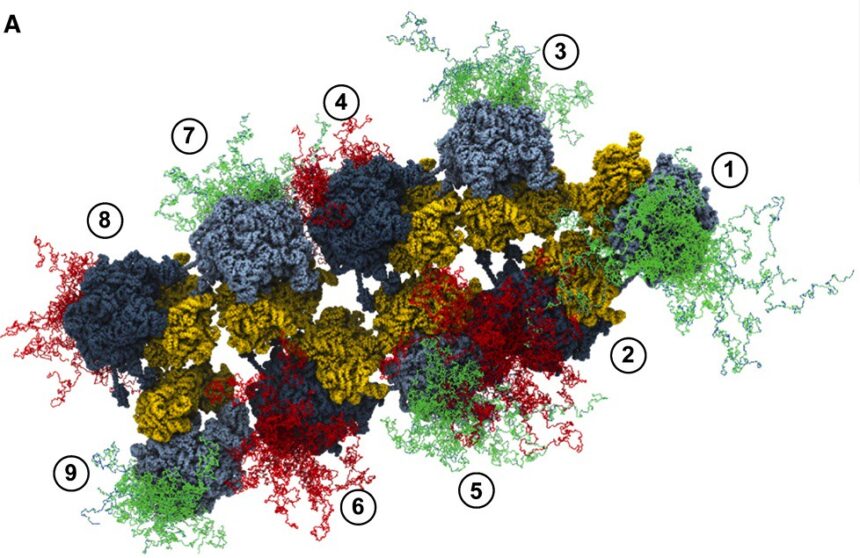
The human body uses 20 standard amino acids as the building blocks for all proteins. Nine are essential—they cannot be made by the body and must come from food—while eleven can be synthesised internally. Understanding how these amino acids differ in structure and function is central to clinical nutrition and disease prevention. — "Replicating Nanomachines" by jurvetson is licensed under CC BY 2.0. To view a copy of this license, visit https://creativecommons.org/licenses/by/2.0/. (CC BY 2.0)
SHARE
1 min read|38 words

9 of 20 amino acids are essential nutrients that your body cannot synthesise—they must come from dietary sources. Learn why tryptophan, leucine, and lysine are critical for brain, muscle, and immune health.

Read the full article on GMJ Newsroom →

Was this article helpful?

GMJ Brief · Key Finding

📰 Read the full article: The 20 amino acids: life’s molecular alphabet explained →

Share This Article
Facebook LinkedIn Bluesky Copy Link Print
GMJ
ByProf. Giorgi Pkhakadze
Follow:
Prof. Giorgi Pkhakadze, MD, MPH, PhD, is Editor-in-Chief of the Georgian Medical Journal and Chair of the Public Health Institute of Georgia (PHIG). He is Professor and Head of the Department of Social and Behavioural Sciences at David Tvildiani Medical University, and Secretary/Treasurer of the UEMS Section of Public Health. ORCID: 0000-0001-7609-4515.

Submit Your Paper →

Georgia's peer-reviewed open-access medical journal. No APC until January 2027.
Submit Manuscript →
When Fainting Masks Dangerous Heart Rhythms: A Clinical Teaching Case from NEJM

A clinical teaching case published in the New England Journal of Medicine…

Creatine Improves Cognitive-Motor Performance in Young Basketball Players

Creatine loading improved dribbling speed, passing accuracy, and shooting performance in young…

Why Fiber Causes Stomach Upset—And How to Build Tolerance

Fiber-induced stomach upset stems from rapid fermentation, not true intolerance. Microbial adaptation…

Submit Your Paper to GMJ

No APC until January 2027.
Submit Manuscript →

You Might Also Like

New StudiesResearch Digest

Reduced Radiation Shows Promise for Older Lung Cancer Patients in Clinical Trial

By
Prof. Giorgi Pkhakadze
28/05/2026
U-shaped graph showing biological aging across sleep durations from 5 to 10 hours per night

The Optimal Sleep Window: 6.4–7.8 Hours Minimizes Biological Aging in Half-Million-Person Study

By
Prof. Giorgi Pkhakadze
29/07/2026
Healthcare worker adjusting pediatric hospital bed controls with safety lock mechanism

Complete Verification Required: 100% of KayserBett IDA Beds Need Immediate Safety Assessment

By
Prof. Giorgi Pkhakadze
21/06/2026
Medical students participating in virtual residency interviews on computer screens

What Medical Programs Need to Know About Virtual Residency Interviews

By
Prof. Giorgi Pkhakadze
11/07/2026
Facebook Twitter Youtube Instagram
Company
  • Privacy Policy
  • Contact US
  • GMJ Journal
  • Submit Manuscript
  • Editorial Team
  • Register at GMJ
  • Terms of Use

Subscribe to GMJ News — Click here

Join Community
© 2026 Georgian Medical Journal (GMJ). Published by the Public Health Institute of Georgia (PHIG). All rights reserved.
Welcome Back!

Sign in to your account

Username or Email Address
Password

Lost your password?

Not a member? Sign Up