By using this site, you agree to the Privacy Policy and Terms of Use.
Accept
GMJ NewsGMJ NewsGMJ News
  • Latest News
    • GMJ Briefs
  • Podcast & Media
    • Podcast Episodes
    • GMJ Audio
    • GMJ Videos
  • Research Digest
    • New Studies
    • Georgian Research
    • Data & Numbers
  • Policy & Systems
    • Health Policy
    • Quality & Safety
    • Migration & Health
    • Global Health
  • Practice
    • Clinical Updates
    • Case Discussions
    • Pharmacy & Prescribing
    • Ingredients A-Z
  • Perspectives
    • Editorial
    • Explainers
    • Voices
    • Letters
  • Health Topics
  • GMJ Articles
    • Vol. 1 Issue 2 (2026)
    • Vol. 1 Issue 1 (2026)
    • Pre-Launch Articles (2025)
  • Read the Journal →
  • About GMJ News
Notification Show More
Font ResizerAa
GMJ NewsGMJ News
Font ResizerAa
  • Latest News
    • GMJ Briefs
  • Podcast & Media
    • Podcast Episodes
    • GMJ Audio
    • GMJ Videos
  • Research Digest
    • New Studies
    • Georgian Research
    • Data & Numbers
  • Policy & Systems
    • Health Policy
    • Quality & Safety
    • Migration & Health
    • Global Health
  • Practice
    • Clinical Updates
    • Case Discussions
    • Pharmacy & Prescribing
    • Ingredients A-Z
  • Perspectives
    • Editorial
    • Explainers
    • Voices
    • Letters
  • Health Topics
  • GMJ Articles
    • Vol. 1 Issue 2 (2026)
    • Vol. 1 Issue 1 (2026)
    • Pre-Launch Articles (2025)
  • Read the Journal →
  • About GMJ News
Follow US
GMJ News > GMJ Briefs > Announcement: Personalised Squat Biomechanics: How Individual Posture Determines Safe Exercise Form

Announcement: Personalised Squat Biomechanics: How Individual Posture Determines Safe Exercise Form

GMJ
Last updated: 13/08/2026 07:29
By
Prof. Giorgi Pkhakadze
Share
0 Min Read
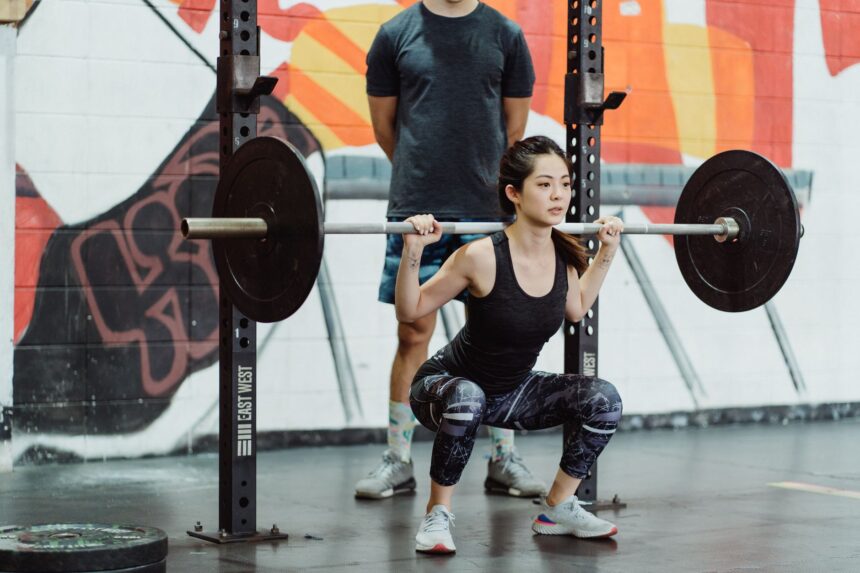
Biomechanics framework showing squat variant selection by postural presentation and anatomical constraints
Effective squat technique depends on individual postural alignment and structural constraints, not universal standards. Exercise variation selection should match personal anatomy—upright posture suits traditional squats, whilst forward collapse, ankle stiffness, or spinal instability each require different variants to minimise injury risk. — Photo by Ketut Subiyanto on Pexels (Pexels License)
SHARE
1 min read|52 words

There is no 'best squat'—only the best squat for YOUR posture and constraints. Exercise variation selection should adapt to individual anatomy: upright posture → traditional squats; forward collapse → front-loaded variants; stiff ankles → heel elevation. Good training adapts the exercise to the body, not vice versa.

Read the full article on GMJ Newsroom →

Was this article helpful?
GMJ Brief · Announcement

📰 Read the full article: Personalised Squat Biomechanics: How Individual Posture Determines Safe Exercise Form →

Share This Article
Facebook LinkedIn Bluesky Copy Link Print
GMJ
ByProf. Giorgi Pkhakadze
Follow:
Prof. Giorgi Pkhakadze, MD, MPH, PhD, is Editor-in-Chief of the Georgian Medical Journal and Chair of the Public Health Institute of Georgia (PHIG). He is Professor and Head of the Department of Social and Behavioural Sciences at David Tvildiani Medical University, and Secretary/Treasurer of the UEMS Section of Public Health. ORCID: 0000-0001-7609-4515.

Submit Your Paper →

Georgia's peer-reviewed open-access medical journal. No APC until January 2027.
Submit Manuscript →
Creatine and Kidney Damage: What the Evidence Actually Shows

A 2025 systematic review of 21 studies and analysis of 685 clinical…

How neurotransmitters orchestrate mood, sleep, and cognition: a biochemical primer

Brain function depends on chemical communication between neurons through neurotransmitters. Twelve major…

Vitamin D’s Role in Alzheimer’s Tau Accumulation: New Evidence from Framingham Heart Study

A 16-year analysis from the Framingham Heart Study finds that higher vitamin…

Submit Your Paper to GMJ

No APC until January 2027.
Submit Manuscript →

You Might Also Like

Diagram showing three pathways by which modern diets compromise gut barrier integrity: altered bile acid metabolism and SCFA production, food additive effects on mucus layer, and circadian disruption from irregular eating patterns.

Key Finding: How Modern Diets Damage the Gut Barrier and Drive Chronic Disease

By
Prof. Giorgi Pkhakadze
12/08/2026
Medical professionals operating radiotherapy equipment in hospital treatment room

What UK Radiotherapy Safety Data Means for Clinical Practice: Three Key Takeaways

By
Prof. Giorgi Pkhakadze
01/07/2026

🚨 WOAH Statement on the Ebola Virus Disease Outbreak in the Democratic Republic of the Congo and Uganda

By
Prof. Giorgi Pkhakadze
01/07/2026
Healthcare workers conducting disease surveillance in Latin American community

PAHO and Mundo Sano Foundation Launch Historic Partnership to Combat Neglected Tropical Diseases Across Americas

By
Prof. Giorgi Pkhakadze
05/06/2026
Facebook Twitter Youtube Instagram
Company
  • Privacy Policy
  • Contact US
  • GMJ Journal
  • Submit Manuscript
  • Editorial Team
  • Register at GMJ
  • Terms of Use

Subscribe to GMJ News — Click here

Join Community
© 2026 Georgian Medical Journal (GMJ). Published by the Public Health Institute of Georgia (PHIG). All rights reserved.
Welcome Back!

Sign in to your account

Username or Email Address
Password

Lost your password?

Not a member? Sign Up