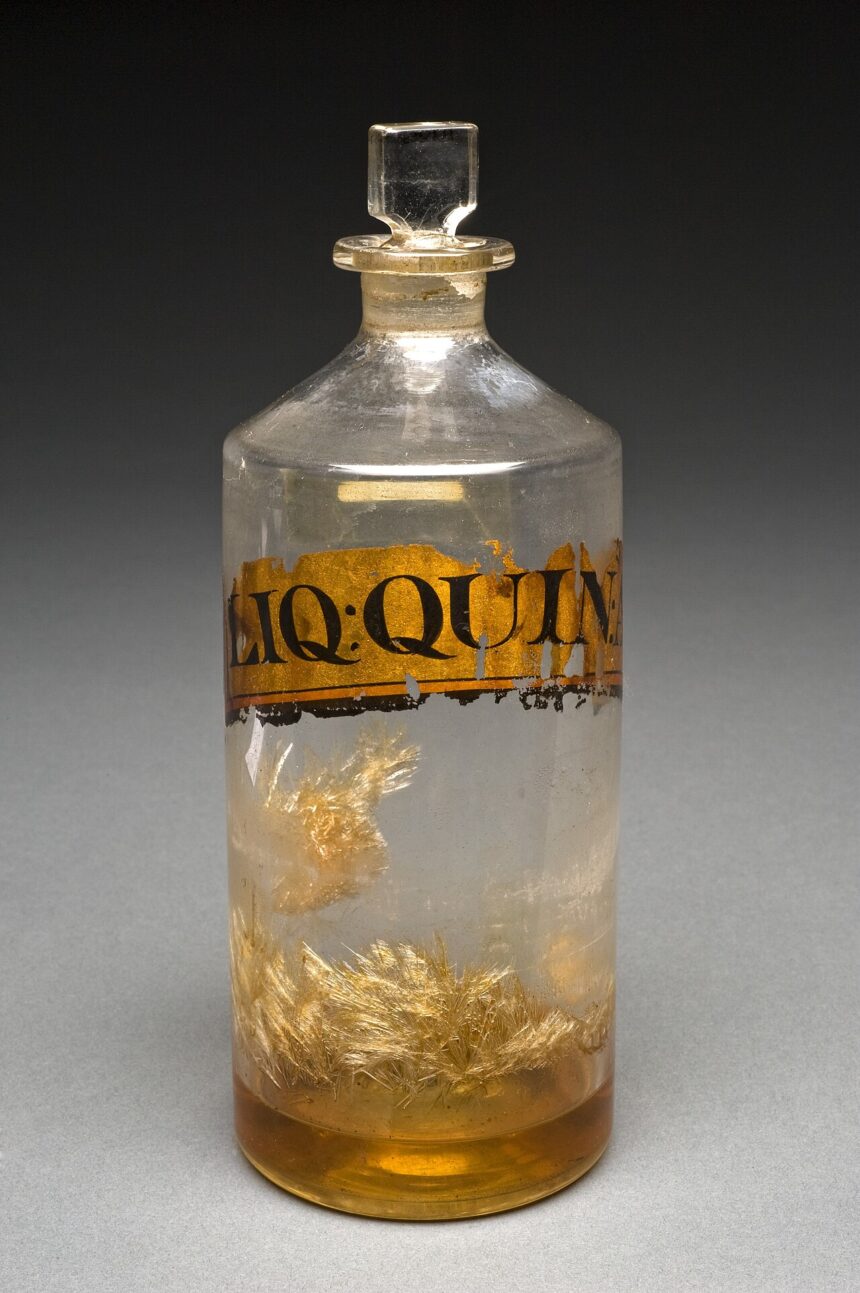
Packaging usually belongs to the marketing department. For liquid B12 it belongs to photochemistry — because cobalamins are among the most light-sensitive molecules in the entire supplement world, and the coenzyme forms most worth taking are the most photolabile of all. The amber bottle around a B12 liquid is not an aesthetic; it is a piece of the formulation doing continuous chemical work.
The photochemistry: a bond built to break
Methylcobalamin’s defining feature — the cobalt–carbon bond holding its methyl group (the coenzyme-form story) — is also its photochemical weakness. Organometallic Co–C bonds are intrinsically photoactive: absorb a photon in the visible/UV range and the bond cleaves homolytically, ejecting a methyl radical; in aqueous, oxygen-containing solution the cobalt promptly picks up a hydroxyl group instead. The primary reaction is thus brutally simple: light converts methylcobalamin to hydroxocobalamin — still a cobalamin (and pharmaceutically useful in its own right), but no longer the coenzyme form the label promised. Continued illumination pushes further, degrading the corrin ring itself toward biologically inactive corrinoid fragments. The quantitative work (Juzeniene & Nizauskaite 2013) makes the speed vivid: in dilute aqueous solution under light exposure, methylcobalamin’s photoconversion proceeds on a timescale of minutes — with UVA and blue wavelengths doing the efficient damage, tracking the molecule’s strong absorption bands below ~550 nm. Adenosylcobalamin is similarly fragile; cyanocobalamin is the most photostable of the family yet still degrades under sustained light. Solutions are the worst case: molecules dissolved and mobile, photons penetrating freely — precisely the physics of a clear dropper bottle on a bright shelf.
Why clear packaging is a genuine quality failure
Follow the consequence chain. A methylcobalamin liquid in clear glass, retail-lit for weeks and then sunlit on a kitchen counter, progressively converts to hydroxocobalamin and beyond. The user still gets some B12 activity (hydroxocobalamin is convertible in vivo) — which is exactly what makes the failure insidious: nothing tastes or looks different, yet the product is no longer what was tested, dosed and labelled, and late-stage degradants contribute nothing. A manufacturer choosing clear packaging for a liquid cobalamin has either not run the photostability study or not minded its result. Formal stability science treats this as a defined obligation: ICH Q1B, the international photostability guideline, exists precisely because light is a routine degradation pathway that must be tested, not assumed away.
Amber glass as a numerical specification
The defence is wavelength filtering. Amber (brown) glass blocks essentially all UV and strongly attenuates visible light up to roughly 450–500 nm — the exact region where cobalamin photochemistry is driven — which is why pharmacopoeial standards define amber containers by transmission limits (light-protective containers must keep transmittance below defined thresholds across ~290–450 nm) rather than by colour name. That makes “amber glass” a checkable engineering claim: the container either meets the transmission specification or it does not. Combined with a box for retail display and the simple user instruction — cap on, cupboard not windowsill — the photon dose over a bottle’s service life falls by orders of magnitude. This is the same packaging logic our liquid-format article applies across light-sensitive nutrients; cobalamins are simply the sharpest case in the catalogue.

Proving the protection worked: degradation-product testing
A specification is a promise; analytics is the receipt. Because photolysis converts methylcobalamin into other cobalamins, a non-specific “total B12” assay cannot detect the damage — a fully degraded product can pass it. Verification requires stability-indicating, form-resolving HPLC: an identity assay confirming the analyte is still methylcobalamin, plus quantification of hydroxocobalamin and further degradants as named impurities, at release and through shelf-life. On a serious certificate of analysis (how to read one), that line — methylcobalamin identity confirmed, degradation products within limits — is the analytical proof that the amber bottle, the box and the formulation did their job from factory to final drop.
The clinical bottom line
Light cleaves methylcobalamin’s cobalt–methyl bond within minutes in solution, converting the coenzyme form to hydroxocobalamin and onward to inactive fragments — so for liquid B12, packaging is chemistry: amber glass meeting pharmacopoeial transmission limits below ~450 nm, backed by form-specific HPLC that proves the molecule survived. A clear bottle of methylcobalamin is not a style choice; it is a stability study nobody ran.
Primary sources
- Juzeniene A, Nizauskaite Z. Photodegradation of cobalamins in aqueous solutions and in human blood. J Photochem Photobiol B. 2013;122:7–14. doi:10.1016/j.jphotobiol.2013.03.001
- Ahmad I, Anwar Z, Ahmed S, et al. Photostability and photostabilization of drugs and drug products — cobalamin photochemistry sections. Int J Photoenergy. 2016;2016:8135608. doi:10.1155/2016/8135608
- Watanabe F. Vitamin B12 sources and bioavailability. Exp Biol Med (Maywood). 2007;232(10):1266–1274. doi:10.3181/0703-MR-67
- ICH Harmonised Tripartite Guideline Q1B: Photostability Testing of New Drug Substances and Products. 1996. ich.org
- Obeid R, Fedosov SN, Nexo E. Cobalamin coenzyme forms… Mol Nutr Food Res. 2015;59(7):1364–1372. doi:10.1002/mnfr.201500019
- European Pharmacopoeia — 3.2.1 Glass containers for pharmaceutical use (light-protective container transmission requirements). edqm.eu
Educational information on formulation science, not medical advice.
Was this article helpful?
Related Coverage


Editorial standards. This article was produced under the GMJ News editorial process, with oversight by the GMJ Editorial Board. Our editorial process. Spotted an error? Contact the editorial team.