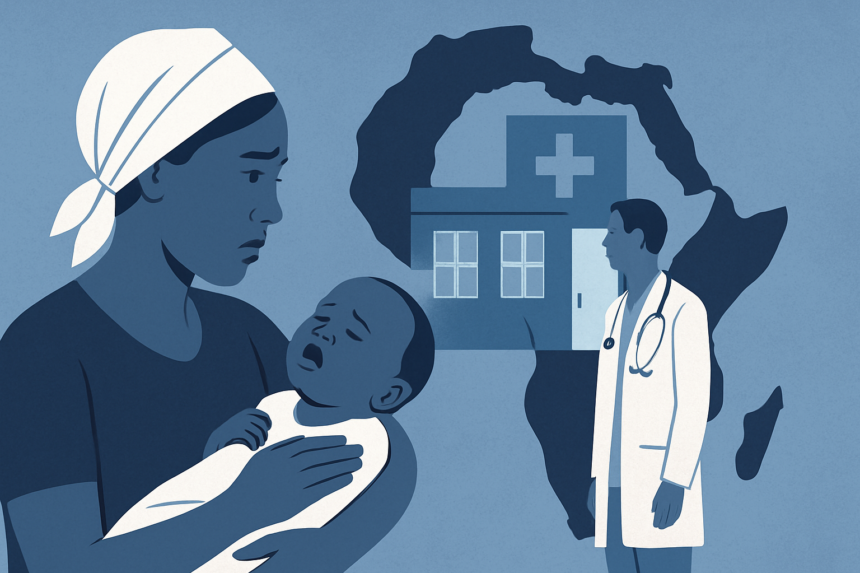
A groundbreaking seven-country study has uncovered a troubling paradox in healthcare-seeking behavior across sub-Saharan Africa and Pakistan: caregivers are significantly less likely to seek formal medical care when their infants show the most severe symptoms. Researchers from Johns Hopkins Bloomberg School of Public Health analyzed data from nearly 5,000 neonatal and infant deaths, revealing that only 8.4% to 41.8% of critically ill neonates received formal healthcare, compared to 15.0% to 66.7% of those with mild illness. This counterintuitive finding challenges conventional assumptions about how families respond to medical emergencies. The research team, led by Henry D. Kalter, employed a novel two-sign assessment method focusing on activity level and feeding behavior to classify illness severity. These results suggest that current global child survival programs may be missing critical intervention points, requiring healthcare systems and policymakers to fundamentally reconsider how they engage families during medical crises.
Was this article helpful?