By using this site, you agree to the Privacy Policy and Terms of Use.
Accept
GMJ NewsGMJ NewsGMJ News
  • Latest News
    • GMJ Briefs
  • Podcast & Media
    • Podcast Episodes
    • GMJ Audio
    • GMJ Videos
  • Research Digest
    • New Studies
    • Georgian Research
    • Data & Numbers
  • Policy & Systems
    • Health Policy
    • Quality & Safety
    • Migration & Health
    • Global Health
  • Practice
    • Clinical Updates
    • Case Discussions
    • Pharmacy & Prescribing
    • Ingredients A-Z
  • Perspectives
    • Editorial
    • Explainers
    • Voices
    • Letters
  • GMJ Articles
    • Vol. 1 Issue 2 (2026)
    • Vol. 1 Issue 1 (2026)
    • Pre-Launch Articles (2025)
  • Read the Journal →
  • About GMJ News
Notification Show More
Font ResizerAa
GMJ NewsGMJ News
Font ResizerAa
  • Latest News
    • GMJ Briefs
  • Podcast & Media
    • Podcast Episodes
    • GMJ Audio
    • GMJ Videos
  • Research Digest
    • New Studies
    • Georgian Research
    • Data & Numbers
  • Policy & Systems
    • Health Policy
    • Quality & Safety
    • Migration & Health
    • Global Health
  • Practice
    • Clinical Updates
    • Case Discussions
    • Pharmacy & Prescribing
    • Ingredients A-Z
  • Perspectives
    • Editorial
    • Explainers
    • Voices
    • Letters
  • GMJ Articles
    • Vol. 1 Issue 2 (2026)
    • Vol. 1 Issue 1 (2026)
    • Pre-Launch Articles (2025)
  • Read the Journal →
  • About GMJ News
Follow US
GMJ News > GMJ Briefs > Three Critical Insights: How New Infant Mortality Research Reshapes Global Health Strategy

Three Critical Insights: How New Infant Mortality Research Reshapes Global Health Strategy

GMJ
Last updated: 24/06/2026 17:47
By
Prof. Giorgi Pkhakadze
Share
1 Min Read
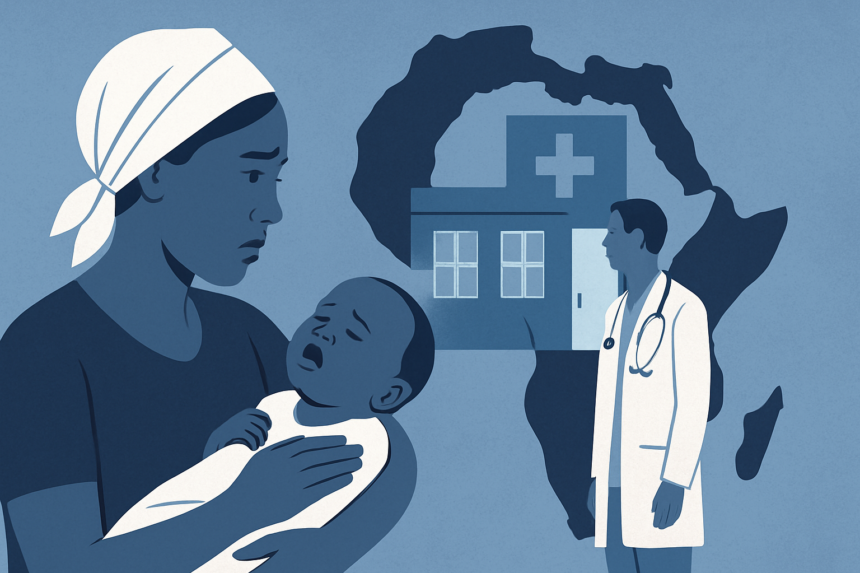
Healthcare worker examining infant in African clinic setting
New research reveals parents seek medical care for severely ill infants only 8.4%-41.8% of the time, compared to 66.7% for mild illness. Johns Hopkins study develops simple two-sign assessment tool for identifying illness severity.
SHARE
1 min read|141 words

A major new study from Johns Hopkins Bloomberg School of Public Health reveals three essential findings that should reshape child survival programming in sub-Saharan Africa and beyond. First, the research confirms a counterintuitive reality: severely ill neonates received formal healthcare in only 8.4% to 41.8% of cases, compared to 15.0% to 66.7% for mild illness. Second, multivariate analysis demonstrated that infant age, rather than symptom severity, was the strongest predictor of healthcare seeking across all six African countries studied. Third, these patterns demand a fundamental shift in how global health interventions are designed and implemented. Rather than assuming families will naturally seek care during severe illness, programs must actively address the specific barriers—whether cultural, economic, or informational—that prevent caregivers from accessing professional healthcare when their infants face life-threatening conditions. Understanding these dynamics is essential for developing effective strategies to reduce preventable infant mortality.

Was this article helpful?

Share This Article
Facebook LinkedIn Bluesky Copy Link Print
GMJ
ByProf. Giorgi Pkhakadze
Follow:
Prof. Giorgi Pkhakadze, MD, MPH, PhD, is Editor-in-Chief of the Georgian Medical Journal and Chair of the Public Health Institute of Georgia (PHIG). He is Professor and Head of the Department of Social and Behavioural Sciences at David Tvildiani Medical University, and Secretary/Treasurer of the UEMS Section of Public Health. ORCID: 0000-0001-7609-4515.

Submit Your Paper →

Georgia's peer-reviewed open-access medical journal. No APC until January 2027.
Submit Manuscript →
Republican Opposition to Opioid Treatment Medications Sparks Policy Debate

Republican federal actions and proposals targeting opioid treatment medications have sparked debate…

NHS workforce planning faces strategic uncertainty as UK prioritises domestic medical graduates

NHS workforce planning faces uncertainty as new legislation prioritises UK medical graduates…

Maternal mortality crisis deepens for Sudanese refugee women in Central African Republic

Pregnant Sudanese refugee women in Central African Republic face 138 times higher…

Submit Your Paper to GMJ

No APC until January 2027.
Submit Manuscript →

You Might Also Like

Global HealthPolicy & Systems

WHO Director-General calls for ceasefire as DR Congo battles deadly Ebola resurgence

By
Prof. Giorgi Pkhakadze
30/05/2026
Air France aircraft on tarmac representing flight diversion due to health protocols

Takeaway: Air France Flight Diverts to Canada After Passenger From Ebola-Hit Congo Boards ‘In Error’

By
Prof. Giorgi Pkhakadze
25/06/2026

PHEIC Declaration: Ebola Outbreak – DRC with Confirmed Cross-Border Transmission to Uganda

By
Prof. Giorgi Pkhakadze
31/05/2026
Global HealthPolicy & Systems

WHO Declares International Emergency as Ebola Outbreak Spreads from DR Congo to Uganda

By
Prof. Giorgi Pkhakadze
31/05/2026
Facebook Twitter Youtube Instagram
Company
  • Privacy Policy
  • Contact US
  • GMJ Journal
  • Submit Manuscript
  • Editorial Team
  • Register at GMJ
  • Terms of Use

Subscribe to GMJ News — Click here

Join Community
© 2026 Georgian Medical Journal (GMJ). Published by the Public Health Institute of Georgia (PHIG). All rights reserved.
Welcome Back!

Sign in to your account

Username or Email Address
Password

Lost your password?

Not a member? Sign Up