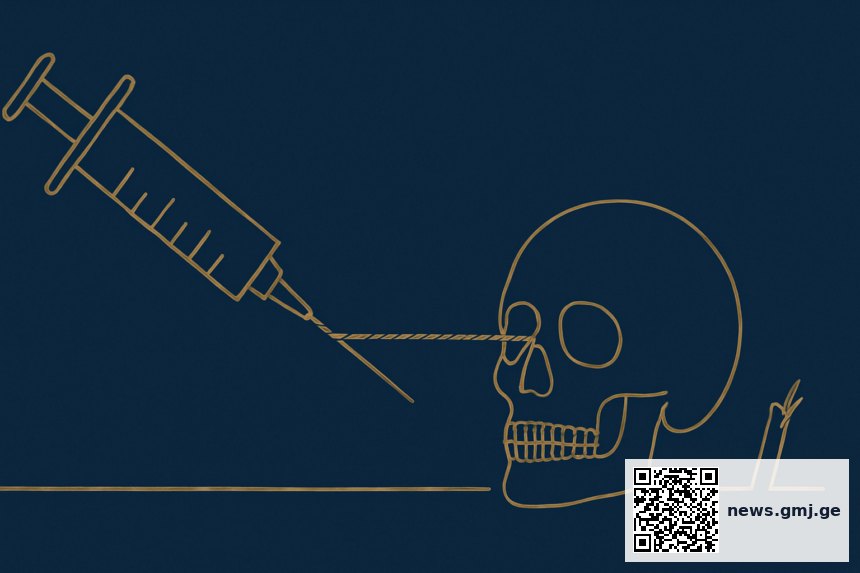
The third measles-related death recorded in Pennsylvania represents far more than a tragic individual loss. It is a systemic failure—a failure of vaccination infrastructure, public health communication, and institutional resilience in a high-income country that should have eliminated this virus decades ago. As Editor-in-Chief of a journal committed to evidence-based medicine and public health accountability, I must ask the difficult question our health systems are avoiding: how did we allow preventable mortality from a vaccine-preventable disease to return to America?
Measles killed an estimated 4.3 million children globally in 1980. That number fell to fewer than 100,000 by 2017, almost entirely through vaccination. The United States achieved measles elimination status in 2000. Yet here we are, documenting fatalities from a disease we declared conquered. This is not inevitable. It is institutional failure.
The proximate cause appears straightforward: vaccination coverage has fallen below herd immunity thresholds in specific communities. Pennsylvania’s outbreak mirrors patterns across the United States—pockets of low immunization rates, often driven by vaccine hesitancy amplified through social media, consolidated around specific geographic or demographic clusters. But identifying the mechanism is not the same as understanding the failure.
The deeper institutional problem lies in three interconnected weaknesses in our public health architecture.
First: fragmentation of vaccination delivery. The United States lacks a unified national immunization platform. Vaccination responsibility is distributed across federal, state, and local health departments; private pediatric practices; community health centers; and pharmacy networks. This fragmentation creates gaps. When a child falls through this distributed system—moving between providers, experiencing gaps in preventive care access, or lacking documentation of prior vaccination—the system has no mechanism to reliably catch them before disease exposure occurs. A unified registry with active outreach capacity could identify under-immunized populations in real time. Most high-income countries maintain this. We do not.
Second: erosion of public trust in health institutions. Vaccine hesitancy did not emerge from nowhere. It grew in the soil of decades of institutional messaging failures, perceived conflicts of interest, and public health communication that too often lectured rather than engaged. The COVID-19 pandemic accelerated this erosion catastrophically. When public health institutions issue mixed messages, when communication prioritizes reassurance over transparency, when the public perceives coordination between government health agencies and pharmaceutical companies as insufficiently regulated—trust collapses. And without trust, no vaccine campaign succeeds. The Pennsylvania outbreak did not emerge because vaccines lack efficacy. It emerged because vaccine coverage rates fell. Why? Because somewhere in the communication chain, we failed to maintain sufficient public confidence in vaccination as a public health intervention.
Third: insufficient public health workforce and infrastructure investment. Measles outbreak response requires rapid epidemiological investigation, contact tracing, vaccination clinic organization, and sustained community engagement. These functions demand trained personnel, data systems, and funding. Pennsylvania’s local health departments, like most in America, are chronically understaffed and underfunded. When a measles case is identified, the public health response depends on human beings conducting face-to-face outreach. Yet we have systematically defunded the workforce that performs this work. We cannot expect outbreak containment from an underfunded system operating below capacity.
What distinguishes this moment from previous vaccine-preventable disease resurgences is that we now have documentary evidence of mortality. The third death in Pennsylvania is not abstract epidemiology. It is a person who received no measles vaccination, contracted the virus, developed complications, and died. This is no longer a statistical projection. It is a concrete outcome of system failure.
The response must move beyond rhetoric about “vaccine confidence.” We need structural reform: unified national immunization registries with active recall systems; substantial workforce investment in local public health; transparent, community-engaged communication strategies that restore institutional credibility; and explicit separation of pharmaceutical industry influence from public health messaging.
Other high-income nations have prevented measles deaths precisely because they made these institutional investments. We can do the same. But doing so requires acknowledging that these deaths are not inevitable consequences of individual vaccine hesitancy. They are preventable outcomes of collective institutional neglect.
Pennsylvania’s third measles death demands that we finally treat vaccination infrastructure with the seriousness it deserves.
Was this article helpful?
100% of readers found this helpful (1 votes)
Disclaimer. This article is health journalism intended for general information and education. It is not medical advice and is not a substitute for professional diagnosis or treatment. Always consult a qualified healthcare provider about your individual circumstances. Full disclaimer →

Editorial standards. This article was produced under the GMJ News editorial process, with oversight by the GMJ Editorial Board. Our editorial process. Spotted an error? Contact the editorial team.