By using this site, you agree to the Privacy Policy and Terms of Use.
Accept
GMJ NewsGMJ NewsGMJ News
  • Latest News
    • GMJ Briefs
  • Podcast & Media
    • Podcast Episodes
    • GMJ Audio
    • GMJ Videos
  • Research Digest
    • New Studies
    • Georgian Research
    • Data & Numbers
  • Policy & Systems
    • Health Policy
    • Quality & Safety
    • Migration & Health
    • Global Health
  • Practice
    • Clinical Updates
    • Case Discussions
    • Pharmacy & Prescribing
    • Ingredients A-Z
  • Perspectives
    • Editorial
    • Explainers
    • Voices
    • Letters
  • GMJ Articles
    • Vol. 1 Issue 2 (2026)
    • Vol. 1 Issue 1 (2026)
    • Pre-Launch Articles (2025)
  • Read the Journal →
  • About GMJ News
Notification Show More
Font ResizerAa
GMJ NewsGMJ News
Font ResizerAa
  • Latest News
    • GMJ Briefs
  • Podcast & Media
    • Podcast Episodes
    • GMJ Audio
    • GMJ Videos
  • Research Digest
    • New Studies
    • Georgian Research
    • Data & Numbers
  • Policy & Systems
    • Health Policy
    • Quality & Safety
    • Migration & Health
    • Global Health
  • Practice
    • Clinical Updates
    • Case Discussions
    • Pharmacy & Prescribing
    • Ingredients A-Z
  • Perspectives
    • Editorial
    • Explainers
    • Voices
    • Letters
  • GMJ Articles
    • Vol. 1 Issue 2 (2026)
    • Vol. 1 Issue 1 (2026)
    • Pre-Launch Articles (2025)
  • Read the Journal →
  • About GMJ News
Follow US
GMJ News > GMJ Briefs > Animal Health Receives 0.6% of Global Health Funding While Human Health Claims 95%

Animal Health Receives 0.6% of Global Health Funding While Human Health Claims 95%

GMJ
Last updated: 10/06/2026 23:55
By
Prof. Giorgi Pkhakadze
Share
1 Min Read
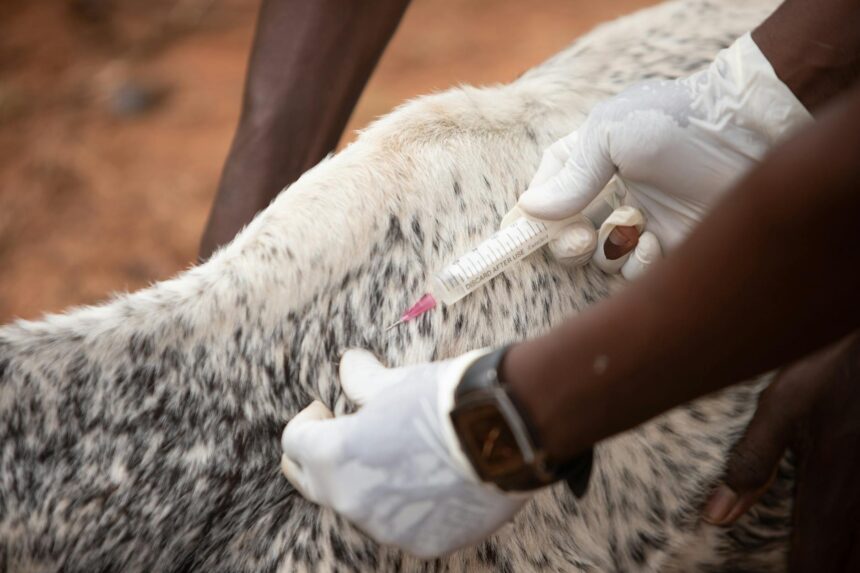
Infographic showing animal health funding represents tiny fraction of global health spending
Animal health receives just 0.6% of global health spending despite mounting disease crises that pose significant risks to human populations. A new WOAH report reveals critical funding gaps threatening pandemic preparedness. — Photo: Life In Lens / Pexels
SHARE
1 min read|123 words

According to the World Organisation for Animal Health’s 2024 global health spending analysis, animal health receives only 0.6% of total global health expenditure, revealing a stark funding disparity that undermines disease prevention efforts at their source. The distribution shows human health commanding 95% of spending, environmental health at 4%, and plant health at 2%, leaving animal health systems critically underfunded.

This allocation pattern is particularly troubling given the well-documented epidemiological evidence that three-quarters of emerging infectious diseases have animal origins. The funding gap directly correlates with weakened surveillance capabilities and inadequate response infrastructure, especially in regions where zoonotic disease risks are highest. Current surveillance systems remain insufficient to detect and contain animal diseases before they potentially spillover into human populations, creating a precarious situation for global health security.

Was this article helpful?

GMJ Brief · Key Finding

📰 Read the full article: Animal health receives just 0.6% of global health spending despite mounting disease crises →

Related reference
  • Iron · Ingredient
Share This Article
Facebook LinkedIn Bluesky Copy Link Print
GMJ
ByProf. Giorgi Pkhakadze
Follow:
Prof. Giorgi Pkhakadze, MD, MPH, PhD, is Editor-in-Chief of the Georgian Medical Journal and Chair of the Public Health Institute of Georgia (PHIG). He is Professor and Head of the Department of Social and Behavioural Sciences at David Tvildiani Medical University, and Secretary/Treasurer of the UEMS Section of Public Health. ORCID: 0000-0001-7609-4515.

Submit Your Paper →

Georgia's peer-reviewed open-access medical journal. No APC until January 2027.
Submit Manuscript →
Sleep deprivation damages multiple body systems simultaneously, six controlled studies show

Six controlled studies show that sleep deprivation simultaneously disrupts hormonal regulation, metabolic…

How Vitamins and Minerals Power Brain Chemistry: The Neurotransmitter Connection

Vitamins B6, B12, folate, and minerals including zinc, magnesium, and iron function…

Beyond Neurons: How Brain’s Supporting Cells Drive Inflammation and Cognitive Resilience

The brain's health depends on more than neurons alone. A complex cellular…

Submit Your Paper to GMJ

No APC until January 2027.
Submit Manuscript →

You Might Also Like

Illustration of artificial intelligence analyzing electronic health records for adverse drug event detection

AI-Powered Clinical Notes Transform Drug Safety Monitoring

By
Prof. Giorgi Pkhakadze
18/07/2026
Global HealthHealth PolicyPolicy & Systems

Hackathons Bridge Research-Policy Gap in Public Health, Study Shows

By
Prof. Giorgi Pkhakadze
23/06/2026
Medical illustration showing T-cell lymphoma development in immunosuppressed transplant patient

Transplant Recipients Face 2-5 Times Higher Risk of Rare T-Cell Lymphoma

By
Prof. Giorgi Pkhakadze
16/07/2026
Medical chart showing STI prevalence rates among HIV-positive patients in China

Landmark 14-Year Study Exposes Critical Gaps in HIV Care Integration

By
Prof. Giorgi Pkhakadze
31/05/2026
Facebook Twitter Youtube Instagram
Company
  • Privacy Policy
  • Contact US
  • GMJ Journal
  • Submit Manuscript
  • Editorial Team
  • Register at GMJ
  • Terms of Use

Subscribe to GMJ News — Click here

Join Community
© 2026 Georgian Medical Journal (GMJ). Published by the Public Health Institute of Georgia (PHIG). All rights reserved.
Welcome Back!

Sign in to your account

Username or Email Address
Password

Lost your password?

Not a member? Sign Up