By using this site, you agree to the Privacy Policy and Terms of Use.
Accept
GMJ NewsGMJ NewsGMJ News
  • Latest News
    • GMJ Briefs
  • Podcast & Media
    • Podcast Episodes
    • GMJ Audio
    • GMJ Videos
  • Research Digest
    • New Studies
    • Georgian Research
    • Data & Numbers
  • Policy & Systems
    • Health Policy
    • Quality & Safety
    • Migration & Health
    • Global Health
  • Practice
    • Clinical Updates
    • Case Discussions
    • Pharmacy & Prescribing
    • Ingredients A-Z
  • Perspectives
    • Editorial
    • Explainers
    • Voices
    • Letters
  • GMJ Articles
    • Vol. 1 Issue 2 (2026)
    • Vol. 1 Issue 1 (2026)
    • Pre-Launch Articles (2025)
  • Read the Journal →
  • About GMJ News
Notification Show More
Font ResizerAa
GMJ NewsGMJ News
Font ResizerAa
  • Latest News
    • GMJ Briefs
  • Podcast & Media
    • Podcast Episodes
    • GMJ Audio
    • GMJ Videos
  • Research Digest
    • New Studies
    • Georgian Research
    • Data & Numbers
  • Policy & Systems
    • Health Policy
    • Quality & Safety
    • Migration & Health
    • Global Health
  • Practice
    • Clinical Updates
    • Case Discussions
    • Pharmacy & Prescribing
    • Ingredients A-Z
  • Perspectives
    • Editorial
    • Explainers
    • Voices
    • Letters
  • GMJ Articles
    • Vol. 1 Issue 2 (2026)
    • Vol. 1 Issue 1 (2026)
    • Pre-Launch Articles (2025)
  • Read the Journal →
  • About GMJ News
Follow US
GMJ News > GMJ Briefs > Why Underfunding Animal Health Systems Creates Global Disease Risks: What You Need to Know

Why Underfunding Animal Health Systems Creates Global Disease Risks: What You Need to Know

GMJ
Last updated: 27/06/2026 23:55
By
Prof. Giorgi Pkhakadze
Share
1 Min Read
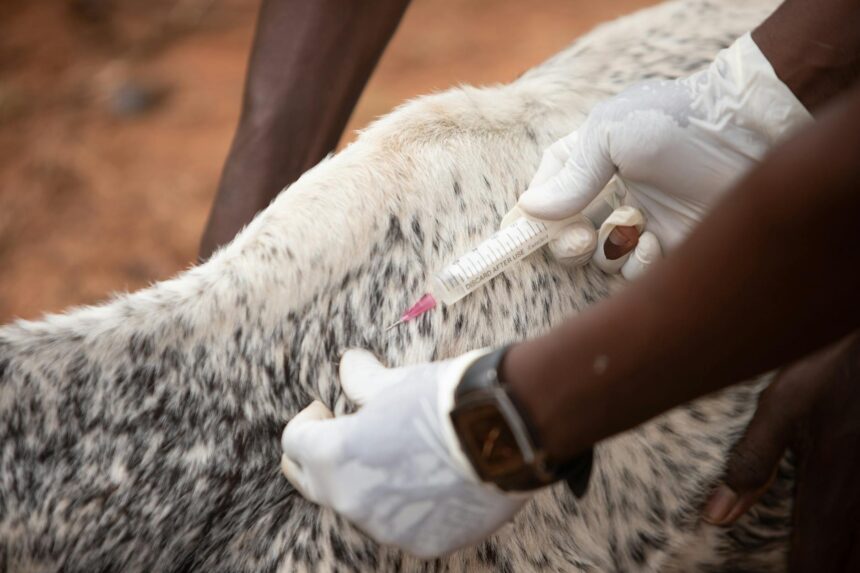
Infographic showing animal health funding represents tiny fraction of global health spending
Animal health receives just 0.6% of global health spending despite mounting disease crises that pose significant risks to human populations. A new WOAH report reveals critical funding gaps threatening pandemic preparedness. — Photo: Life In Lens / Pexels
SHARE
1 min read|131 words

The World Organisation for Animal Health report identifies three critical implications of inadequate animal health investment. First, the 0.6% funding allocation fails to address mounting disease risks despite 75% of emerging diseases originating in animals. Second, economic analysis demonstrates that prevention costs are substantially lower than managing disease outbreaks—yet prevention continues to be underfunded globally. Third, this underfunding directly undermines antimicrobial resistance surveillance and control efforts, threatening both animal and human therapeutic options.

For healthcare professionals and policymakers, the takeaway is clear: strengthening animal health systems represents a cost-effective investment in pandemic preparedness and public health security. The report calls for immediate reallocation of resources toward animal disease surveillance, particularly in low- and middle-income countries where outbreak risks are highest. Implementing robust animal health infrastructure now can prevent far costlier interventions later.

Was this article helpful?

GMJ Brief · Takeaway

📰 Read the full article: Animal health receives just 0.6% of global health spending despite mounting disease crises →

Share This Article
Facebook LinkedIn Bluesky Copy Link Print
GMJ
ByProf. Giorgi Pkhakadze
Follow:
Prof. Giorgi Pkhakadze, MD, MPH, PhD, is Editor-in-Chief of the Georgian Medical Journal and Chair of the Public Health Institute of Georgia (PHIG). He is Professor and Head of the Department of Social and Behavioural Sciences at David Tvildiani Medical University, and Secretary/Treasurer of the UEMS Section of Public Health. ORCID: 0000-0001-7609-4515.

Submit Your Paper →

Georgia's peer-reviewed open-access medical journal. No APC until January 2027.
Submit Manuscript →
Peer Support Group Addresses Rising Loneliness Crisis Among Young Adults Following Suicide Death

A national support group launched to combat loneliness among young adults following…

Trump Administration Removes Job Protections for Thousands of Federal Health Workers

Thousands of federal health workers at HHS agencies including CDC, FDA, and…

Rare Lymphatic-Urinary Fistula Causes Milky Urine in NEJM Case Report

A rare case of chyluria caused by a lymphatic-urinary fistula demonstrates how…

Submit Your Paper to GMJ

No APC until January 2027.
Submit Manuscript →

You Might Also Like

Global HealthPolicy & Systems

Four Health Workers Recover from Ebola Outbreak in Democratic Republic of Congo

By
Prof. Giorgi Pkhakadze
02/06/2026
Parent speaking to baby using parentese communication style

40% Language Acceleration: New Data Validates Effectiveness of Parentese

By
Prof. Giorgi Pkhakadze
10/06/2026
Automated compounding system with syringe labels in hospital pharmacy setting

FDA Issues Class II Recall for Omnicell Syringe Labels Following System Detection Failures

By
Prof. Giorgi Pkhakadze
01/06/2026

PHEIC Declaration: Cross-Border Ebola Transmission DRC-Uganda

By
Prof. Giorgi Pkhakadze
31/05/2026
Facebook Twitter Youtube Instagram
Company
  • Privacy Policy
  • Contact US
  • GMJ Journal
  • Submit Manuscript
  • Editorial Team
  • Register at GMJ
  • Terms of Use

Subscribe to GMJ News — Click here

Join Community
© 2026 Georgian Medical Journal (GMJ). Published by the Public Health Institute of Georgia (PHIG). All rights reserved.
Welcome Back!

Sign in to your account

Username or Email Address
Password

Lost your password?

Not a member? Sign Up