By using this site, you agree to the Privacy Policy and Terms of Use.
Accept
GMJ NewsGMJ NewsGMJ News
  • Latest News
    • GMJ Briefs
  • Podcast & Media
    • Podcast Episodes
    • GMJ Audio
    • GMJ Videos
  • Research Digest
    • New Studies
    • Georgian Research
    • Data & Numbers
  • Policy & Systems
    • Health Policy
    • Quality & Safety
    • Migration & Health
    • Global Health
  • Practice
    • Clinical Updates
    • Case Discussions
    • Pharmacy & Prescribing
    • Ingredients A-Z
  • Perspectives
    • Editorial
    • Explainers
    • Voices
    • Letters
  • GMJ Articles
    • Vol. 1 Issue 2 (2026)
    • Vol. 1 Issue 1 (2026)
    • Pre-Launch Articles (2025)
  • Read the Journal →
  • About GMJ News
Notification Show More
Font ResizerAa
GMJ NewsGMJ News
Font ResizerAa
  • Latest News
    • GMJ Briefs
  • Podcast & Media
    • Podcast Episodes
    • GMJ Audio
    • GMJ Videos
  • Research Digest
    • New Studies
    • Georgian Research
    • Data & Numbers
  • Policy & Systems
    • Health Policy
    • Quality & Safety
    • Migration & Health
    • Global Health
  • Practice
    • Clinical Updates
    • Case Discussions
    • Pharmacy & Prescribing
    • Ingredients A-Z
  • Perspectives
    • Editorial
    • Explainers
    • Voices
    • Letters
  • GMJ Articles
    • Vol. 1 Issue 2 (2026)
    • Vol. 1 Issue 1 (2026)
    • Pre-Launch Articles (2025)
  • Read the Journal →
  • About GMJ News
Follow US
GMJ News > GMJ Briefs > Shipping Cost Inflation Directly Reduces UNICEF’s Child Health Supply Capacity

Shipping Cost Inflation Directly Reduces UNICEF’s Child Health Supply Capacity

GMJ
Last updated: 16/06/2026 19:39
By
Prof. Giorgi Pkhakadze
Share
1 Min Read
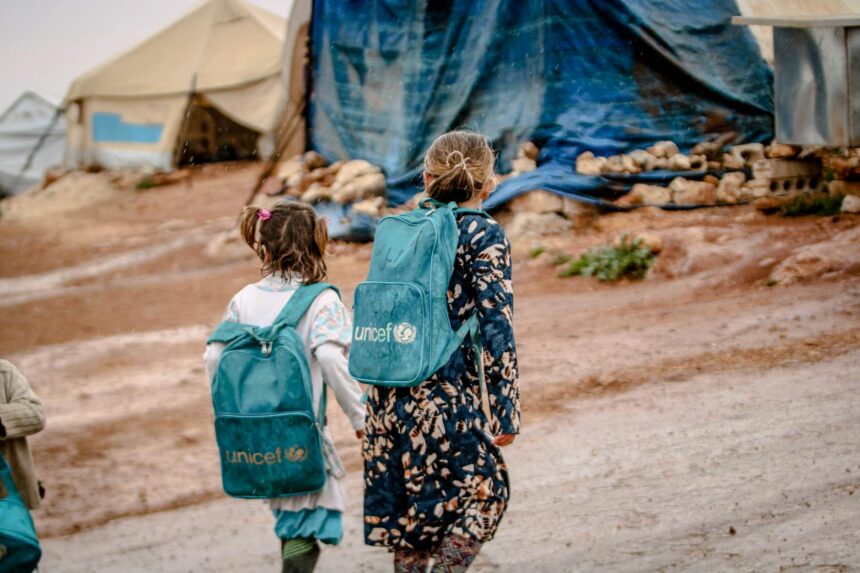
Children receiving medical care showing impact of supply chain disruptions on healthcare delivery
Rising global transport costs are forcing UNICEF to reduce procurement of essential medical supplies for children. The crisis affects vaccines, therapeutic foods, and medical equipment delivery to vulnerable populations worldwide. — Photo: Ahmed akacha / Pexels
SHARE
1 min read|113 words

According to UNICEF’s latest assessment, transport cost increases are directly constraining the organization’s ability to procure lifesaving supplies for vulnerable children. The statistical impact reveals a troubling trend: rising logistics expenses translate immediately into reduced purchasing power for essential medicines and health interventions.

Temperature-sensitive supplies—particularly vaccines required for immunization programs and therapeutic foods for malnourished children—bear the highest burden. These products demand specialized cold-chain transportation, which has experienced dramatic cost escalation. The data demonstrates that shipping inflation disproportionately affects the most vulnerable populations, including children in humanitarian crises where alternative supply routes are unavailable.

This quantifiable reduction in procurement capacity signals a critical inflection point for global child health outcomes in 2024.

Was this article helpful?

GMJ Brief · Key Finding

📰 Read the full article: Rising Transport Costs Reduce UNICEF’s Capacity to Deliver Child Healthcare Supplies →

Share This Article
Facebook LinkedIn Bluesky Copy Link Print
GMJ
ByProf. Giorgi Pkhakadze
Follow:
Prof. Giorgi Pkhakadze, MD, MPH, PhD, is Editor-in-Chief of the Georgian Medical Journal and Chair of the Public Health Institute of Georgia (PHIG). He is Professor and Head of the Department of Social and Behavioural Sciences at David Tvildiani Medical University, and Secretary/Treasurer of the UEMS Section of Public Health. ORCID: 0000-0001-7609-4515.

Submit Your Paper →

Georgia's peer-reviewed open-access medical journal. No APC until January 2027.
Submit Manuscript →
European Drug Pricing Pressures Rise as U.S. Policy Ripple Effects Spread Across Markets

European countries are adopting divergent pharmaceutical pricing policies, creating market complexity and…

Republican Opposition to Opioid Treatment Medications Sparks Policy Debate

Republican federal actions and proposals targeting opioid treatment medications have sparked debate…

NHS workforce planning faces strategic uncertainty as UK prioritises domestic medical graduates

NHS workforce planning faces uncertainty as new legislation prioritises UK medical graduates…

Submit Your Paper to GMJ

No APC until January 2027.
Submit Manuscript →

You Might Also Like

PHEIC Declaration: Ebola Outbreak with Cross-Border Transmission DRC-Uganda

By
Prof. Giorgi Pkhakadze
31/05/2026
Junior doctors on picket line holding BMA strike banners outside hospital

26% Real-Terms Pay Cut Since 2008 Fuels Unprecedented Medical Workforce Crisis

By
Prof. Giorgi Pkhakadze
11/06/2026
Infographic showing global mental health disability statistics with rising trend line

1.2 Billion People Disabled by Mental Health: A Stark Global Inequality

By
Prof. Giorgi Pkhakadze
15/06/2026
Global HealthPolicy & Systems

WHO Declares Public Health Emergency as Ebola Outbreak Spreads from DRC to Uganda

By
Prof. Giorgi Pkhakadze
31/05/2026
Facebook Twitter Youtube Instagram
Company
  • Privacy Policy
  • Contact US
  • GMJ Journal
  • Submit Manuscript
  • Editorial Team
  • Register at GMJ
  • Terms of Use

Subscribe to GMJ News — Click here

Join Community
© 2026 Georgian Medical Journal (GMJ). Published by the Public Health Institute of Georgia (PHIG). All rights reserved.
Welcome Back!

Sign in to your account

Username or Email Address
Password

Lost your password?

Not a member? Sign Up