By using this site, you agree to the Privacy Policy and Terms of Use.
Accept
GMJ NewsGMJ NewsGMJ News
  • Latest News
    • GMJ Briefs
  • Podcast & Media
    • Podcast Episodes
    • GMJ Audio
    • GMJ Videos
  • Research Digest
    • New Studies
    • Georgian Research
    • Data & Numbers
  • Policy & Systems
    • Health Policy
    • Quality & Safety
    • Migration & Health
    • Global Health
  • Practice
    • Clinical Updates
    • Case Discussions
    • Pharmacy & Prescribing
    • Ingredients A-Z
  • Perspectives
    • Editorial
    • Explainers
    • Voices
    • Letters
  • Health Topics
  • GMJ Articles
    • Vol. 1 Issue 2 (2026)
    • Vol. 1 Issue 1 (2026)
    • Pre-Launch Articles (2025)
  • Read the Journal →
  • About GMJ News
Notification Show More
Font ResizerAa
GMJ NewsGMJ News
Font ResizerAa
  • Latest News
    • GMJ Briefs
  • Podcast & Media
    • Podcast Episodes
    • GMJ Audio
    • GMJ Videos
  • Research Digest
    • New Studies
    • Georgian Research
    • Data & Numbers
  • Policy & Systems
    • Health Policy
    • Quality & Safety
    • Migration & Health
    • Global Health
  • Practice
    • Clinical Updates
    • Case Discussions
    • Pharmacy & Prescribing
    • Ingredients A-Z
  • Perspectives
    • Editorial
    • Explainers
    • Voices
    • Letters
  • Health Topics
  • GMJ Articles
    • Vol. 1 Issue 2 (2026)
    • Vol. 1 Issue 1 (2026)
    • Pre-Launch Articles (2025)
  • Read the Journal →
  • About GMJ News
Follow US
GMJ News > GMJ Briefs > 50% of U.S. Counties Without Obstetric Care: The Data Behind the Maternity Crisis

50% of U.S. Counties Without Obstetric Care: The Data Behind the Maternity Crisis

GMJ
Last updated: 28/07/2026 09:30
By
Prof. Giorgi Pkhakadze
Share
1 Min Read
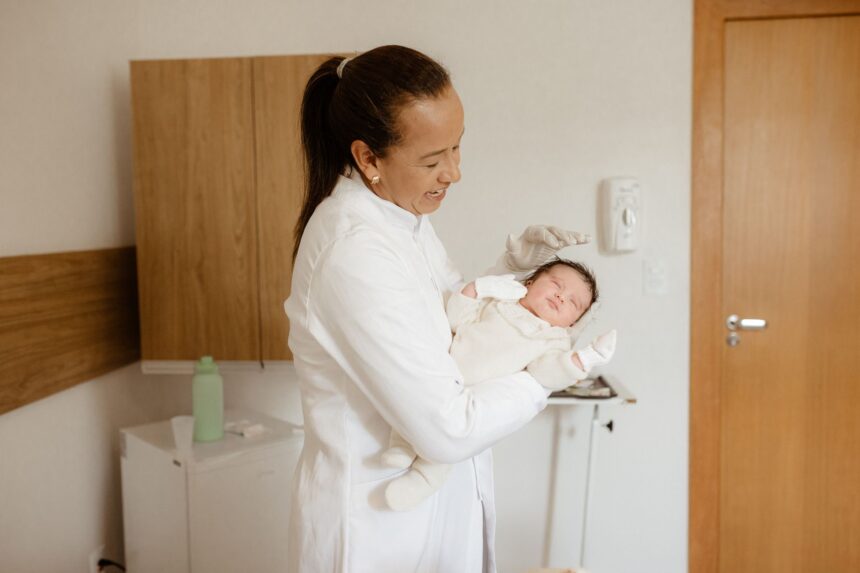
Map showing distribution of obstetric care deserts across U.S. regions, with rural areas most severely affected
Nearly 50% of U.S. counties lack an obstetrician-gynecologist despite falling birth rates. This geographic crisis reflects systemic failures in residency training allocation and physician distribution, not overall workforce shortages. — Photo by Jonathan Borba on Pexels (Pexels License)
SHARE
1 min read|132 words

A striking data point reveals the extent of America’s maternity care crisis: approximately half of all U.S. counties have zero practicing obstetrician-gynecologists. This statistic becomes even more puzzling when considering that national fertility rates continue declining—a trend that, under normal market economics, should have redistributed physician resources to underserved areas.

Instead, STAT News analysis demonstrates that supply-and-demand dynamics have failed to correct the geographic maldistribution. The problem lies in policy architecture: residency training positions concentrate in urban academic centers, creating economic incentives for graduates to establish practices in wealthy metropolitan regions rather than rural or underserved communities.

Regional breakdowns show the severity varies geographically, with Rural Midwest counties experiencing the most acute shortage at 78%, compared to 28% in the Northeast. These disparities translate directly into measurable inequities in maternal health outcomes.

Was this article helpful?

GMJ Brief · Key Finding

📰 Read the full article: Why Nearly Half of U.S. Counties Lack Maternity Care Despite Falling Birth Rates →

Share This Article
Facebook LinkedIn Bluesky Copy Link Print
GMJ
ByProf. Giorgi Pkhakadze
Follow:
Prof. Giorgi Pkhakadze, MD, MPH, PhD, is Editor-in-Chief of the Georgian Medical Journal and Chair of the Public Health Institute of Georgia (PHIG). He is Professor and Head of the Department of Social and Behavioural Sciences at David Tvildiani Medical University, and Secretary/Treasurer of the UEMS Section of Public Health. ORCID: 0000-0001-7609-4515.

Submit Your Paper →

Georgia's peer-reviewed open-access medical journal. No APC until January 2027.
Submit Manuscript →
FDA-Approved Drug Restores Immunotherapy Efficacy in Rare Liver Cancer by Releasing Trapped T Cells

Researchers have identified that rare liver cancers evade immunotherapy by trapping immune…

Timing of Second Stent Placement After Heart Attack: New Trial Challenges Immediate Intervention Strategy

A randomized controlled trial published in the New England Journal of Medicine…

Africa’s Regional Research Hubs: Building Local Capacity for Drug Manufacturing and Health Innovation

Africa needs strategically distributed regional research and development hubs to accelerate local…

Submit Your Paper to GMJ

No APC until January 2027.
Submit Manuscript →

You Might Also Like

Medical isolation ward with healthcare workers in protective equipment

Laboratory Testing Underway for Two Suspected Viral Hemorrhagic Fever Cases in Brazil

By
Prof. Giorgi Pkhakadze
15/06/2026
Historical manuscripts and artifacts documenting gender-nonconforming individuals across ancient civilizations

Documented Evidence: Gender-Nonconforming Individuals Span Four Ancient Civilizations

By
Prof. Giorgi Pkhakadze
29/07/2026
WHO certification document for Turks and Caicos Islands mother-to-child transmission elimination

Exclusive Club: Only 14 Countries Worldwide Certified for Dual HIV and Hepatitis B Mother-to-Child Transmission Elimination

By
Prof. Giorgi Pkhakadze
27/06/2026
Infographic showing teen substance use mental health correlations from UCLA research

Three Essential Screening Recommendations from New Adolescent Substance Use Research

By
Prof. Giorgi Pkhakadze
08/08/2026
Facebook Twitter Youtube Instagram
Company
  • Privacy Policy
  • Contact US
  • GMJ Journal
  • Submit Manuscript
  • Editorial Team
  • Register at GMJ
  • Terms of Use

Subscribe to GMJ News — Click here

Join Community
© 2026 Georgian Medical Journal (GMJ). Published by the Public Health Institute of Georgia (PHIG). All rights reserved.
Welcome Back!

Sign in to your account

Username or Email Address
Password

Lost your password?

Not a member? Sign Up