By using this site, you agree to the Privacy Policy and Terms of Use.
Accept
GMJ NewsGMJ NewsGMJ News
  • Latest News
    • GMJ Briefs
  • Podcast & Media
    • Podcast Episodes
    • GMJ Audio
    • GMJ Videos
  • Research Digest
    • New Studies
    • Georgian Research
    • Data & Numbers
  • Policy & Systems
    • Health Policy
    • Quality & Safety
    • Migration & Health
    • Global Health
  • Practice
    • Clinical Updates
    • Case Discussions
    • Pharmacy & Prescribing
    • Ingredients A-Z
  • Perspectives
    • Editorial
    • Explainers
    • Voices
    • Letters
  • GMJ Articles
    • Vol. 1 Issue 2 (2026)
    • Vol. 1 Issue 1 (2026)
    • Pre-Launch Articles (2025)
  • Read the Journal →
  • About GMJ News
Notification Show More
Font ResizerAa
GMJ NewsGMJ News
Font ResizerAa
  • Latest News
    • GMJ Briefs
  • Podcast & Media
    • Podcast Episodes
    • GMJ Audio
    • GMJ Videos
  • Research Digest
    • New Studies
    • Georgian Research
    • Data & Numbers
  • Policy & Systems
    • Health Policy
    • Quality & Safety
    • Migration & Health
    • Global Health
  • Practice
    • Clinical Updates
    • Case Discussions
    • Pharmacy & Prescribing
    • Ingredients A-Z
  • Perspectives
    • Editorial
    • Explainers
    • Voices
    • Letters
  • GMJ Articles
    • Vol. 1 Issue 2 (2026)
    • Vol. 1 Issue 1 (2026)
    • Pre-Launch Articles (2025)
  • Read the Journal →
  • About GMJ News
Follow US
GMJ News > GMJ Briefs > 655,000 Annual Deaths Underscore the Urgent Need for Cardiac Regeneration Advances

655,000 Annual Deaths Underscore the Urgent Need for Cardiac Regeneration Advances

GMJ
Last updated: 11/06/2026 20:10
By
Prof. Giorgi Pkhakadze
Share
1 Min Read
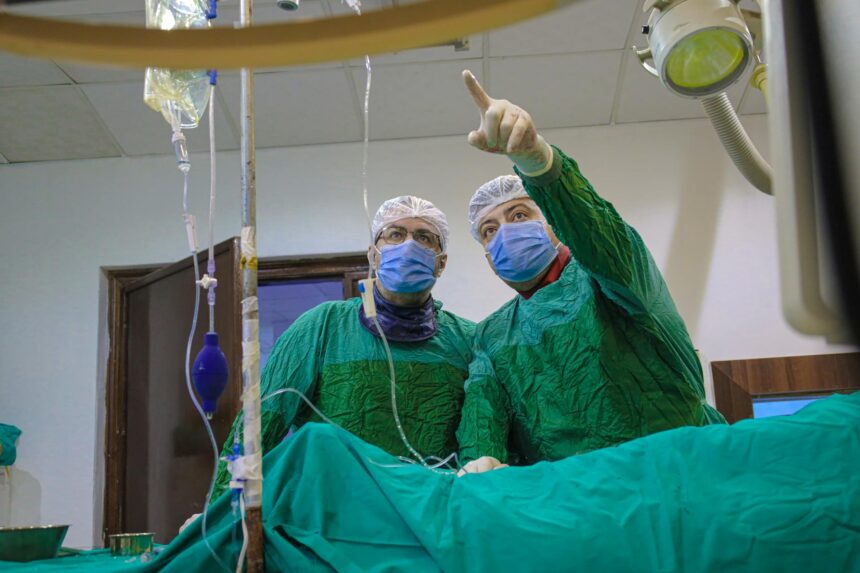
Medical illustration showing cardiac patch therapy on damaged heart tissue
New editorial in NEJM explores cardiac patch therapy as a revolutionary approach to heart repair. These innovative treatments could restore damaged heart tissue rather than just managing symptoms. — Photo: محمد عزام الشيخ يوسف / Pexels
SHARE
1 min read|119 words

Heart disease claims approximately 655,000 American lives each year, with coronary heart disease accounting for the largest share of cardiovascular deaths at 85.2 per 100,000 population. This staggering mortality burden underscores why breakthrough therapies are critically needed.

Current treatments, while effective at slowing disease progression, cannot reverse the underlying tissue damage that drives heart failure in 6.2 million U.S. adults. A new NEJM editorial examines how emerging cardiac patch therapies could address this gap by promoting actual tissue regeneration rather than symptom management alone.

These patch-based interventions represent a promising frontier in regenerative medicine, offering potential for patients who have exhausted conventional treatment options and highlighting the real-world impact of continued investment in cardiac research.

Read the full article on GMJ Newsroom.

Submit Your Paper
GMJ_Submit_Banner

Was this article helpful?

GMJ Brief · Key Finding

📰 Read the full article: Heart patch therapy shows promise for repairing damaged cardiac tissue →

Related reference
  • Heart Failure · Condition
Share This Article
Facebook LinkedIn Bluesky Copy Link Print
GMJ
ByProf. Giorgi Pkhakadze
Follow:
Prof. Giorgi Pkhakadze, MD, MPH, PhD, is Editor-in-Chief of the Georgian Medical Journal and Chair of the Public Health Institute of Georgia (PHIG). He is Professor and Head of the Department of Social and Behavioural Sciences at David Tvildiani Medical University, and Secretary/Treasurer of the UEMS Section of Public Health. ORCID: 0000-0001-7609-4515.

Submit Your Paper →

Georgia's peer-reviewed open-access medical journal. No APC until January 2027.
Submit Manuscript →
World’s First Rooftop ICU Opens in London to Study Nature’s Role in Patient Recovery

King's College Hospital in London opens the world's first rooftop ICU to…

PFAS Create Unique Blood Signatures as Body Transforms Forever Chemicals

Scientists discover PFAS compounds create unique chemical fingerprints in blood as they…

Spinal Cord Stimulation Shows Promise for Chronic Stroke Recovery After Four Years

University of Pittsburgh researchers demonstrate that spinal cord stimulation can improve arm…

Submit Your Paper to GMJ

No APC until January 2027.
Submit Manuscript →

You Might Also Like

Healthcare worker examining infant in African clinic setting

Data Disparity: Severely Ill Infants Receive Care Half as Often as Mildly Sick Peers

By
Prof. Giorgi Pkhakadze
07/06/2026

WHO Declares International Health Emergency Over Ebola Outbreak Spreading From DRC to Uganda

By
Prof. Giorgi Pkhakadze
31/05/2026
Researcher using precision equipment to slice tumor tissue samples for cancer analysis

Precision Tumor Slicing Achieves Optimal 1-2mm Sample Thickness for Cancer Analysis

By
Prof. Giorgi Pkhakadze
10/06/2026
Chart showing three different peak performance ages across human lifespan from Swedish longitudinal study

Aerobic Fitness Variation Increases 25-Fold From Youth to Age 63

By
Prof. Giorgi Pkhakadze
07/06/2026
Facebook Twitter Youtube Instagram
Company
  • Privacy Policy
  • Contact US
  • GMJ Journal
  • Submit Manuscript
  • Editorial Team
  • Register at GMJ
  • Terms of Use

Subscribe to GMJ News — Click here

Join Community
© 2026 Georgian Medical Journal (GMJ). Published by the Public Health Institute of Georgia (PHIG). All rights reserved.
Welcome Back!

Sign in to your account

Username or Email Address
Password

Lost your password?

Not a member? Sign Up